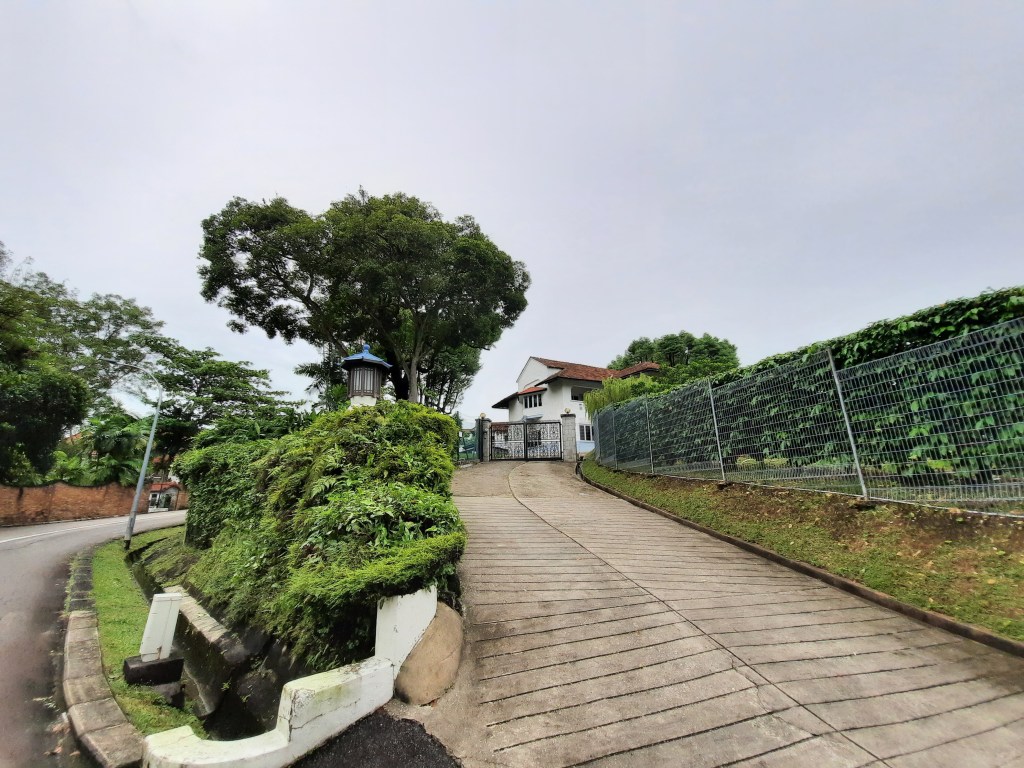
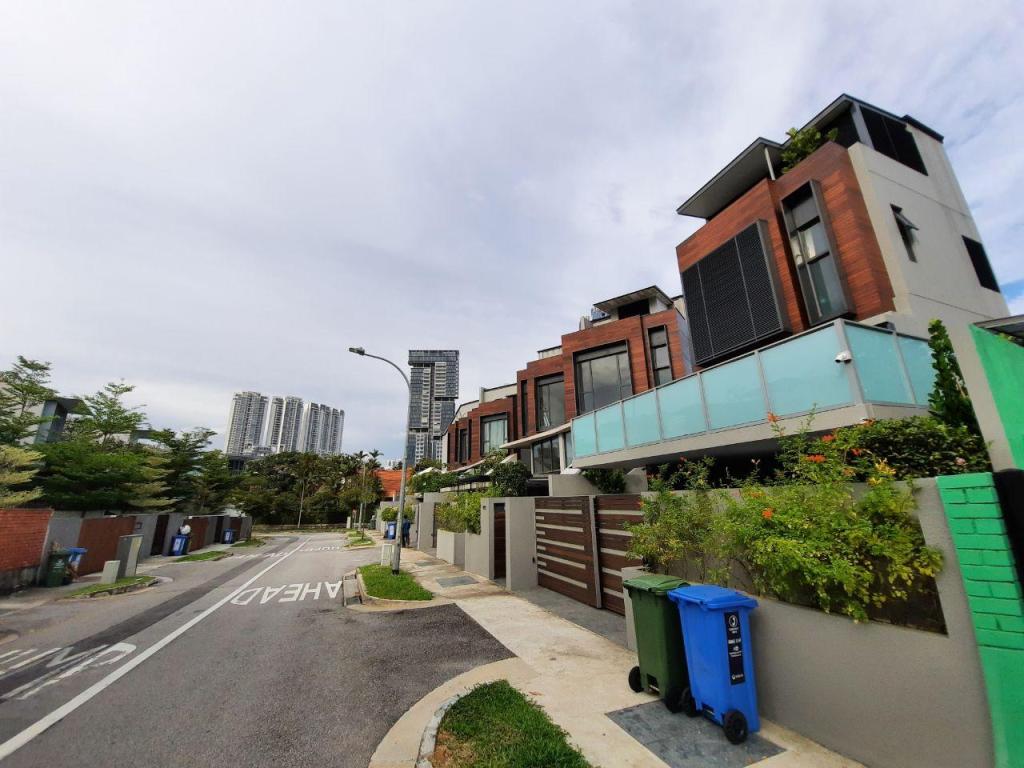
Chee Hoon Ave translates to “purple cloud” and has special significance in the Buddhist religion, where purple is seen to be a divine colour. It also shares the boundary with Camden Park GCBA.
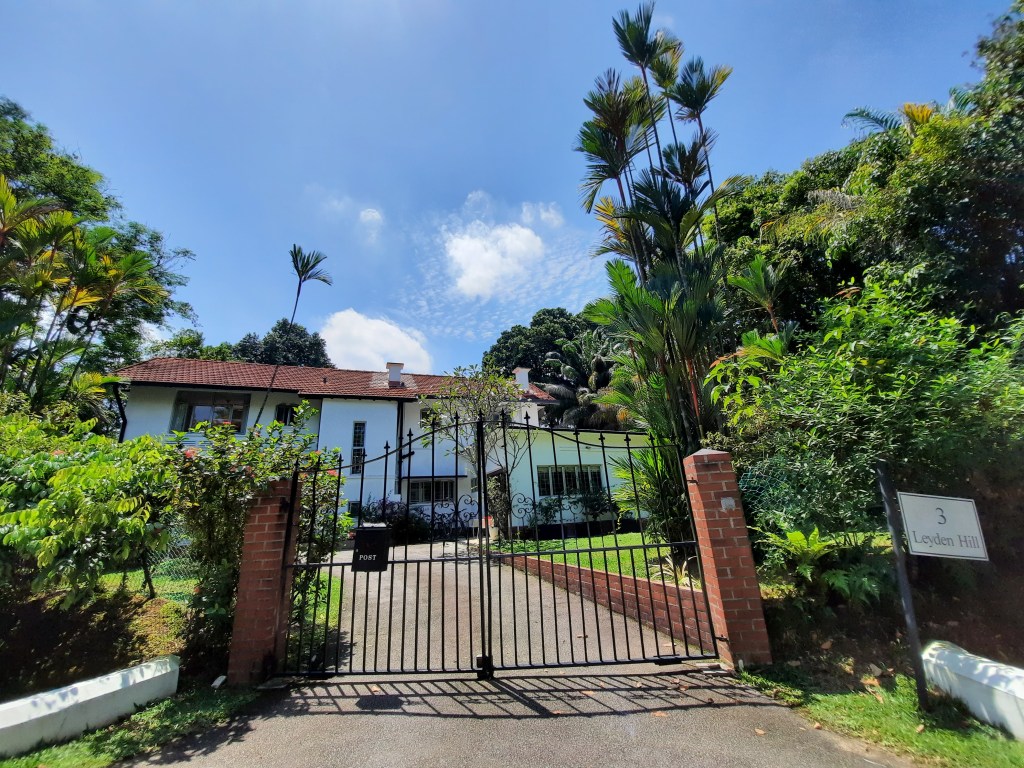
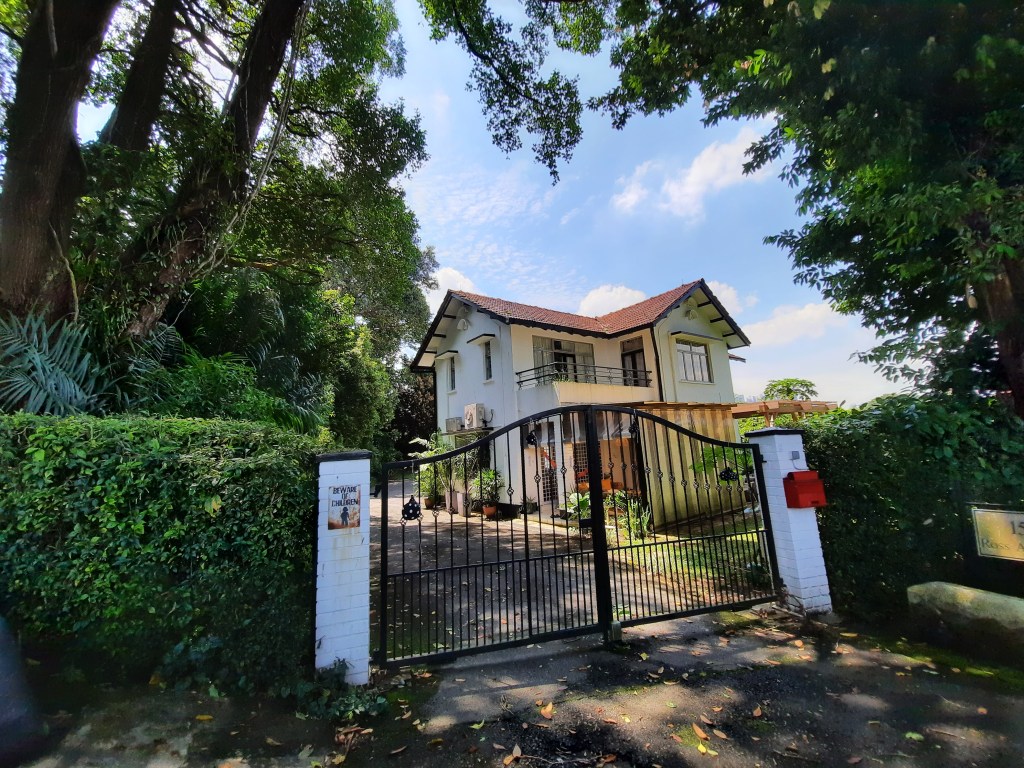
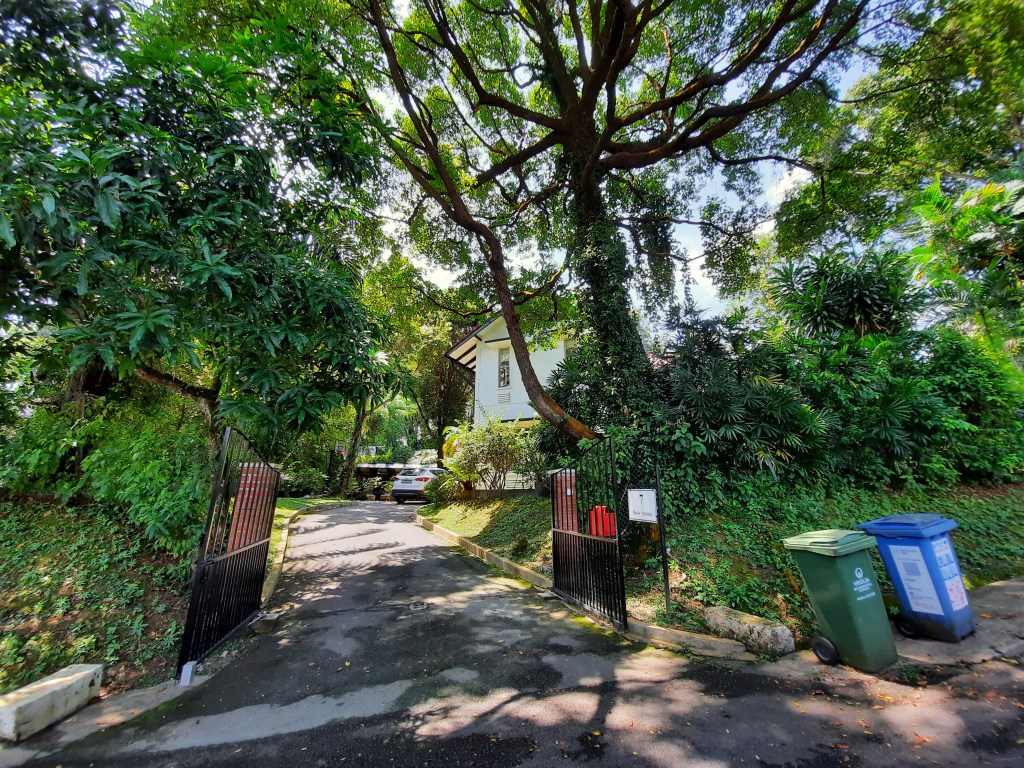
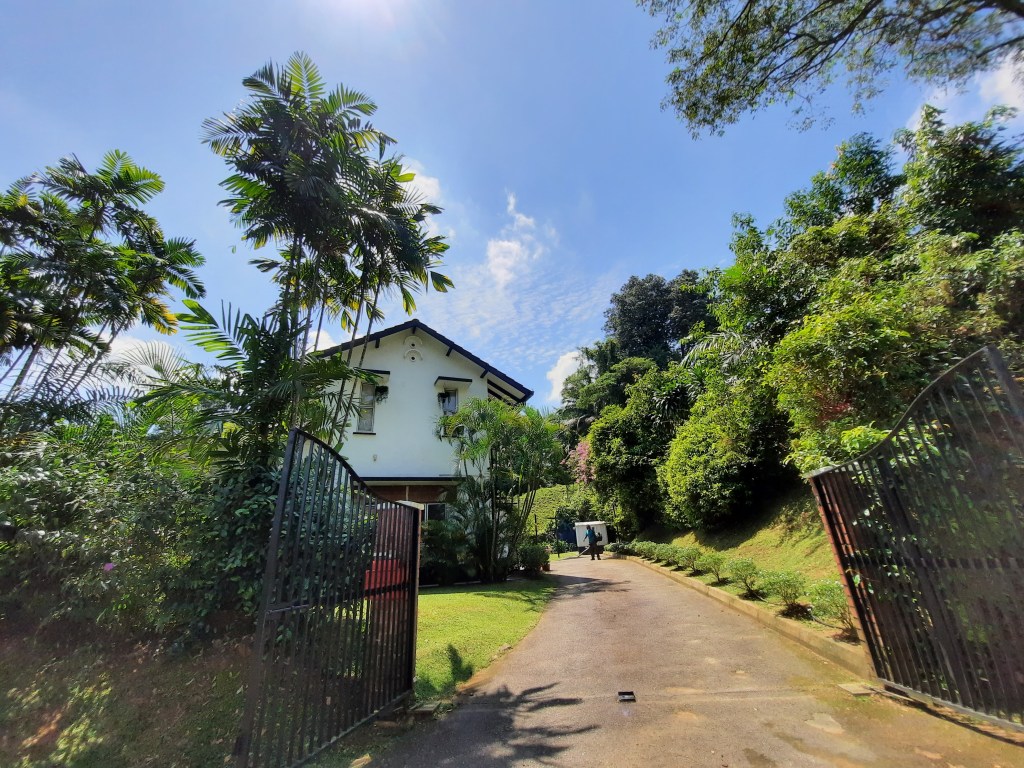
Besides Chee Hoon Ave, this GCBA includes Dunearn Close, Ross Ave (which has mostly B&W homes) and some houses off University Rd and Jln Sejarah.
It is within walking distance to Adam Rd Hawker Centre where there is host of famous food awaiting you – Selera Rasa Nasi Lemak, Adam Rd Mee Pok etc. Its nearest MRT is Botanic Gardens where some parts of the walk there is sheltered.
There are several known billionaires who reside in this GCBA. Amongst the most prominent are UOB’s Wee Cho Yaw and Popiah King Sam Goi, who both reside along Jalan Asuhan and Michael Lien, grandson of OUB founder Lien Ying Chow, who completed his purchase of a 17,868 sqft home for $21.4m ($1,197 psf) in 2015. Past owners have also included the late Ong Swee Law, former PUB Chairman and Seet Teck Tuan, a pineapple tycoon whose 45,155 sqft home was tipped to sell at almost $82m in 2013. Recognise their faces and you might just bump into them while queuing up for Nasi Lemak at Adam Rd Hawker Ctr.
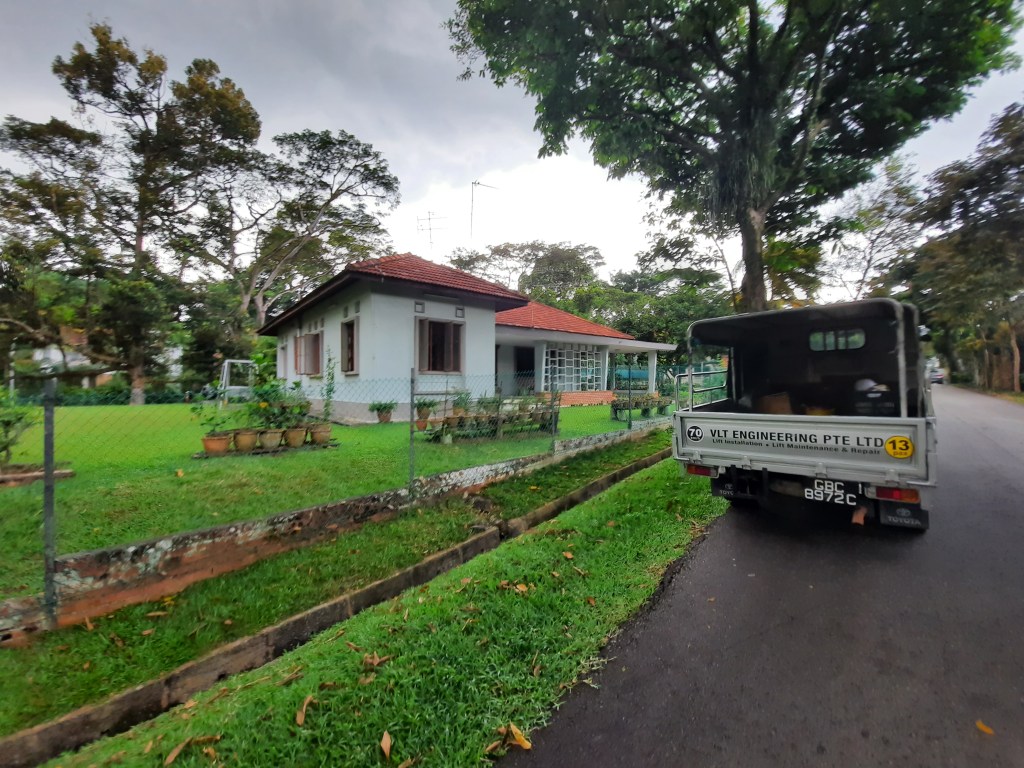
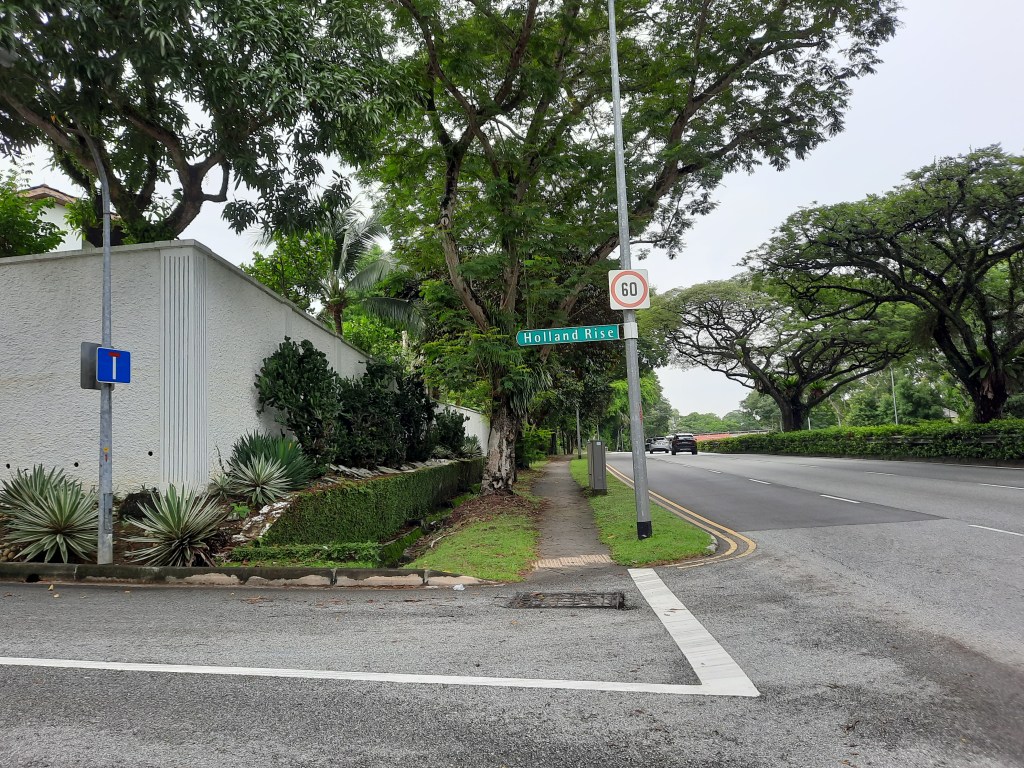
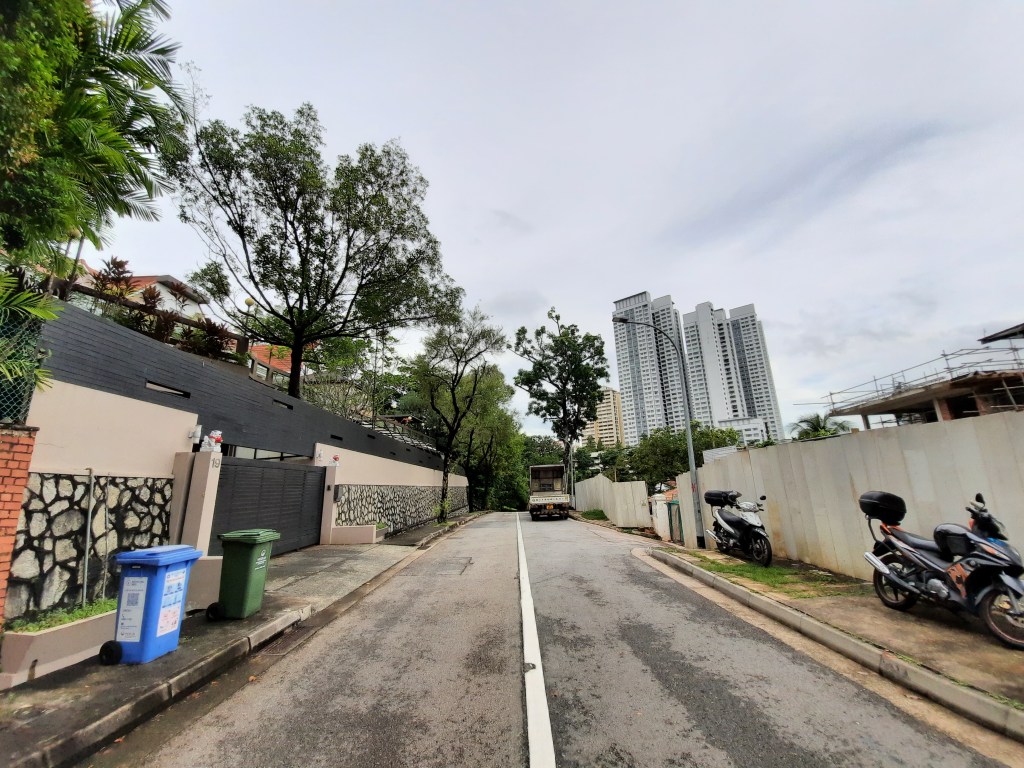
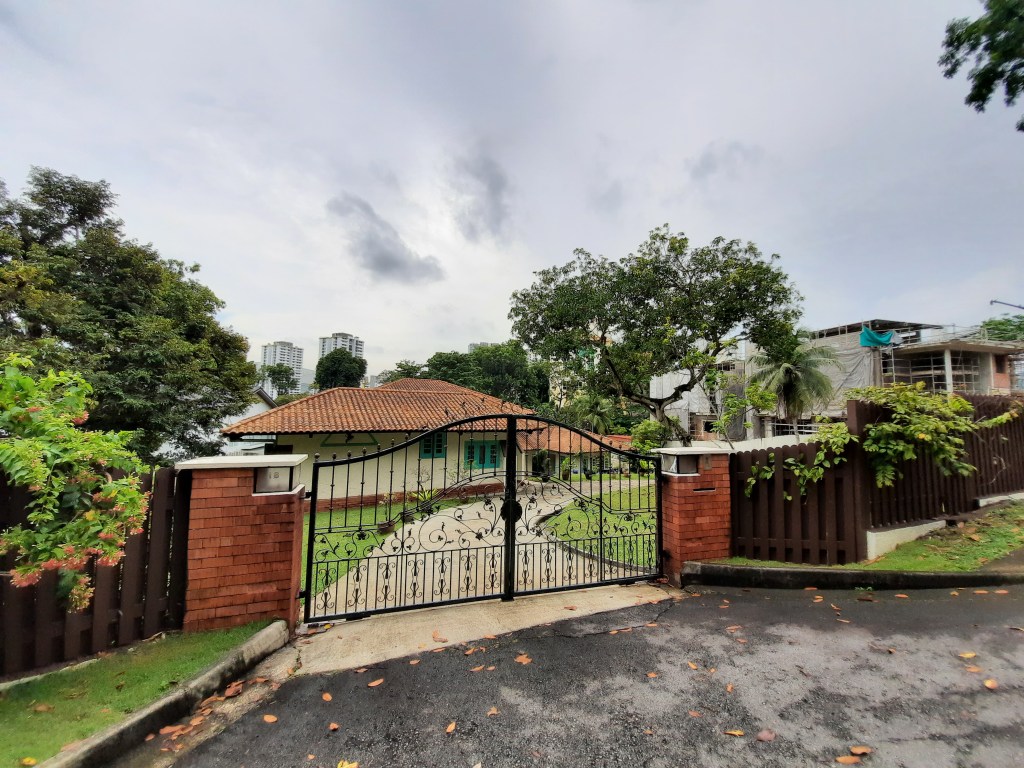
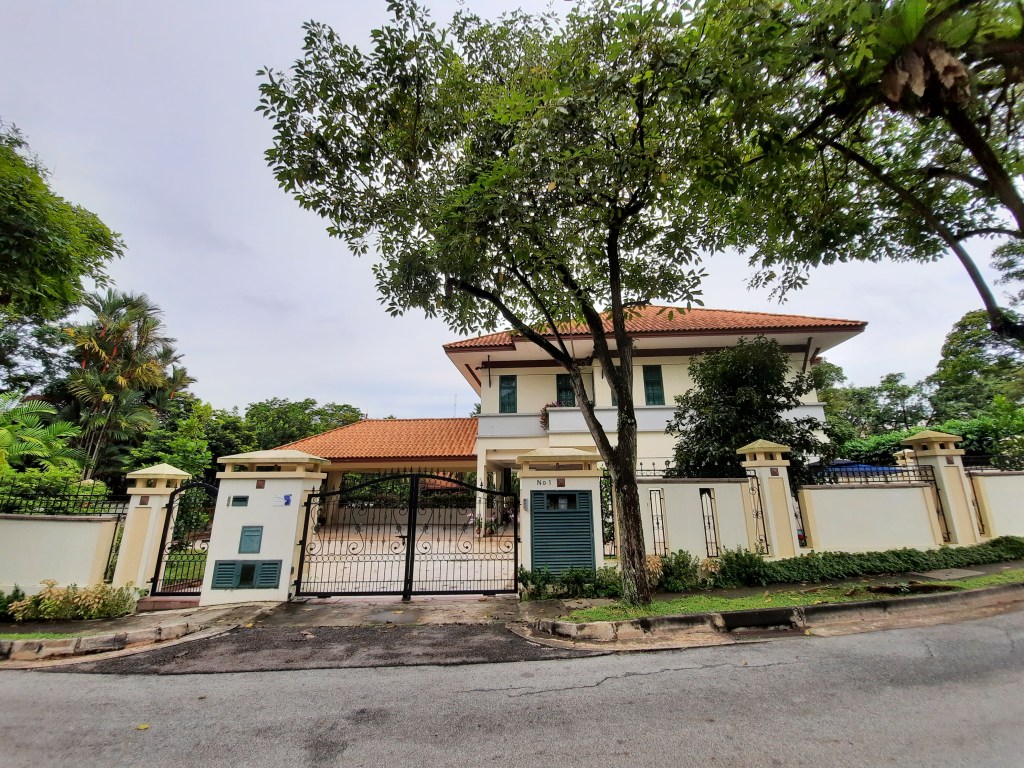
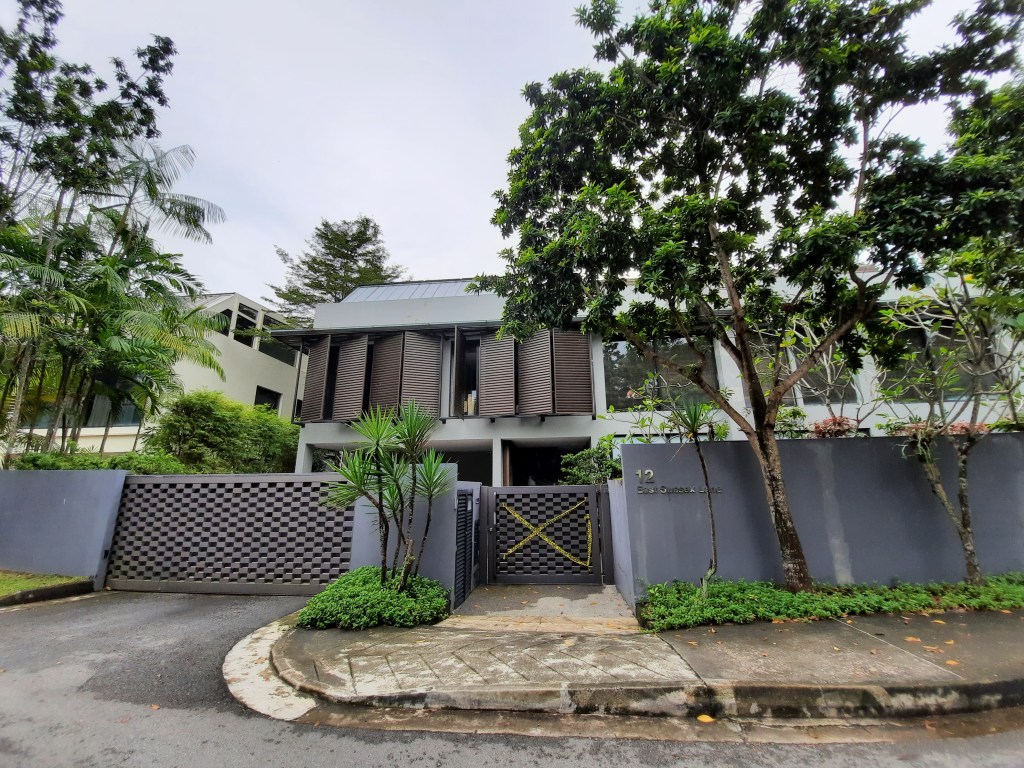
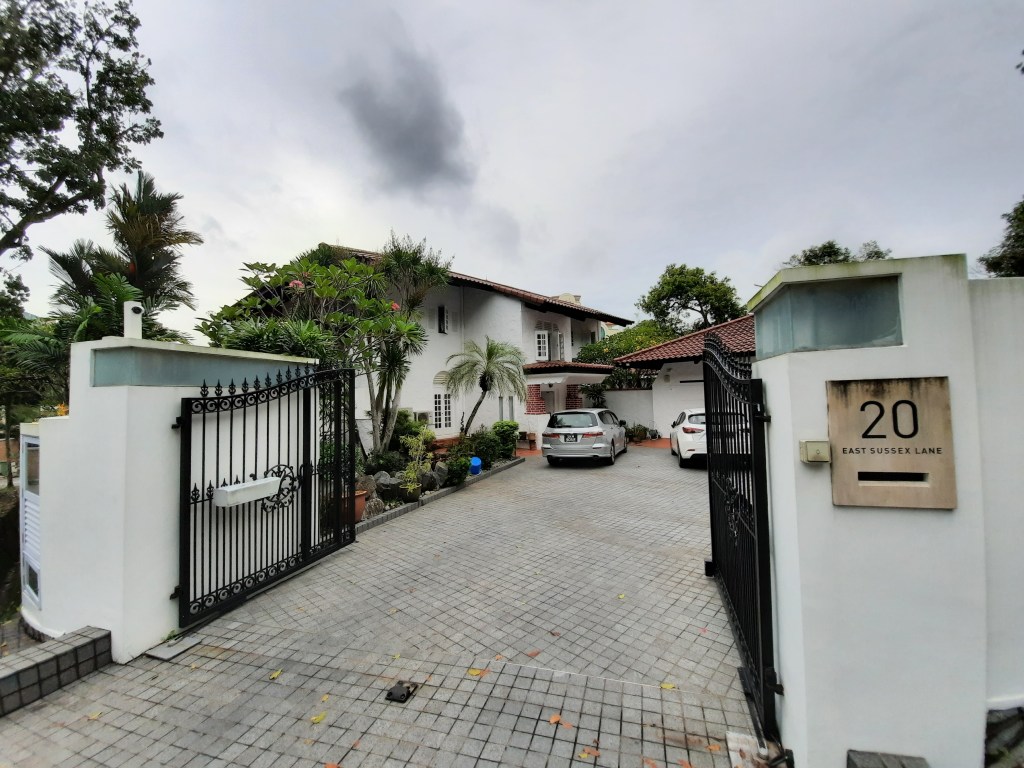
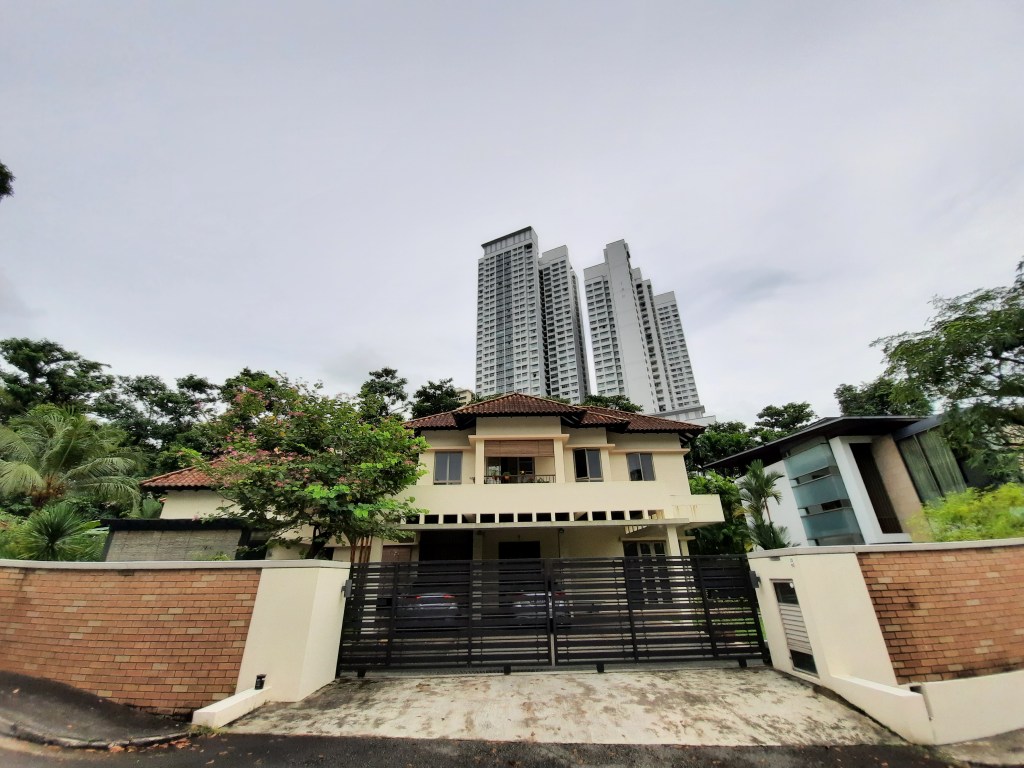
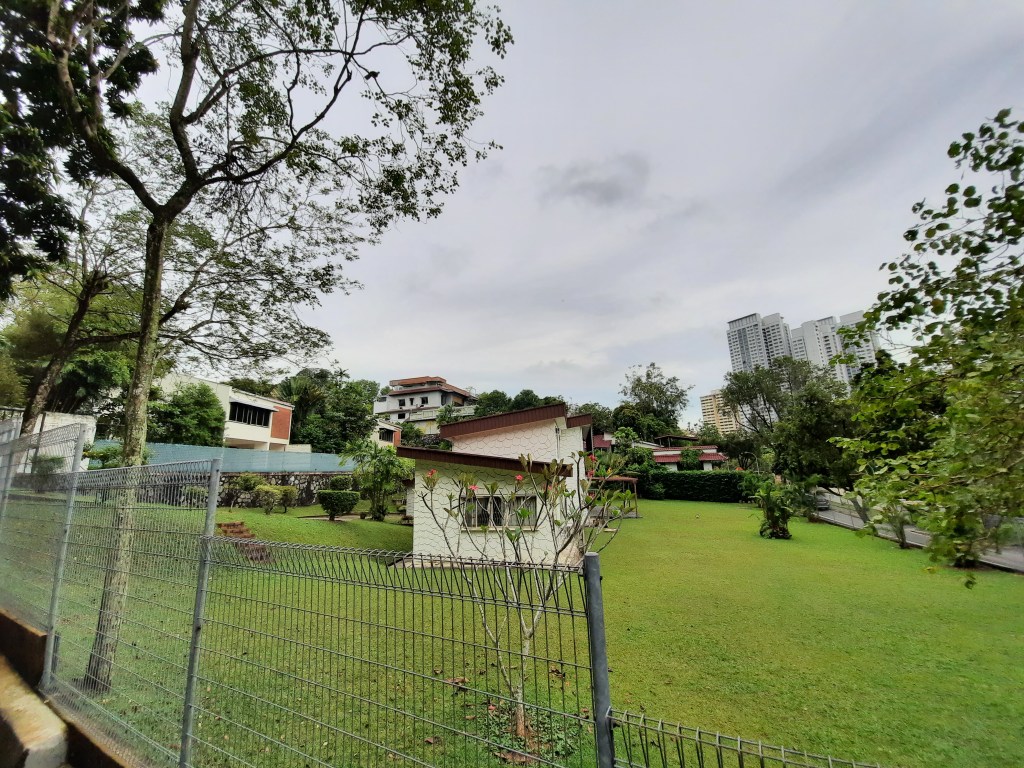
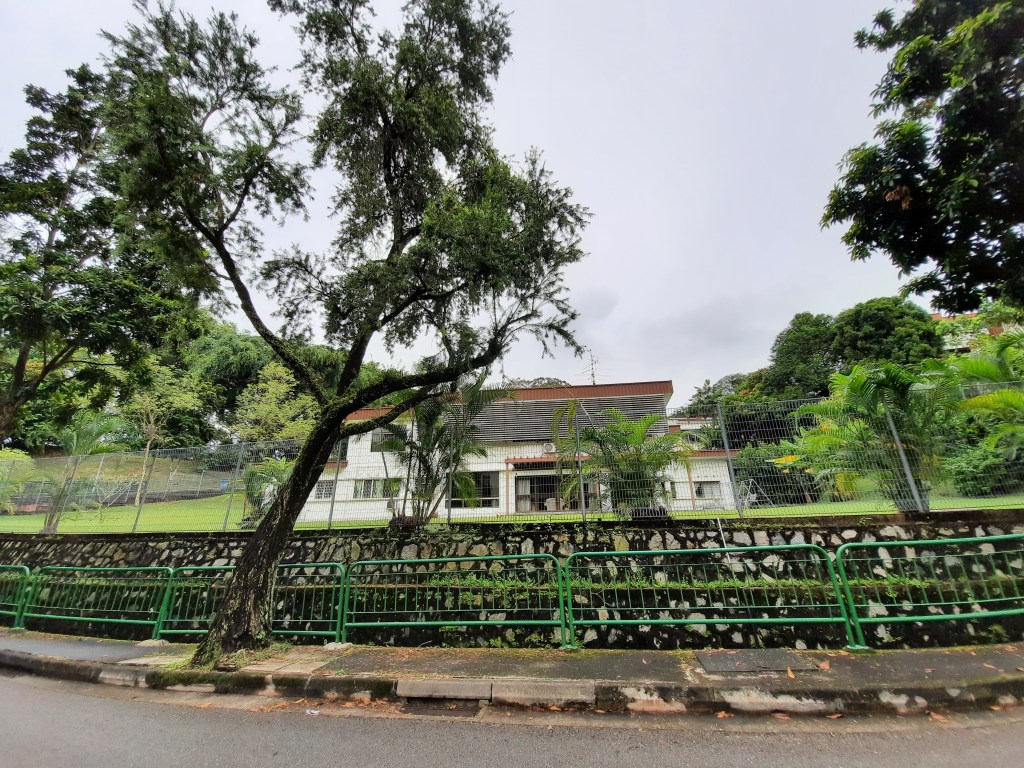
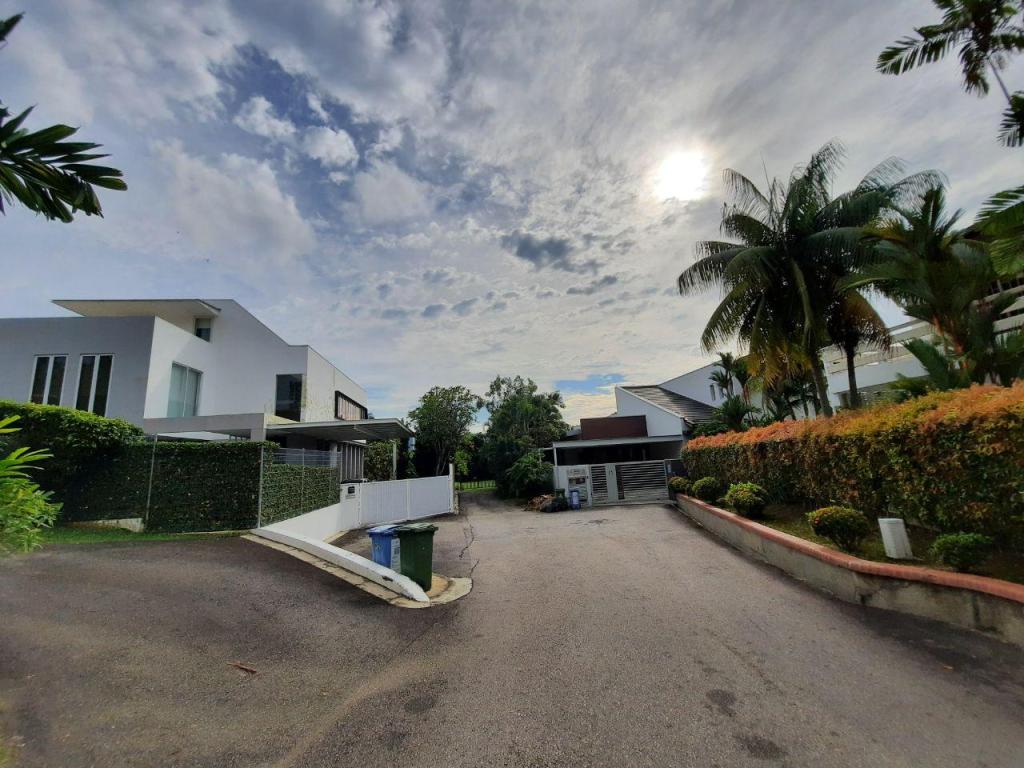
The Holland Rise GCBA comprises of just 2 no-through roads – Holland Rise and East Sussex Lane. While no through roads are usually hallmarks of exclusivity, its location just off Holland Road is both a boon and a bane.
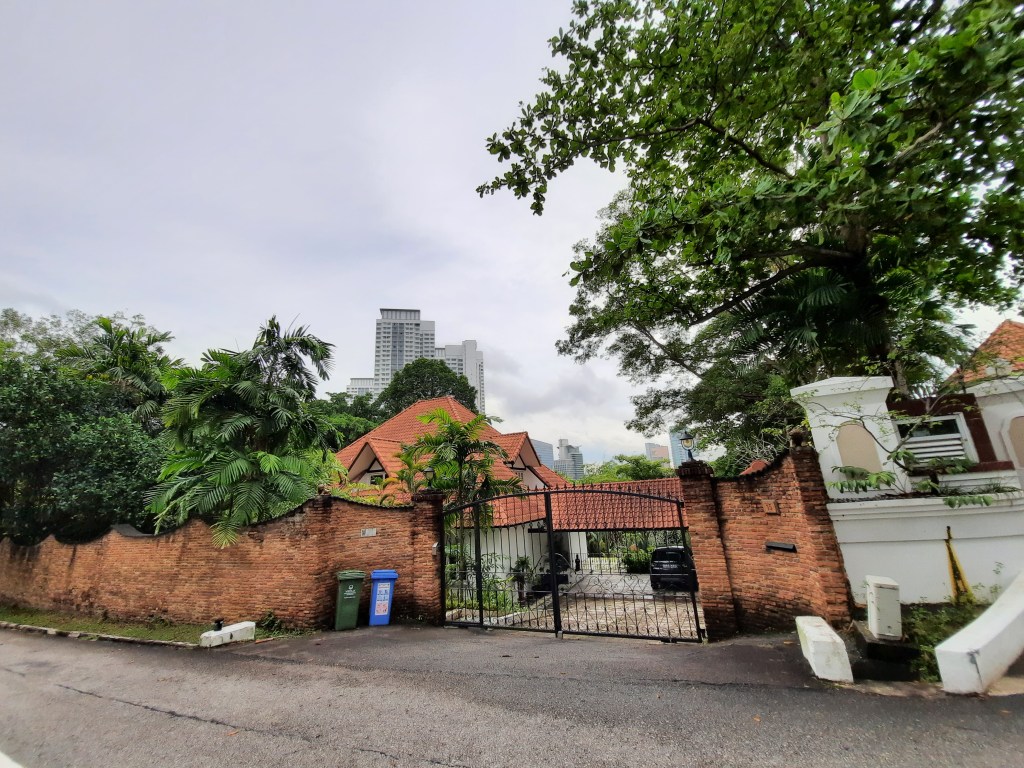
Boon because it’s the only GCBA on the same side of the road as Lor Mambong and Holland Village MRT and the closest home here is just a 7 min walk away. Bane because being off Holland Rd means pretty heavy traffic (and noise) at times. Geographically, it is also in really close proximity to the high rise HDB flats at Holland Dr and Ghim Moh. Would very much rather be staying in those flats overlooking these houses tbh.
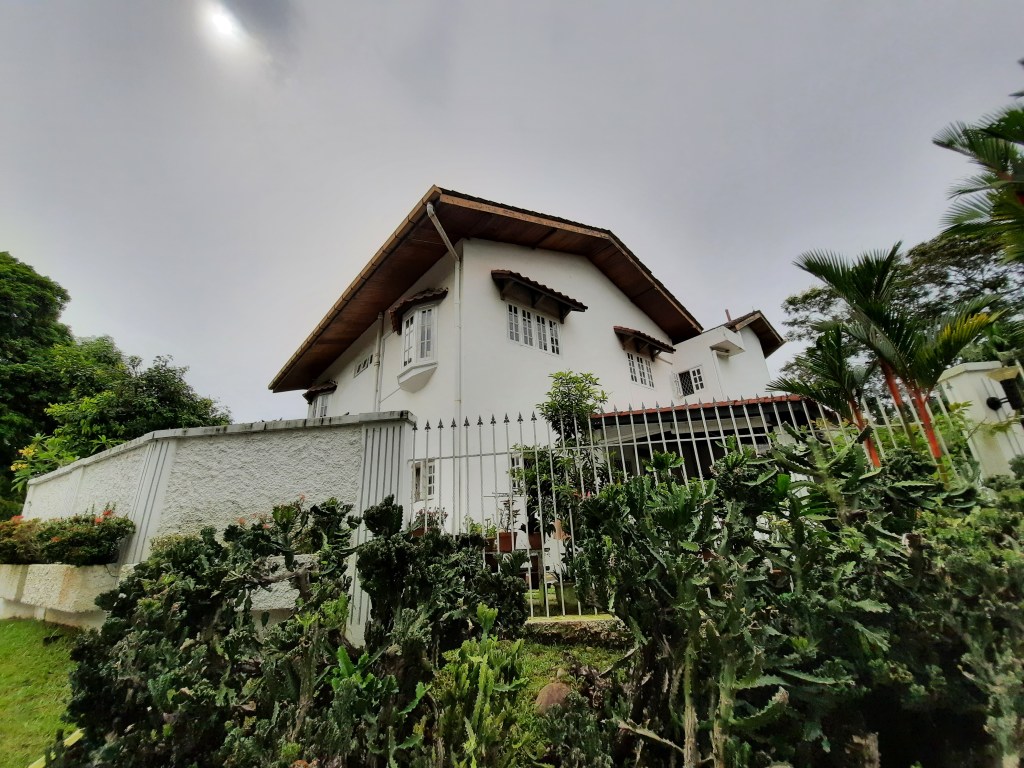
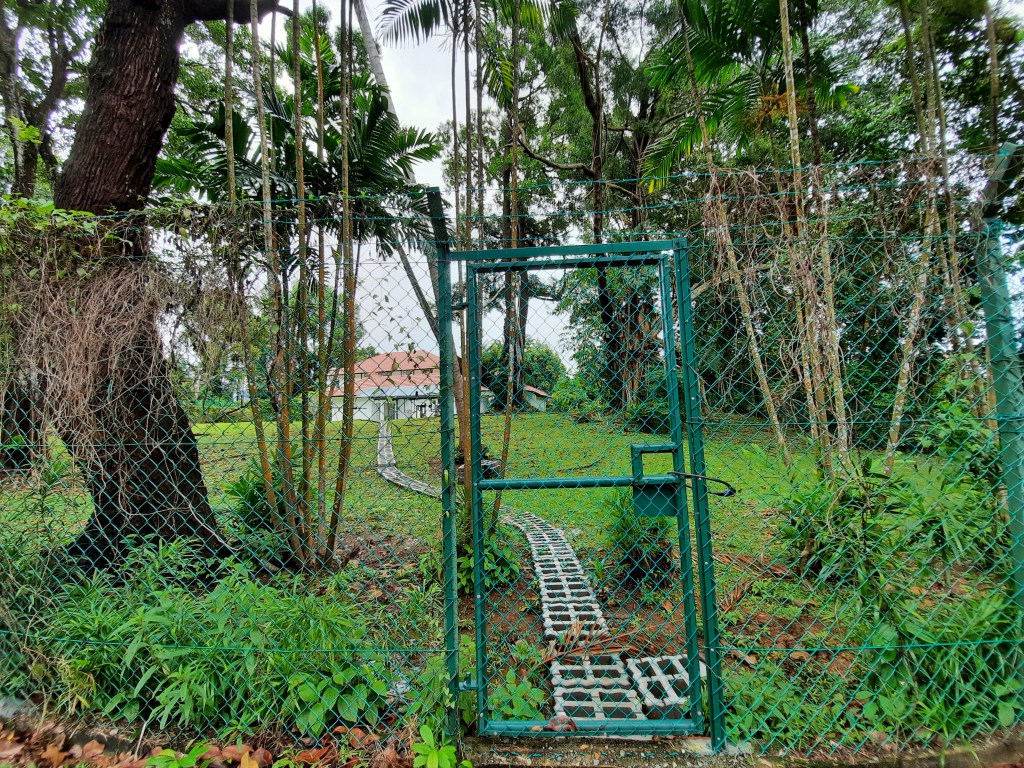
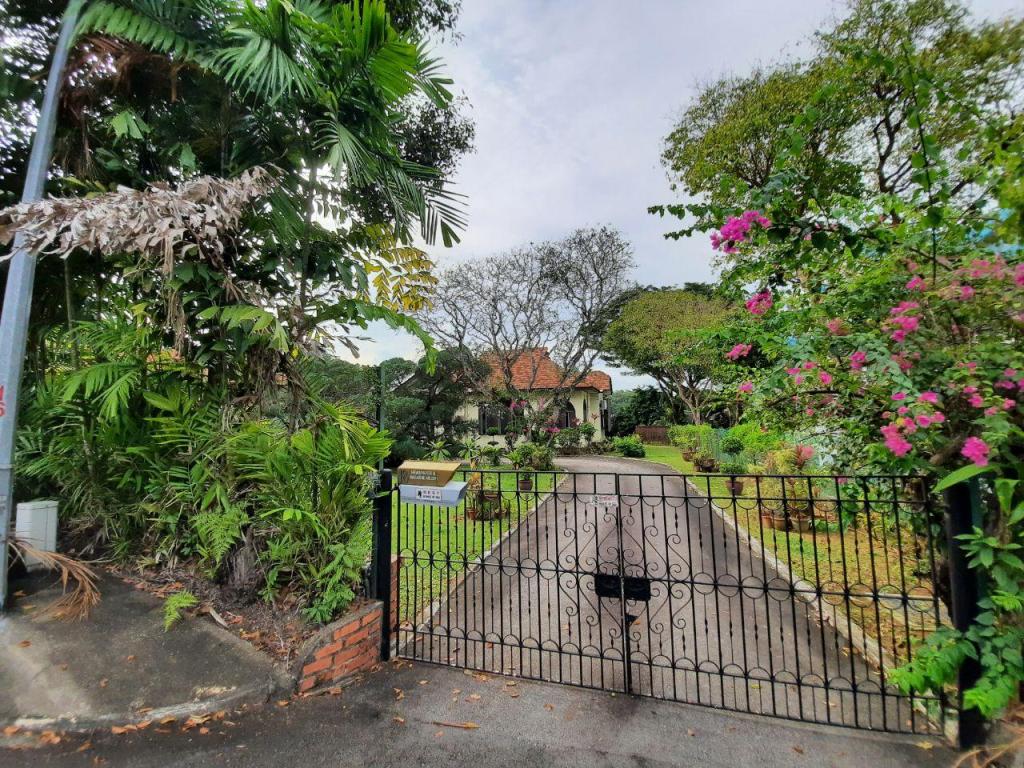
Some houses on this GCBA are still very much in their original condition, which is always a nice touch as they tend to be more spacious with more generous green spaces.
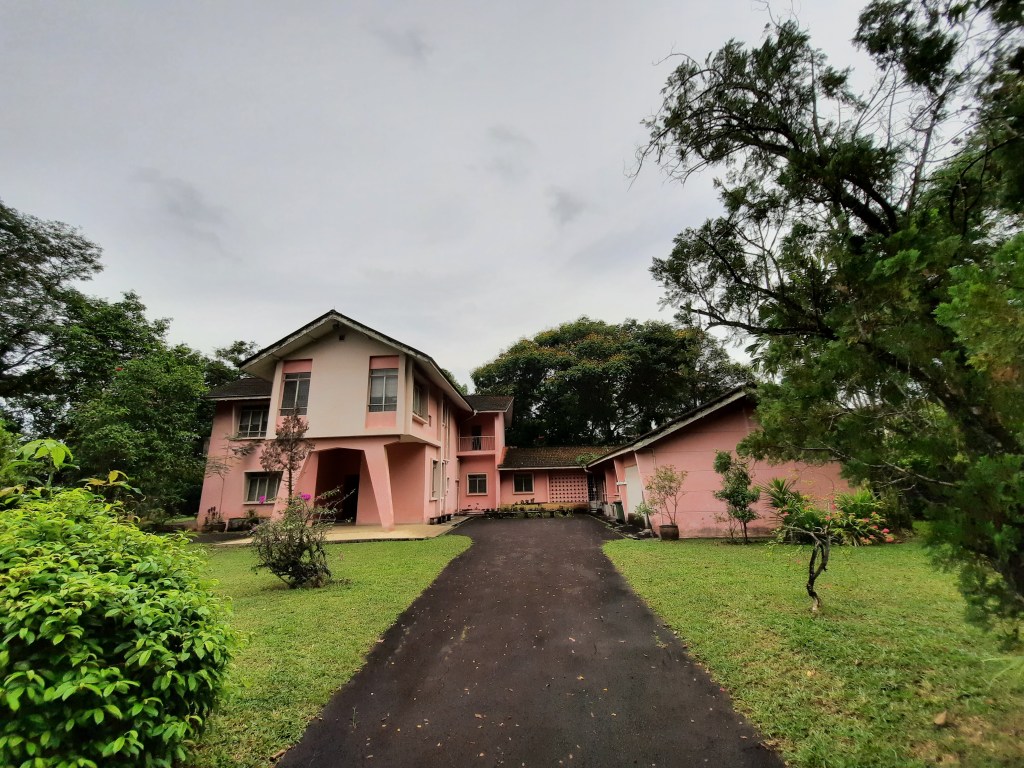
The Pink House is rumoured to be haunted and was put up for sale in 2015 for $41m for its 27,000+ sqft of land with no news if it was eventually sold. A more recent transaction in Dec 2019 involved the purchase of 36,0883 sqft house for $36.88m ($1,000 psf) by the scion of Far East Organisation, Singapore’s largest developer.
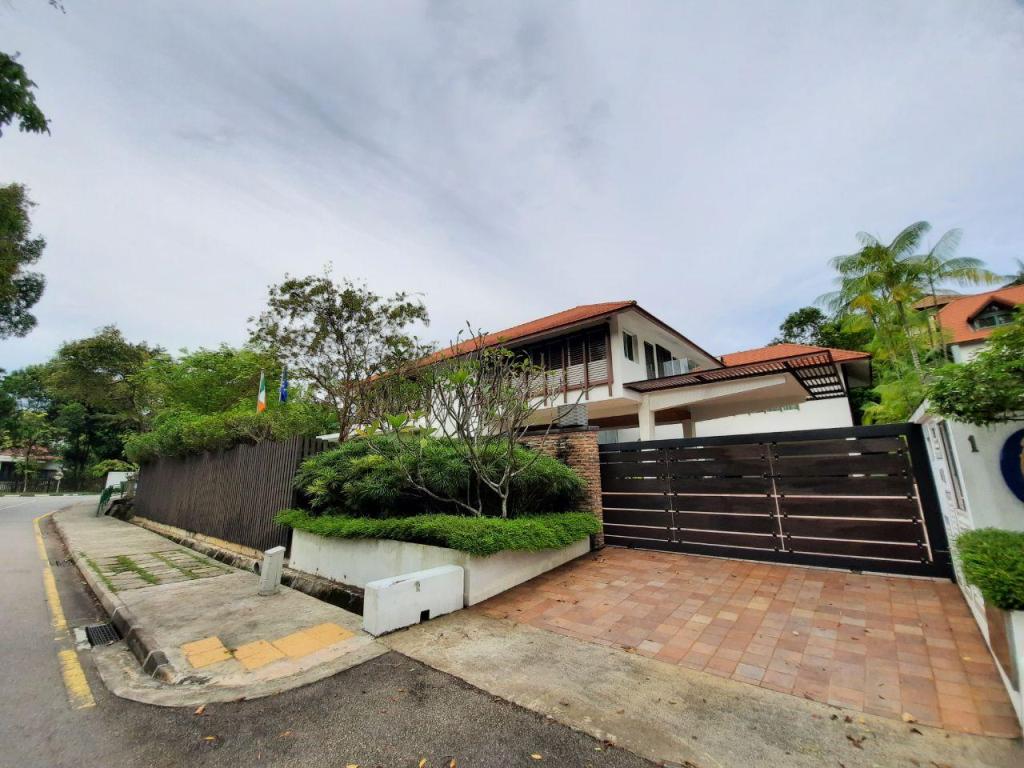
Siang Kuang Avenue has a special place in my family’s heart. Soon after Mum graduated from London in 1983, she found work at a fledging American data storage company. Originally from Sarawak, Malaysia, 13 Siang Kuang Avenue, a single storey detached house, was her 1st home in Singapore as it was near her workplace then. It is now leased to Cherie Hearts Student Care and looks to be the only remaining single storey bungalow along the row, retaining its original facade from the 1980s. Mum went on to work for the same American firm for 31 years and it has since become one of the world’s largest hard disk makers.
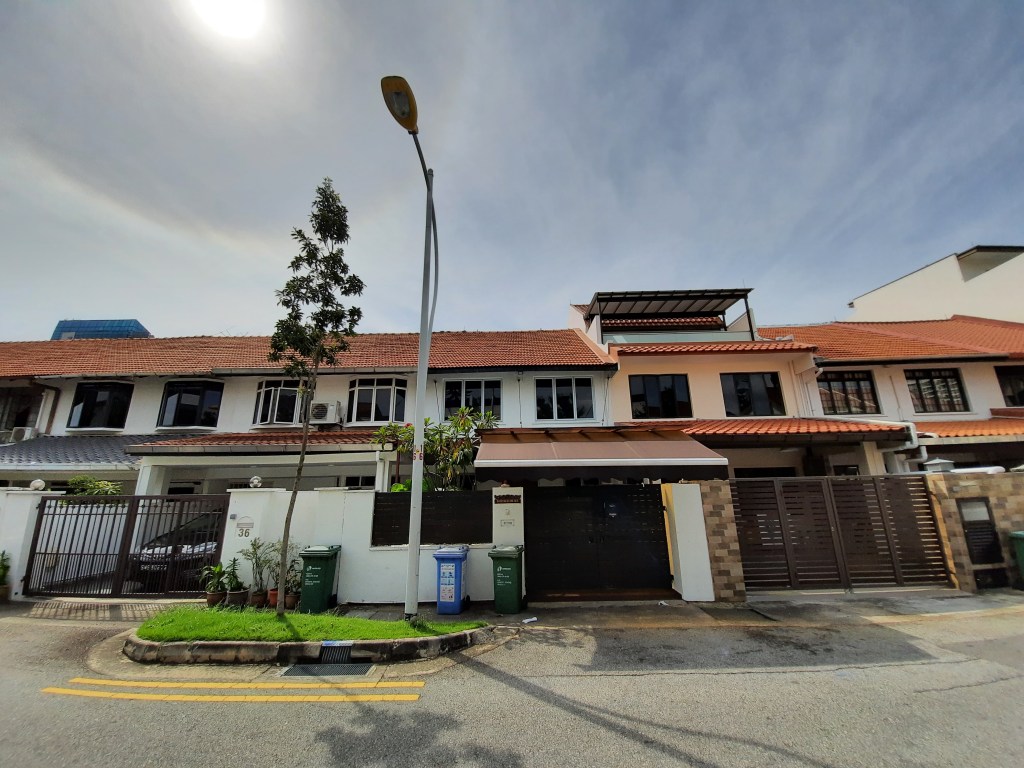
Siang Kuang Avenue also marked my parents’ first property offer, at $460k for 36 Siang Kuang Avenue in 1990, a small sub-1500 sqft terrace house located just across from 13 Siang Kuang Avenue where they lived after getting married. Just like many other parts of Macpherson, Siang Kuang Avenue comprises of most small terrace houses in their original condition as there really isn’t much build up potential given the plot sizes here.
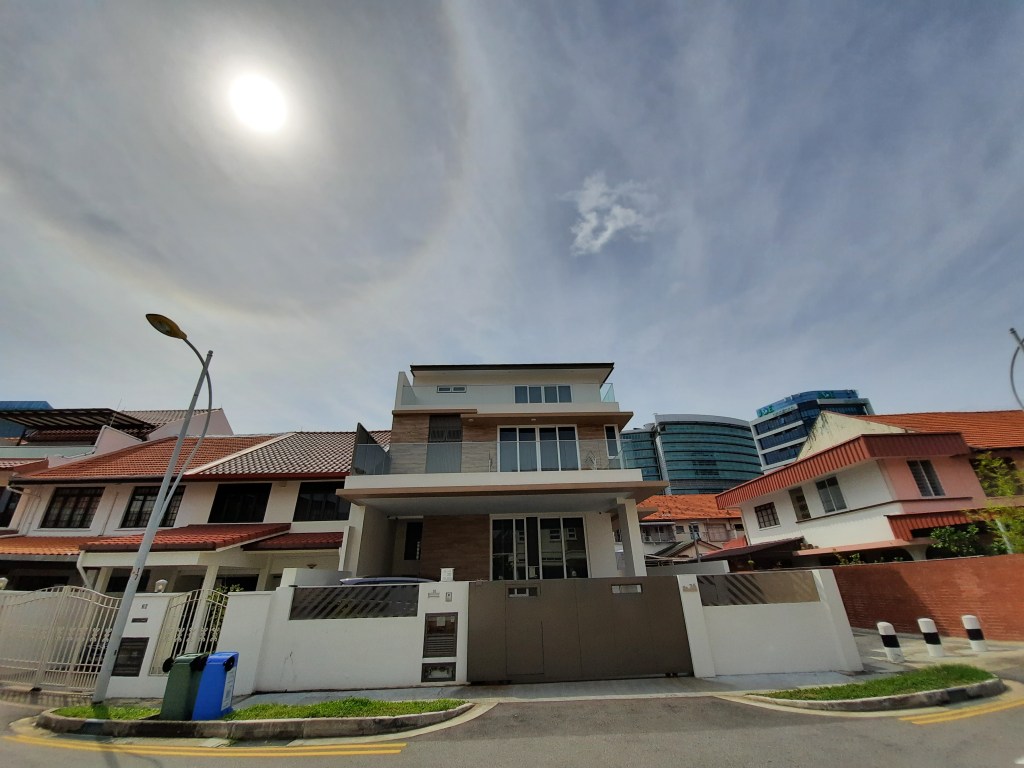
Surprisingly, there are a couple of corner terrace houses which are pretty big. Most of the original detached houses have now been subdivided into Semi-Ds instead.
The location of The Venue Residences used to house a wet market and hawker centre, which my parents frequented when they were residing here.
Located a short walk from Potong Pasir MRT and just round the corner from the popular River South (Hoe Nam) Prawn Noodles, Siang Kuang Ave was named after Tan Siang Kuang, a prominent Teochew businessman and the 1st Chairman of Overseas Union Bank. The neighbouring roads are also named after his family members – Puay Hee, his son and Siak Kew, his brother. Siang Kuang’s low profile family was in the news in 2018, having sold their palatial 66,452sqft home at 14/14A Nassim Rd for a whopping $218m ($2,744psf) to Stanley Ho’s Shun Tak.
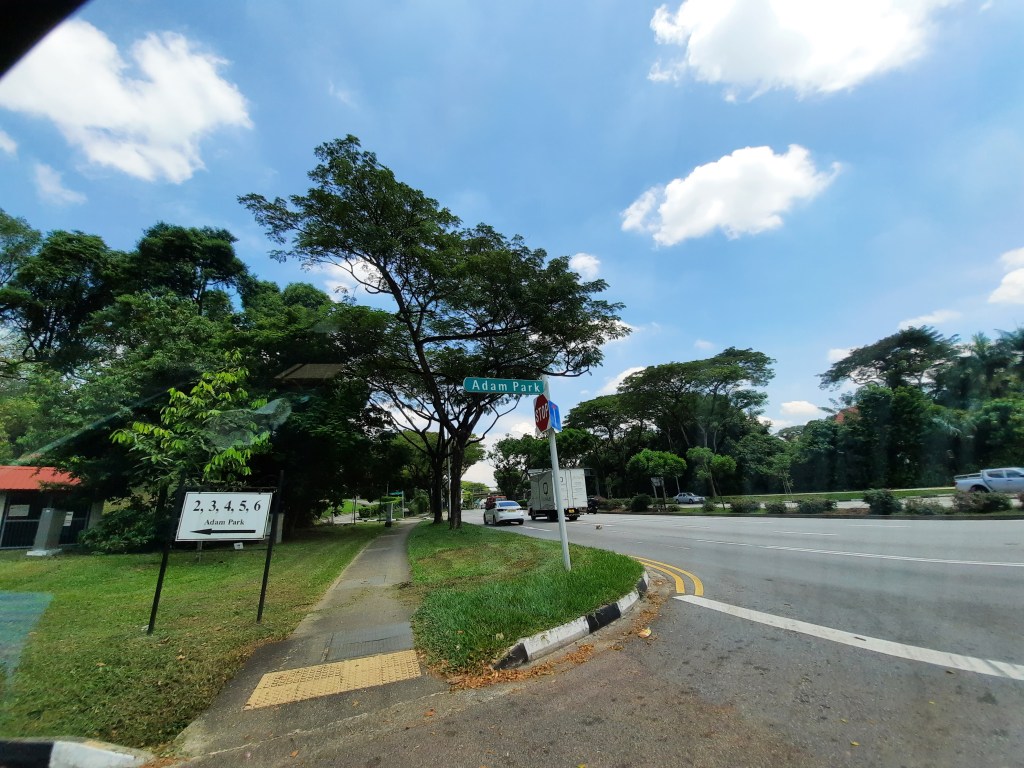
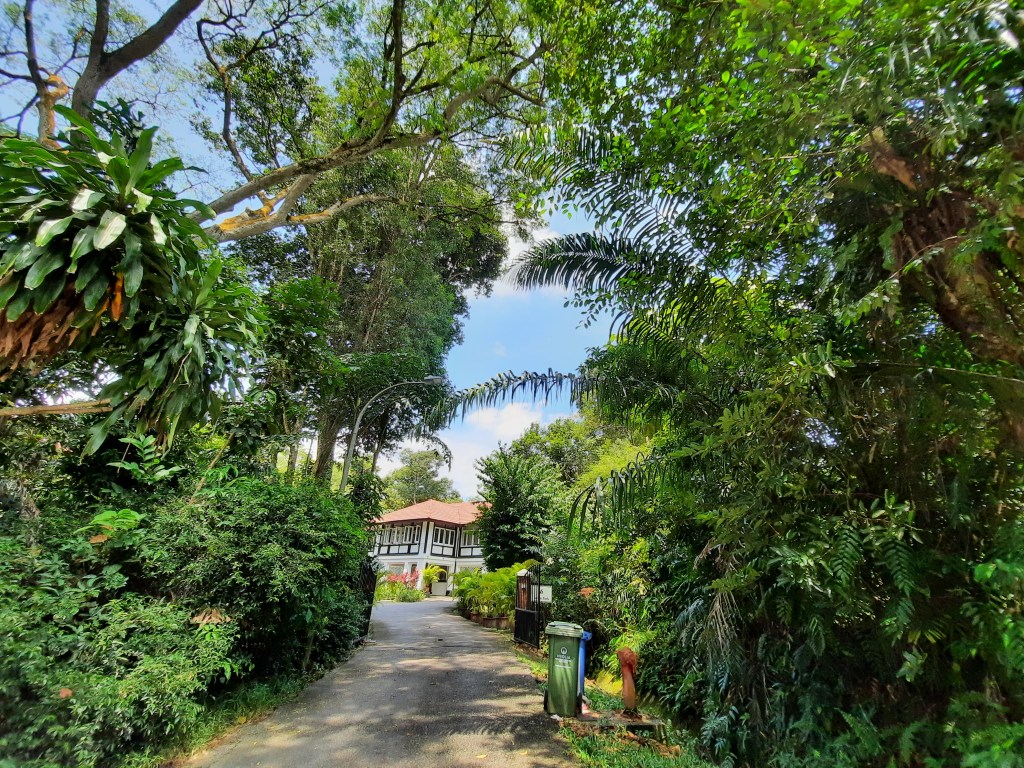
Originally built in the 1920s, these 19 B&W bungalows were divided into 3 distinct types to cater to British officers of varying seniority. The most opulent of these had tennis courts, garages and outhouses. Located near the Botanic Gardens, Adam Park (and Rd) were named after Frank Adam, the former Managing Director of Straits Trading Company.
However, Adam Park is no ordinary conservation zone. These homes have a dark and eerie past as well. 7 Adam Park, which now houses the Surbana Jurong Academy, used to be the HQ of 1st Battalion Cambridgeshire Regiment during WWII in 1942. A fierce battle between the Brits and Japs ensued, resulting in heavy casualties, earning an area here the nickname Hellfire Corner. It was to be one of the last battles before the Surrender.
Following the British’s surrender, these Adam Park bungalows were used to house 3000 Brit and Aussie POWs and many were forced to work on the Syonan Jinja shrine at Macritchie Reservoir. Nonetheless, there was a small chapel, hospital and canteen for the POWs here at Adam Park.
The area’s rich archaeological significance gave rise to The Adam Park Project (TAPP), which has uncovered some 1400 artefacts to date. These B&W houses now belong to the State and are tenanted to many expat families.
Credits to Remember Singapore and Roots.sg for their comprehensive content on Adam Park, which I have adapted for this post.
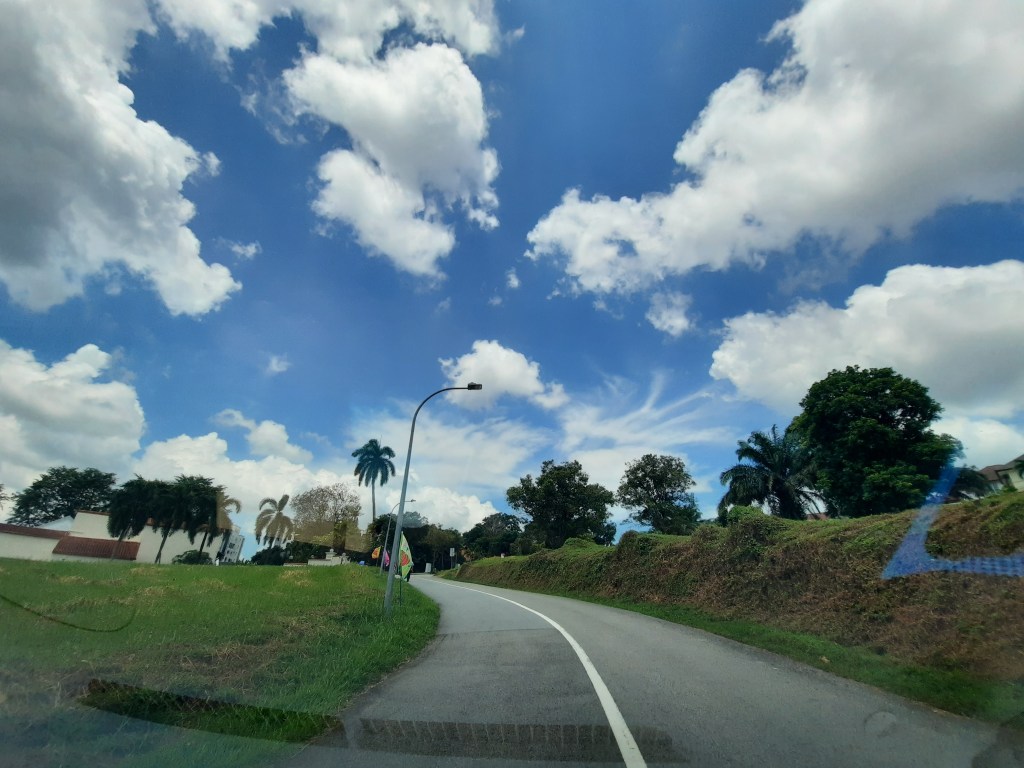
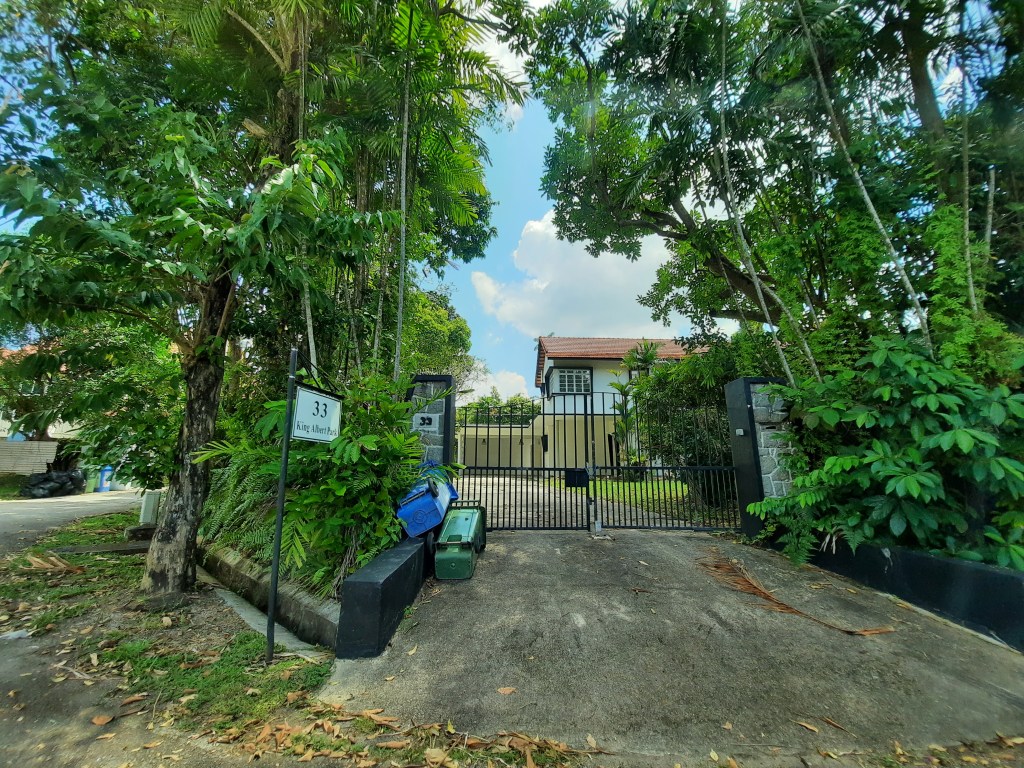
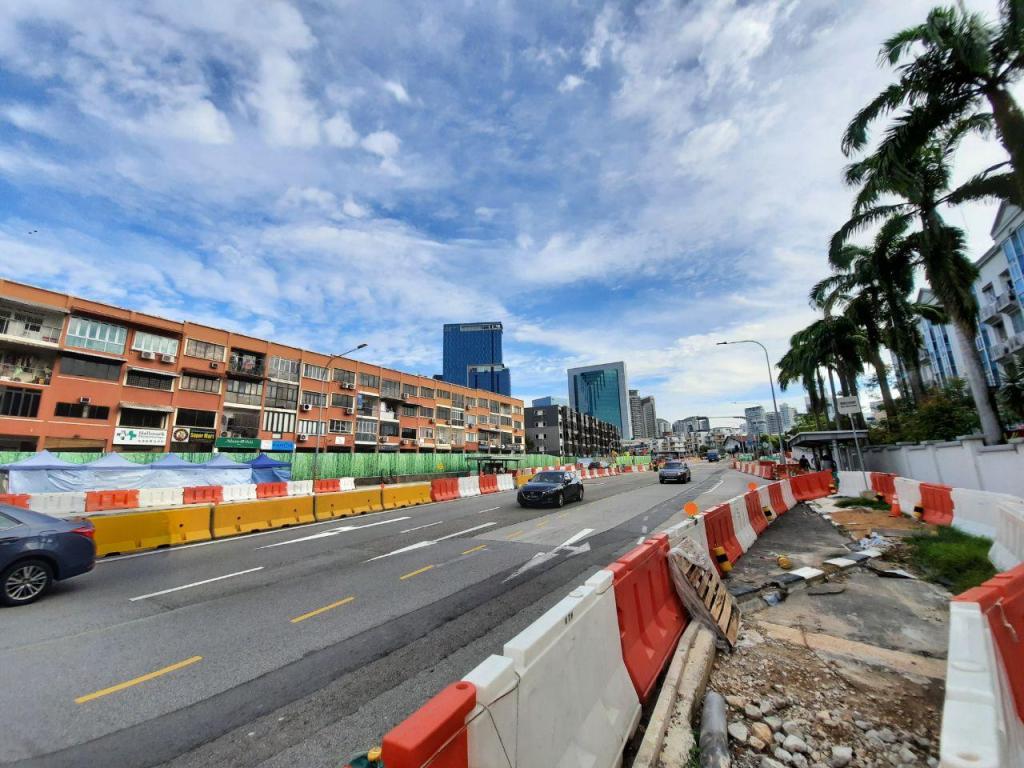
This GCBA was named after King Albert I of Belgium and developed by a Belgian bank in 1939. It adjoins the Old Bukit Timah Railway Station (imagine how noisy it was when trains used to ply this route from Malaysia daily) and also borders Bukit Timah / Dunearn Rd and Clementi Rd. The former leads you to King Albert Park MRT and MGS while the latter will take you to Ngee Ann Poly and SUSS in a couple of minutes.
There are still large swathes of green (undeveloped) land nearby, which represent lots of redevelopment potential for the area. Add that to the upcoming Beauty World transformation and there seems to be a decent upside potential for this place!
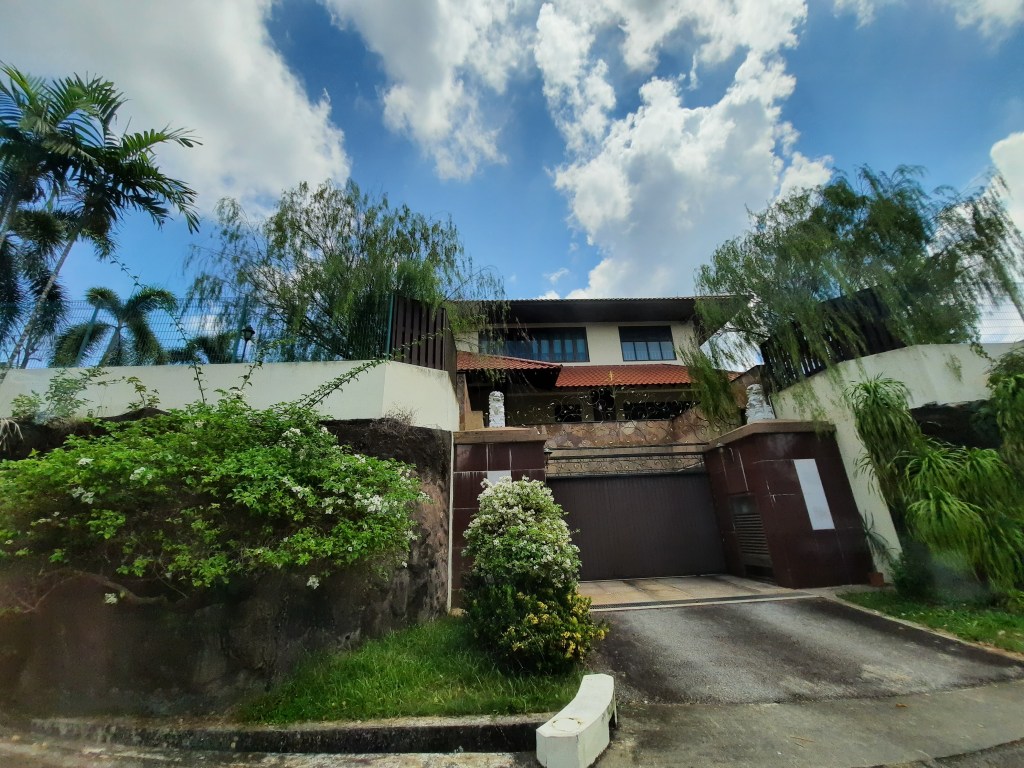
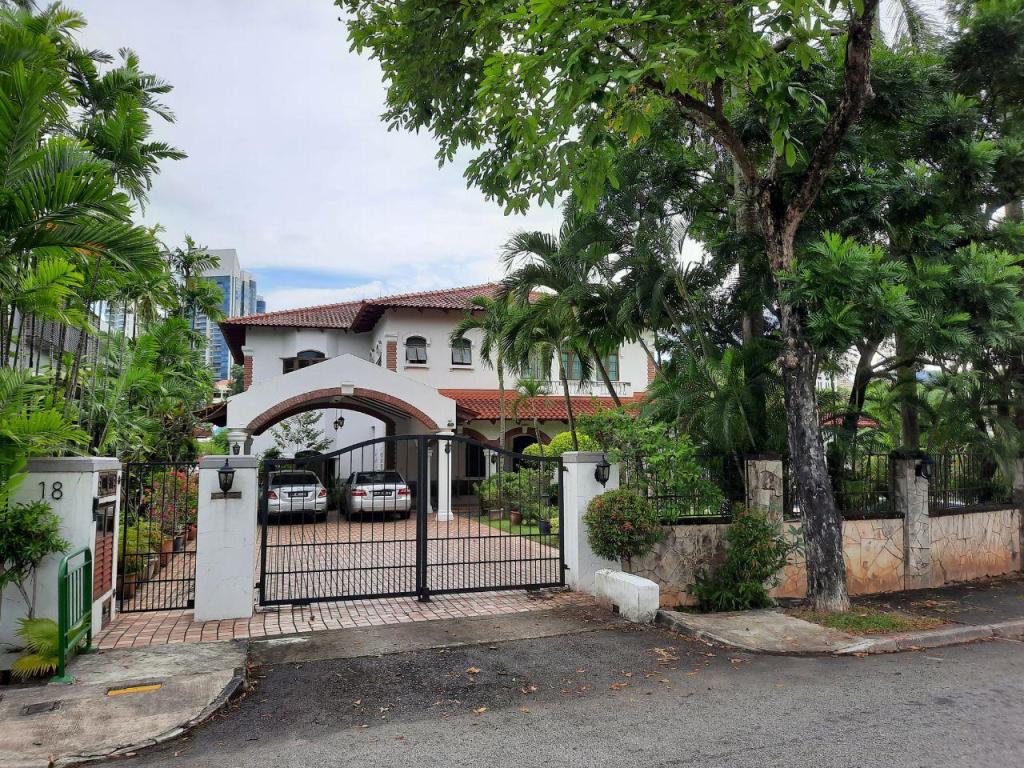
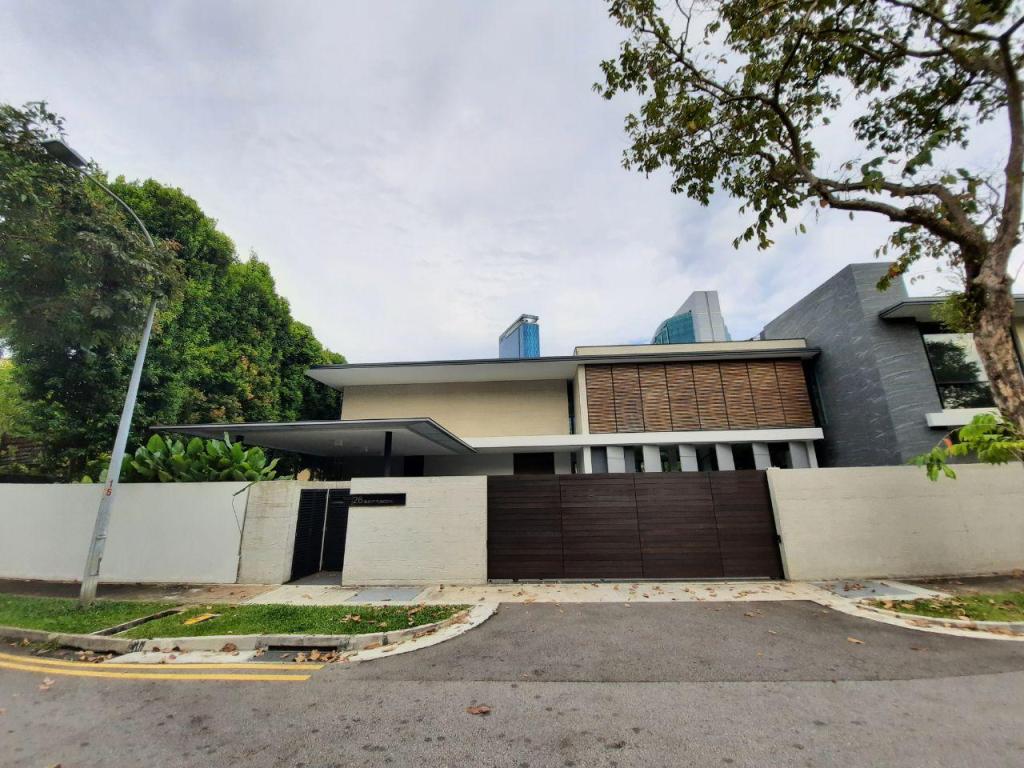
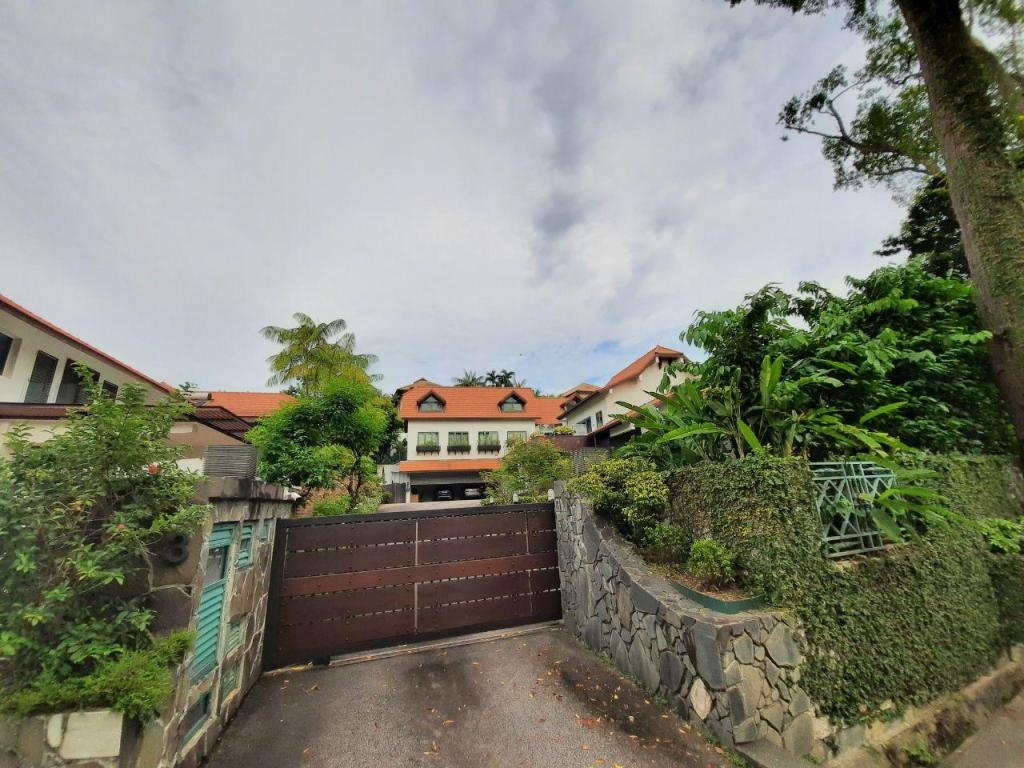
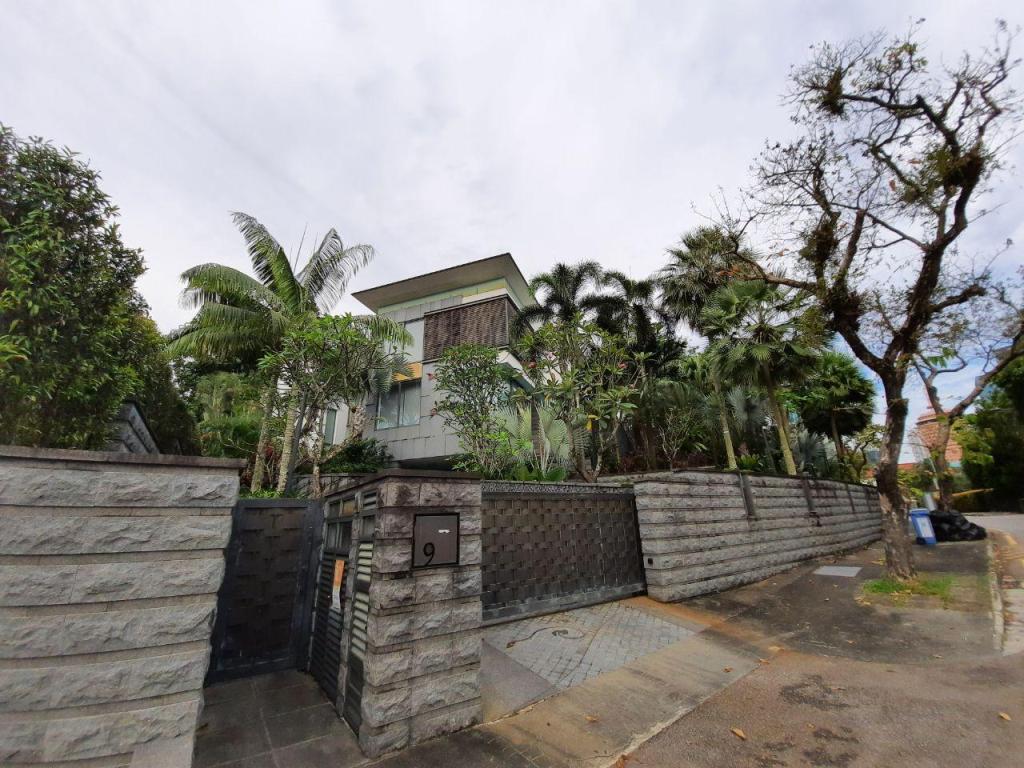
Pictured here are several prominent GCBs in this area. 26 KAP, a 16,750sqft home, was sold by SC Global’s Simon Cheong for $25mil ($1,493psf) back in 2016.
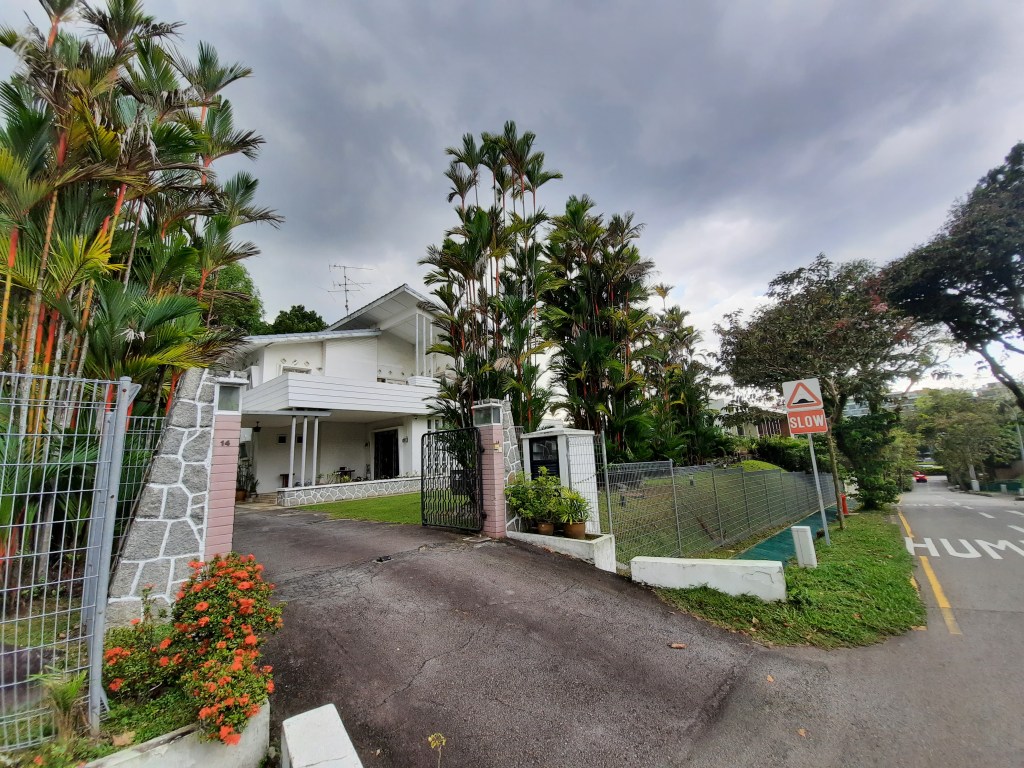
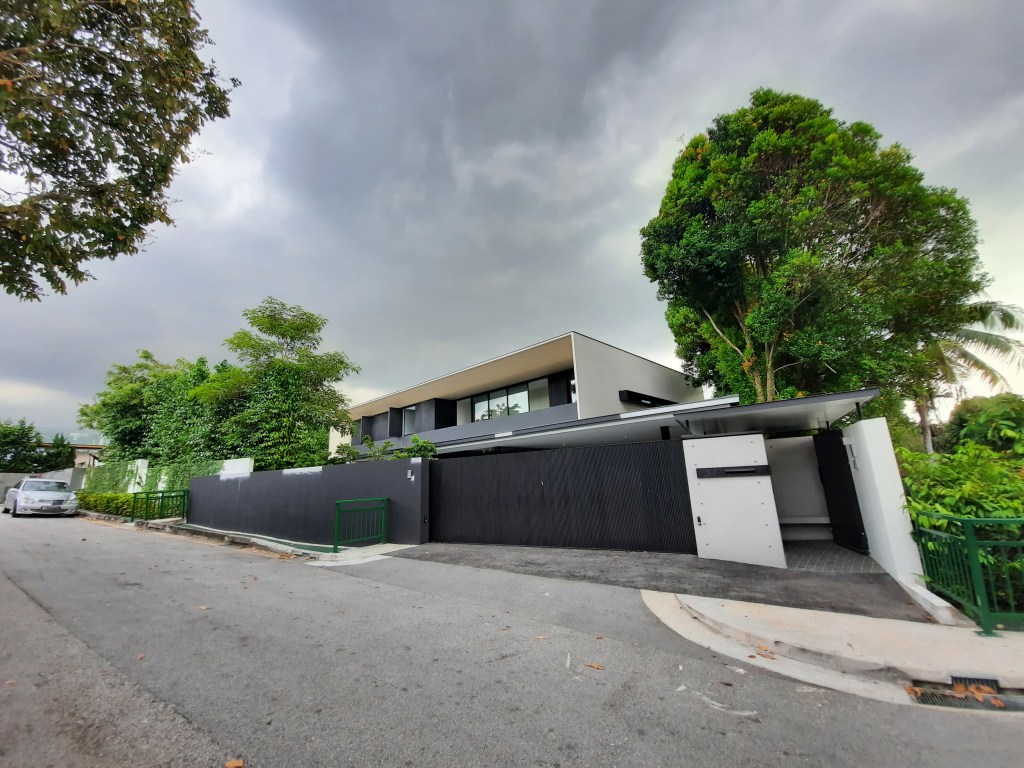
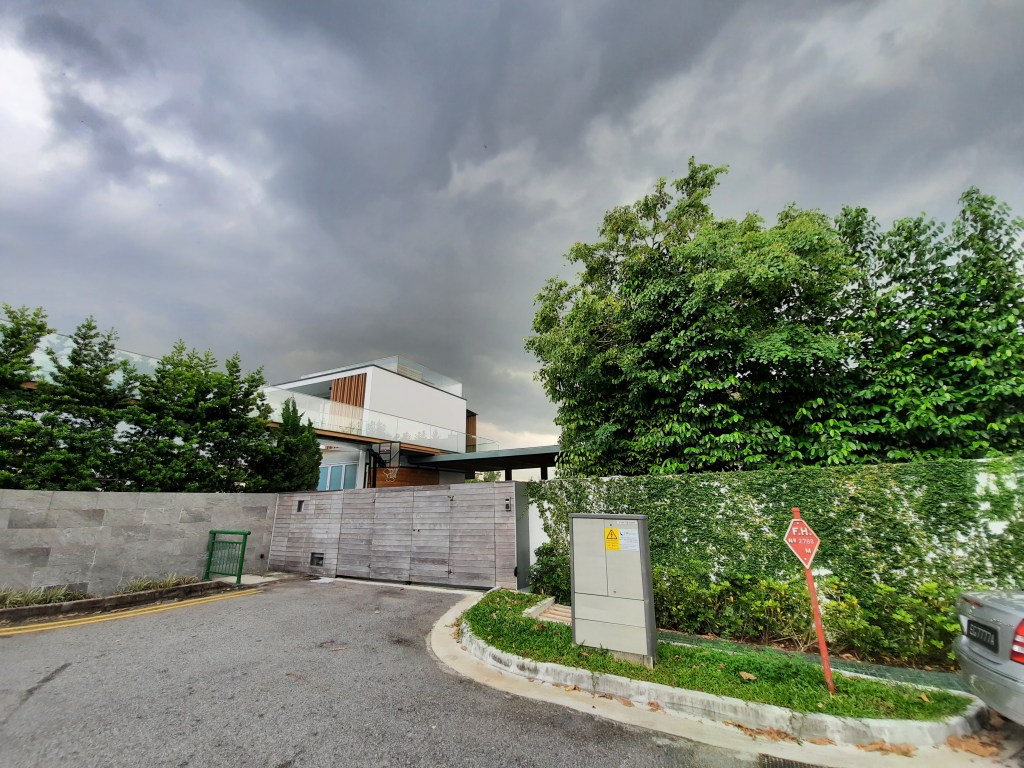
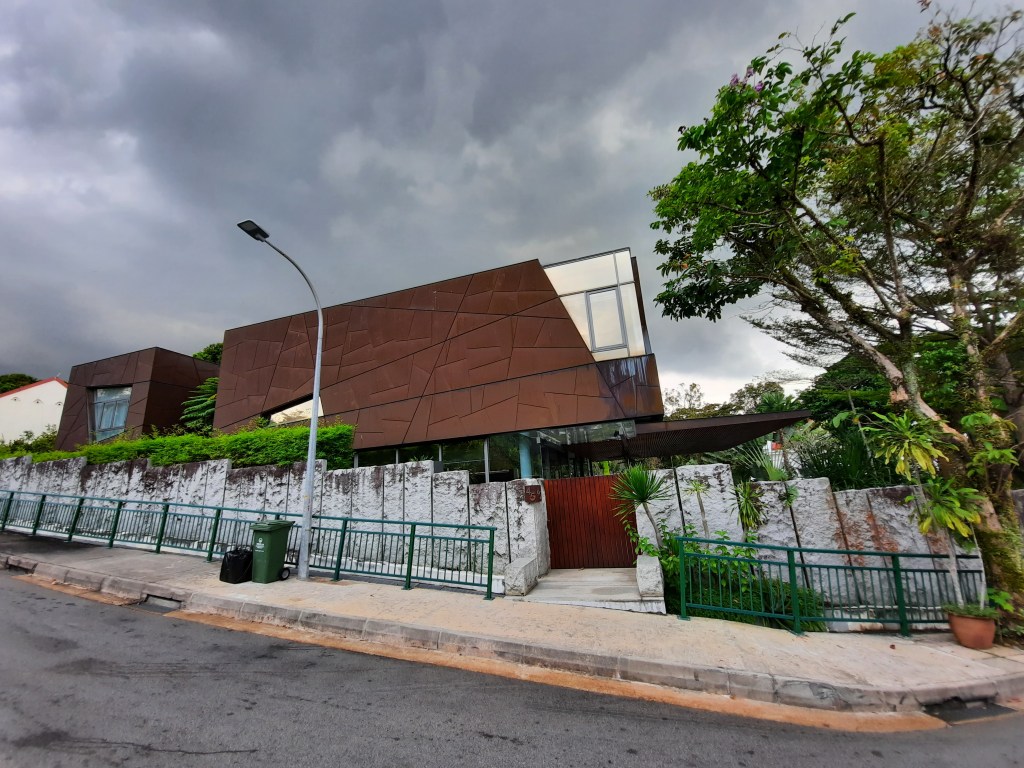
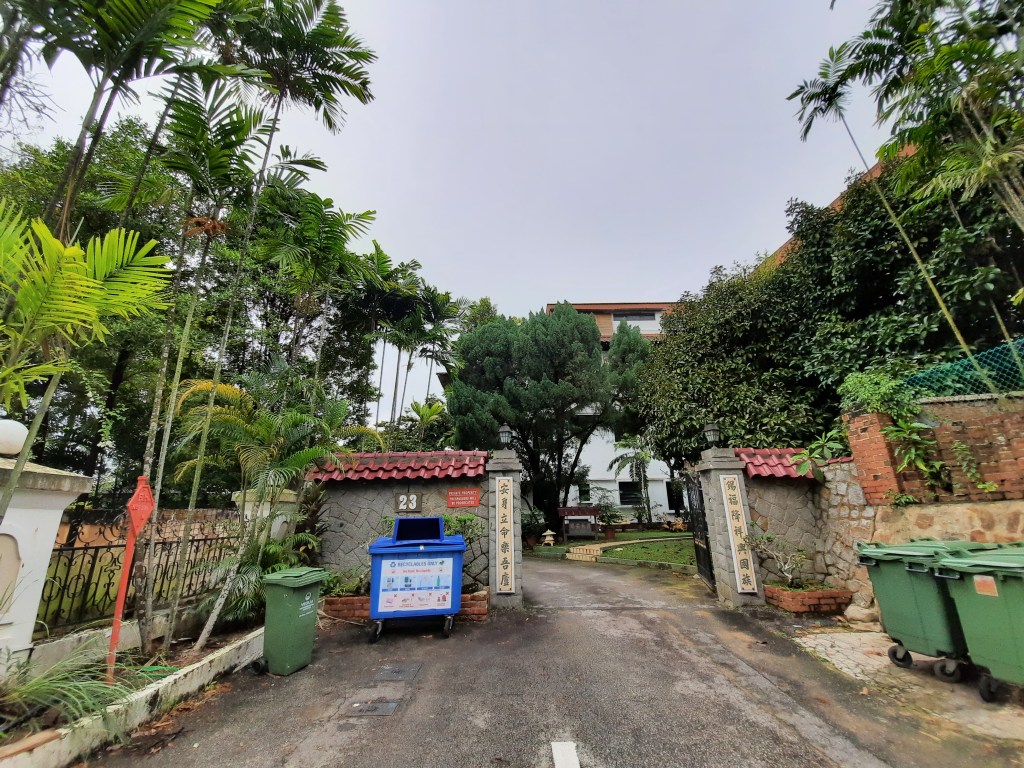
This doesn’t look like much but it was originally 70,820 sqft of land owned by K16 Services. Yip Yuen Hong of ipli Architects designed 4 distinct GCBs from that plot – Concrete (23KAP) Copper (19KAP), Black Aluminium (18KAP) & Brass (18A KAP) and all are currently tenanted.
Famous owners in the KAP GCBA include Far East Organisation, who purchased 18 KAP, a colossal 39,228 sqft home in Mar 2017 for $43.8mil ($1,117psf). FEO somehow tends to snag pretty good deals (and sell them for a fortune after). Robert Kwan, who brought McDonald’s to Singapore and Dr Julian Theng of Eagle Eye Centre (who has a tennis court at home!) also live in this GCBA.
In Sept 2020, a 7,945 sqft bungalow was listed at $10.8mil ($1,359 psf). As this plot is below the URA requirement of 1,400 sqm, it is not considered a GCB despite being located in a GCBA. It was orignally built in 1960.
Credits to Robert Powell for the history of this GCB estate.
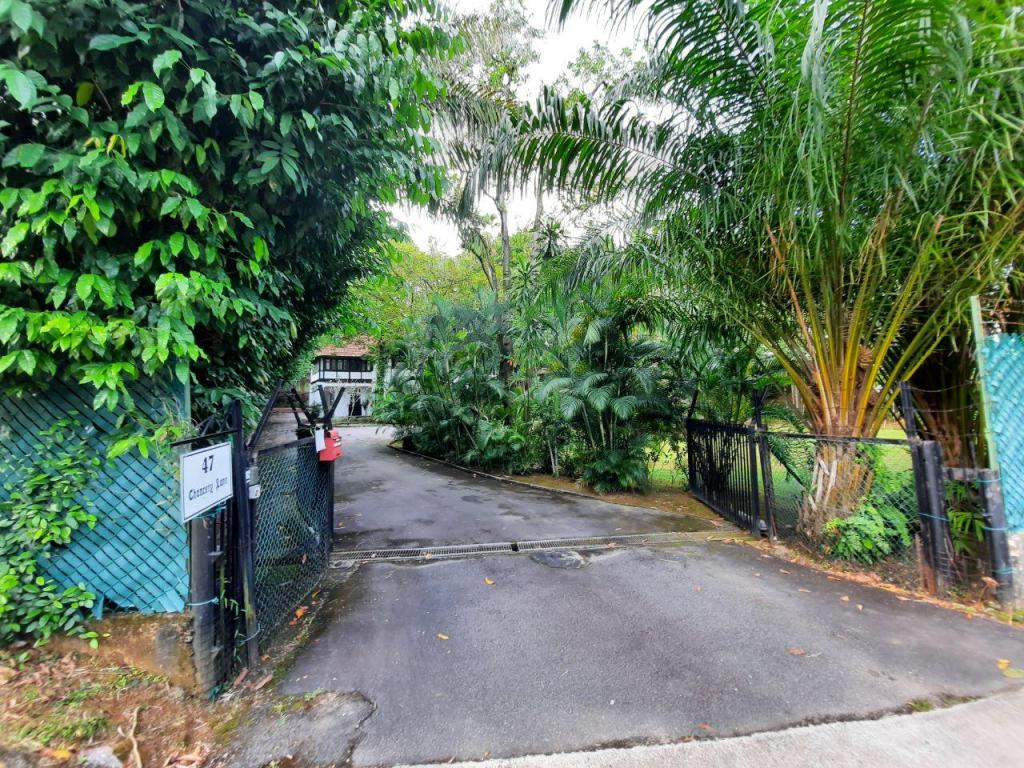
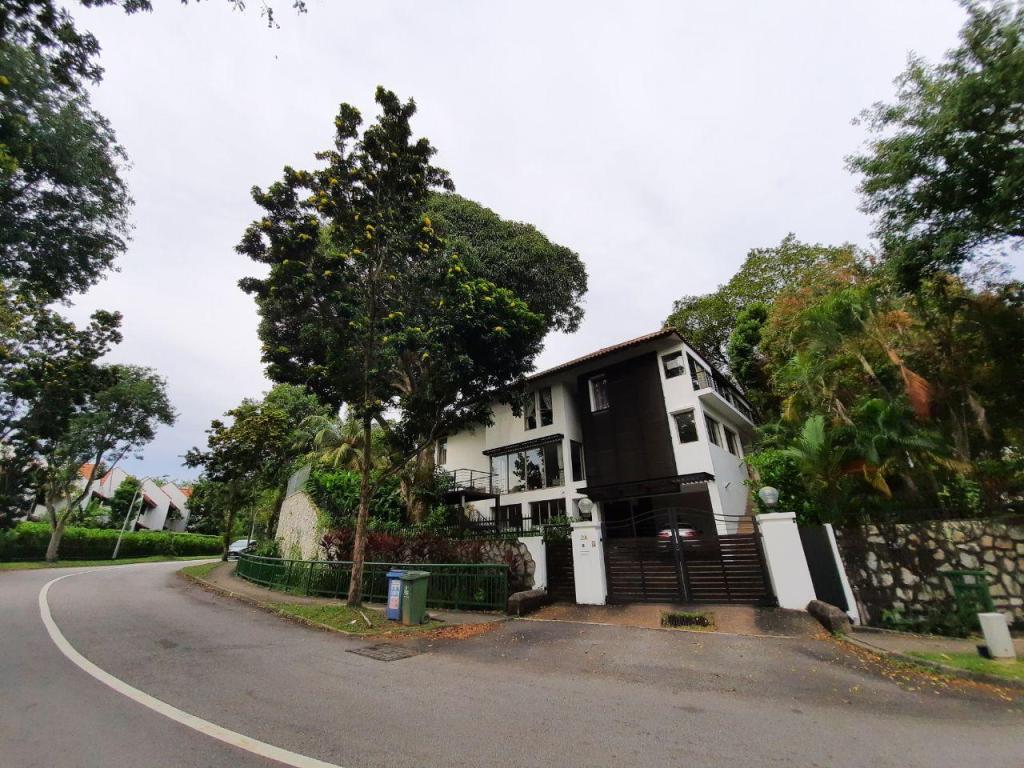
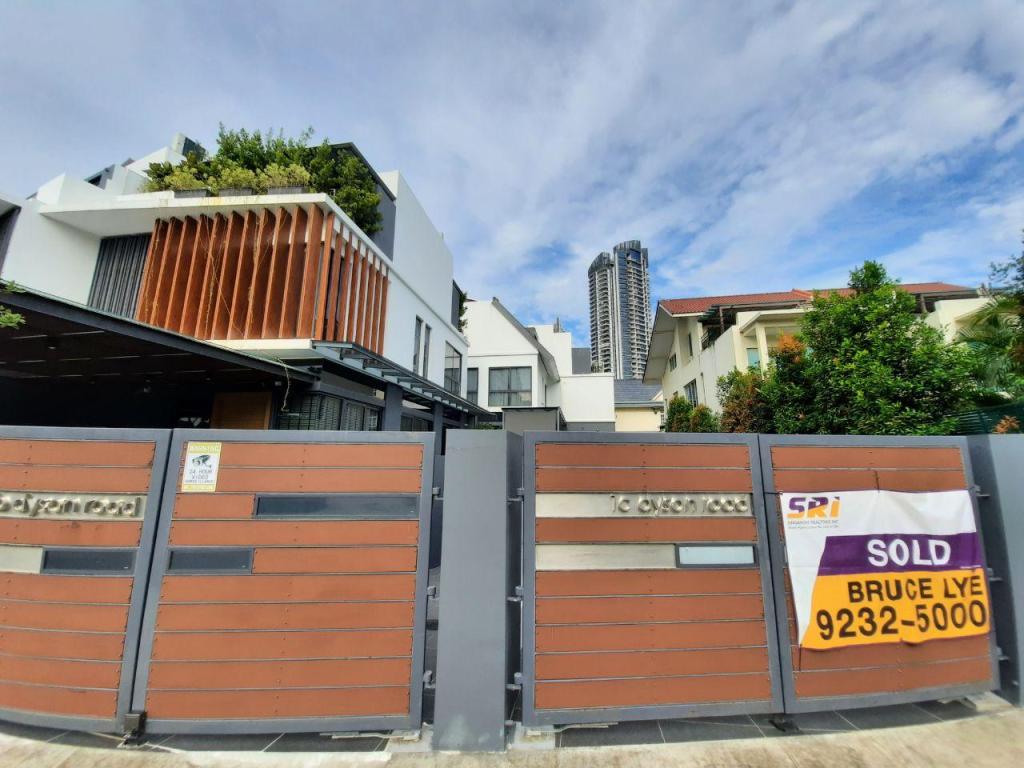
Translated into English, Bukit Tunggal stands for ‘singular hill’ because of its distinctive topographical feature. Syed Omar Alsagoff, a prominent Muslim leader, lived on the hill and his sons developed the hill for senior govt officials in the 1920s, following his death. Besides Bukit Tunggal Rd, this GCBA includes the Chancery area, Dyson Rd and Mount Rosie Rd.
It is estimated that there are only ~60 GCBs in this area, as many are smaller landed properties or cluster housing. Location wise, this GCBA is close to many top schools such as ACS, SCGS and SJI and the Novena malls, making it a pretty unique choice in terms of proximity to amenities.
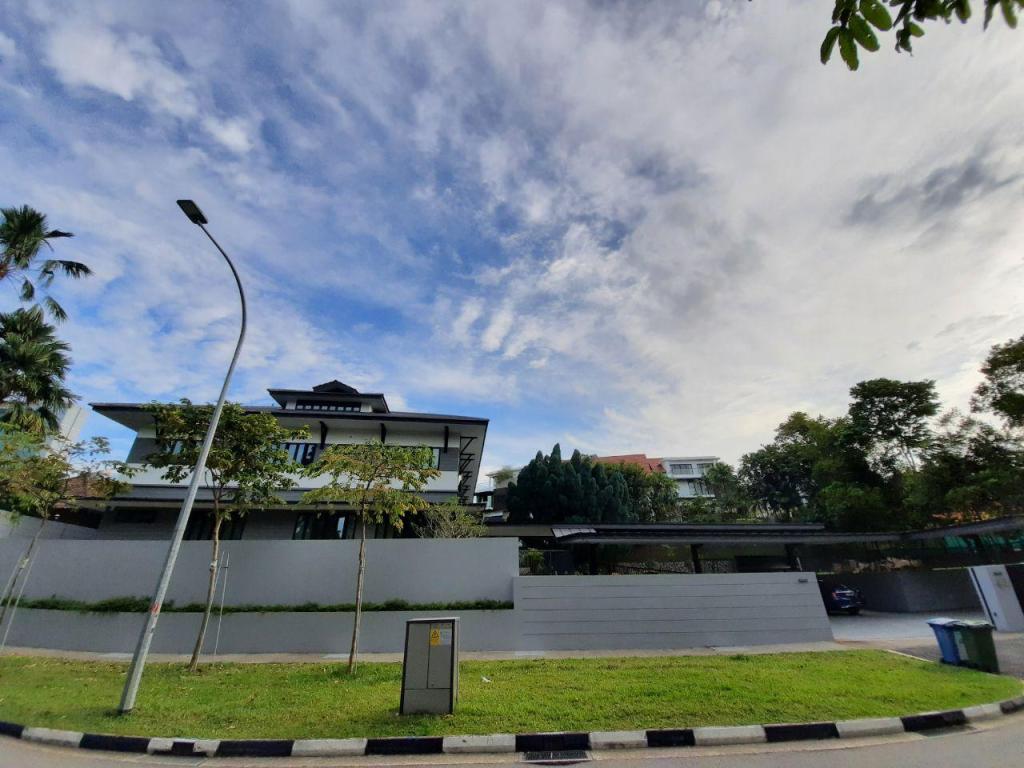
As with other GCBAs, owners here are prominent folks. Late S Rajaratnam, our 1st Foreign Minister, used to live a 30 Chancery Lane, a 20,688sqft plot which sold for $28.5m ($1,378psf) in 2013. This has since been redeveloped to this lovely new home by Ernesto Bedmar.
Other owners here are said to include Chua Thian Poh of Ho Bee Land, RSP Architect’s Albert Hong, late ‘Father of Opthalmology’ Prof. Arthur Lim and several other prominent doctors, architects and businessmen.
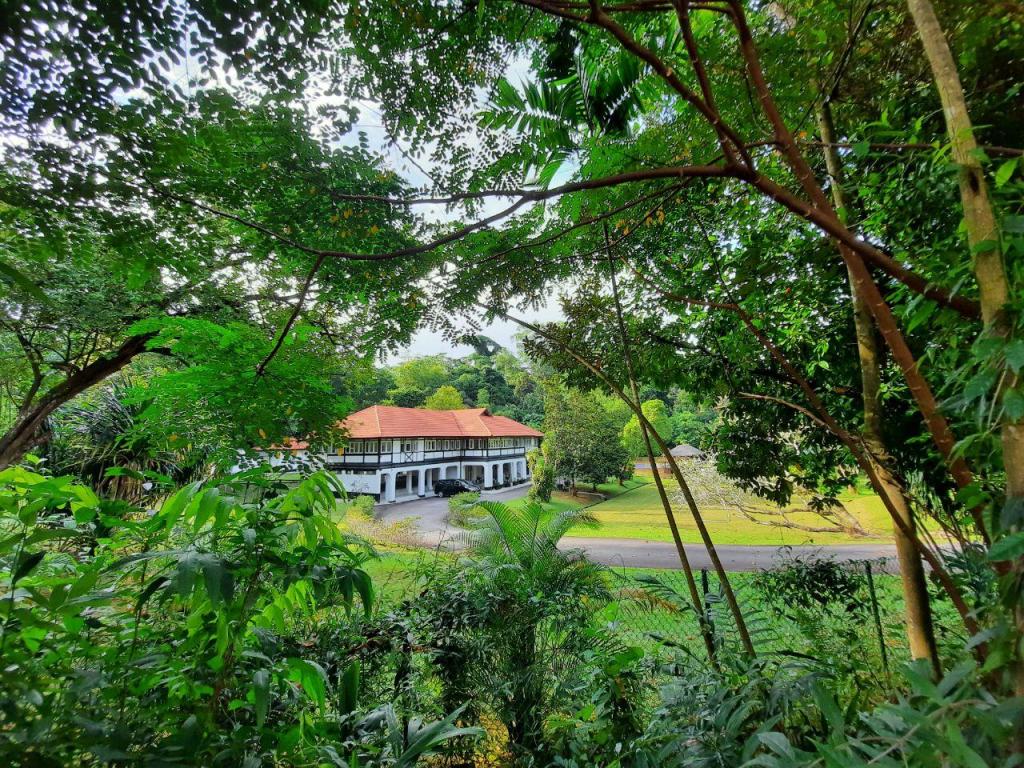
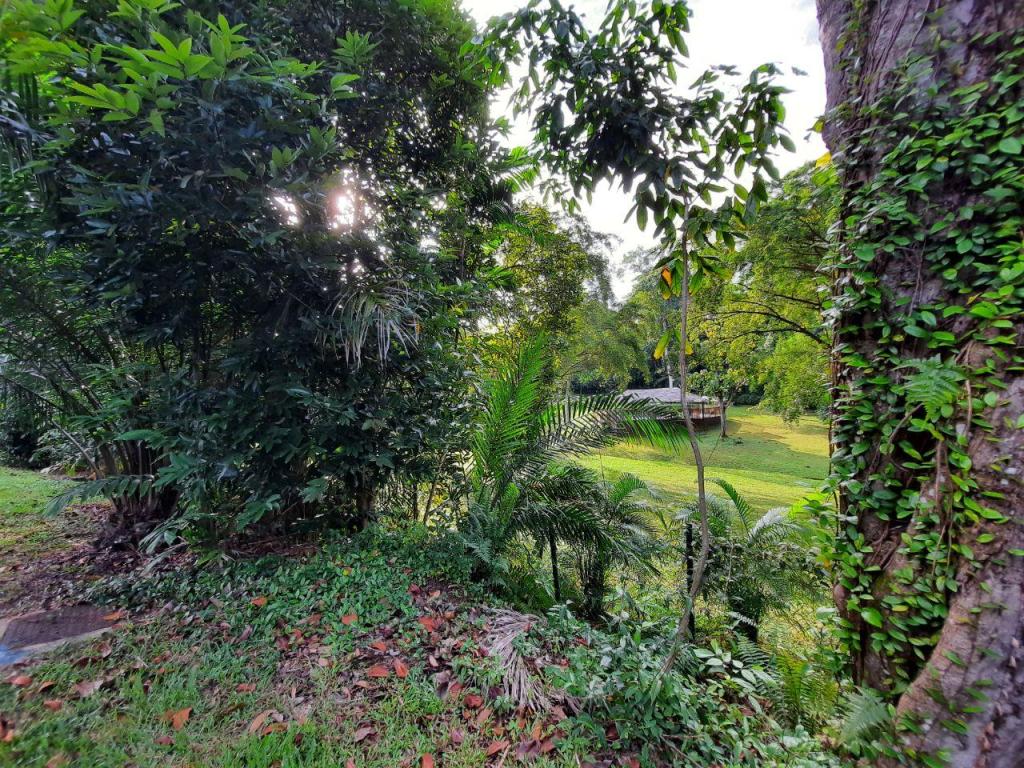
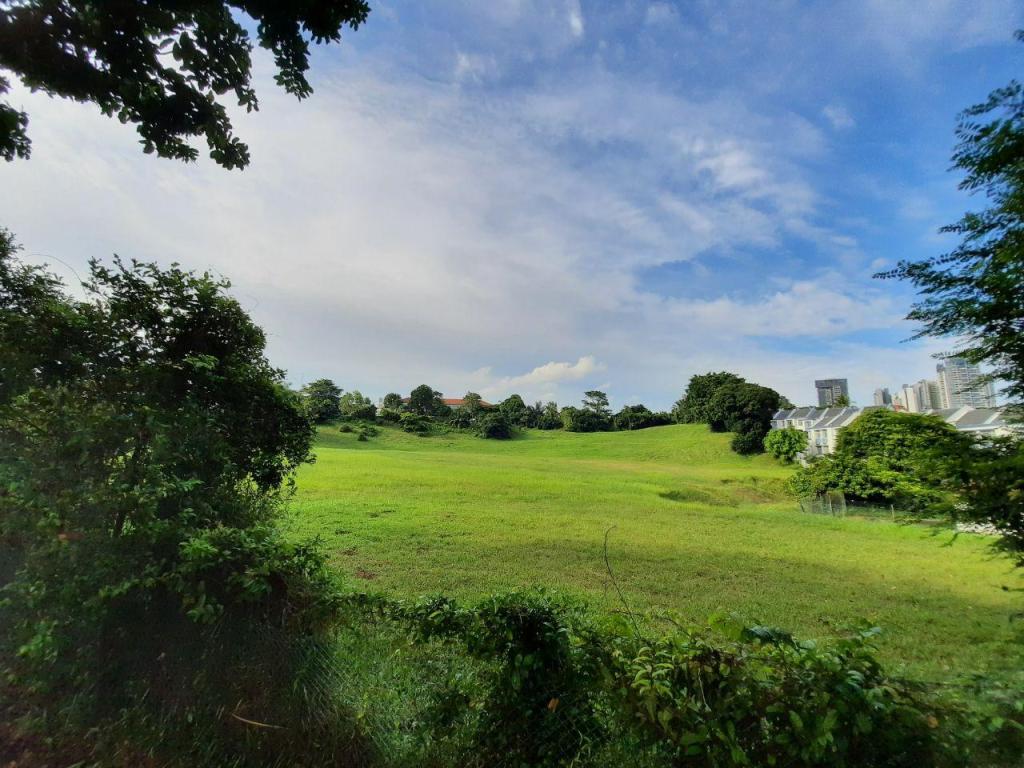
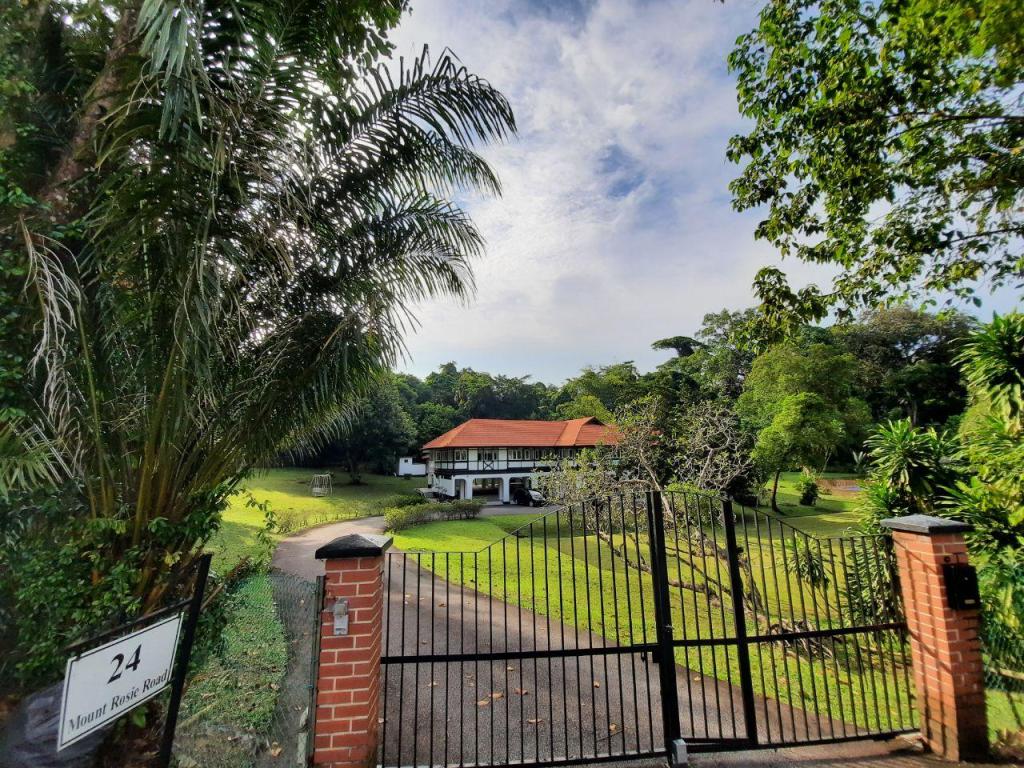
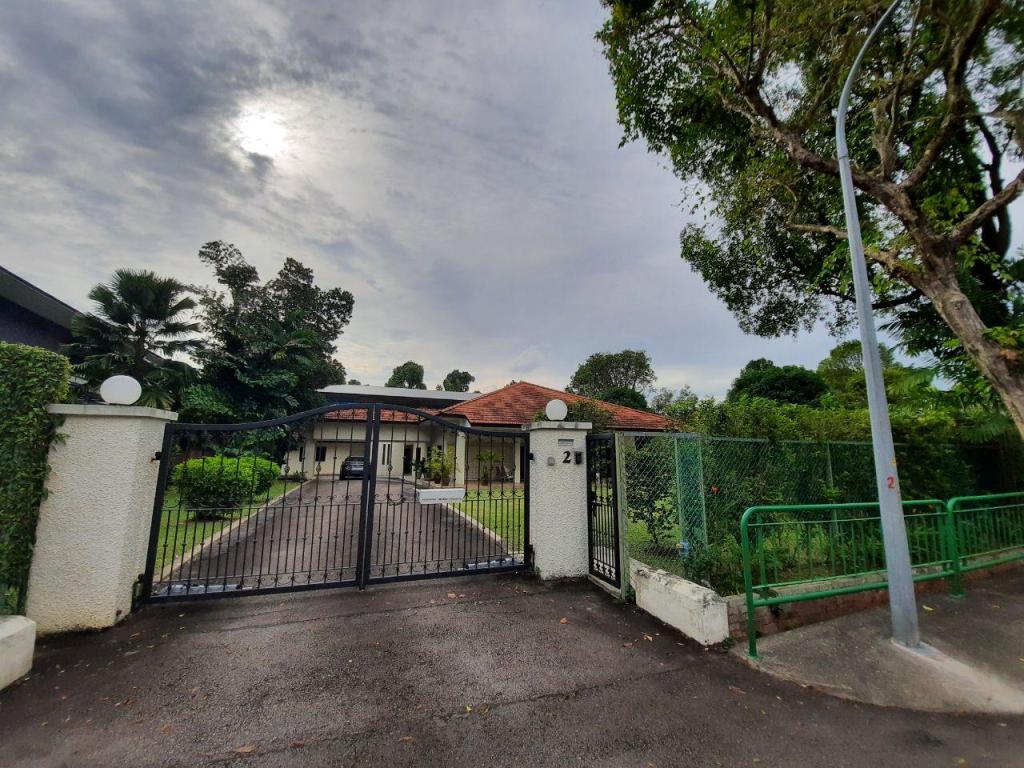
This GCBA has areas which are so undeveloped, including this sprawling plot of green near Mount Rosie Rd (#10), which is also home to many amazingly huge bungalows, including 24 Mount Rosie Rd (#2), a black & white which is 1,092,156sqft according to SRX. 1million sqft is quite bizarre and that equates to 1,000x 4-room HDB flats laid out beside each other.
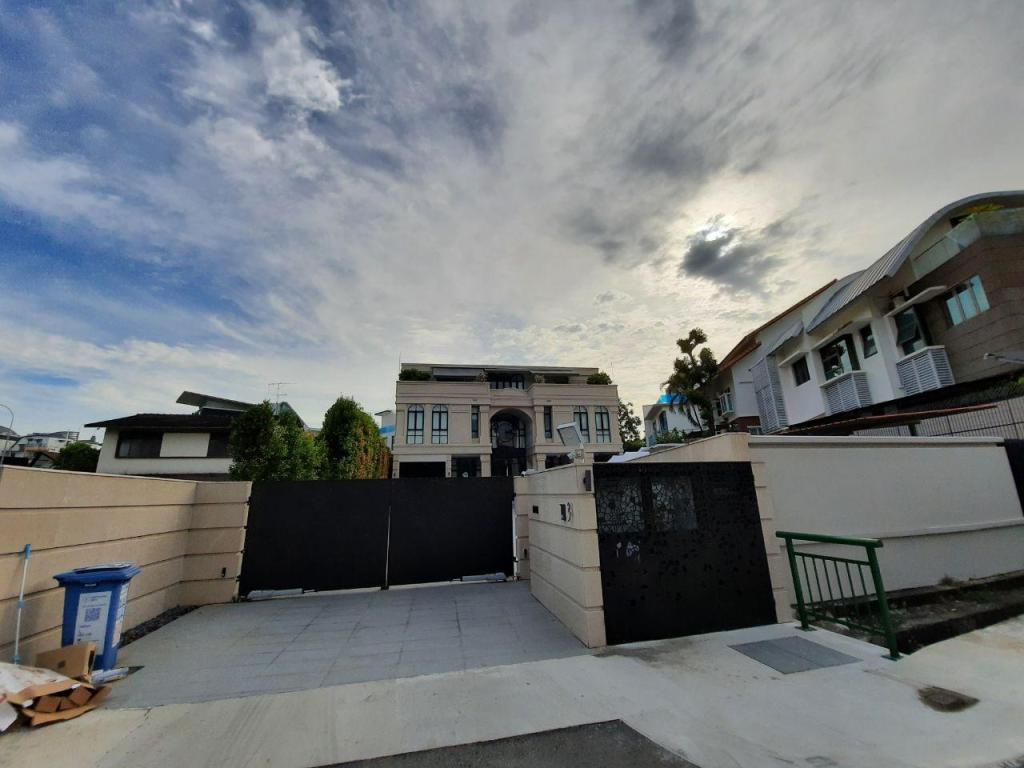
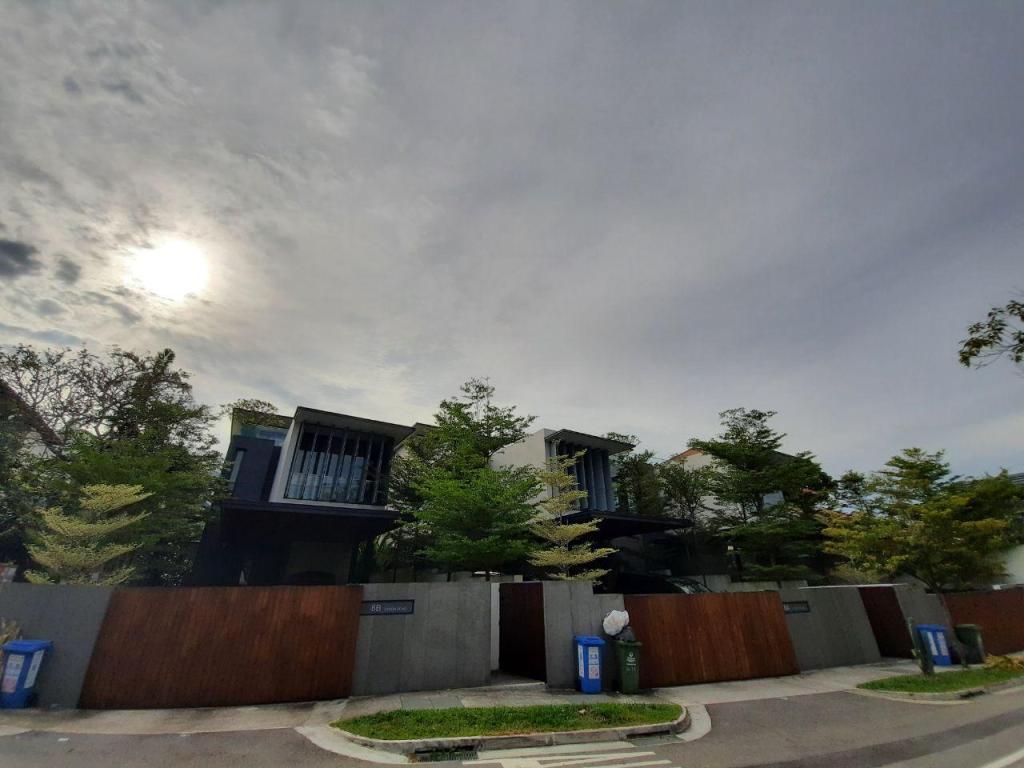
The other photos showcase a mix of black&whites and some old and newer builds. As with the past, many of these newer builds are works of renowned architects. You will find strong design elements by the likes of Ernesto Bedmar, Wallflower Architects, K2LD, RSP, Hyla & Visual Text Architects here among others.
Singaporeans are an ambitious bunch. If I am entitled to speak on behalf of my generation, I believe there is always that constant desire to upgrade and do better. That applies to all aspects of our lives, including our residential dwelling. Most young couples start off with a BTO, which takes about 5 years to build from their time of application and another 5 years to fulfil its Minimum Occupancy Period (MOP). Thus, most couples will have about 10 years of salary increments and savings to stash away for their next dream home.
Then comes the next question – what kind of property should we upgrade to? In this post, I focus on the non-landed private residential segment, which is the preferred choice for HDB upgraders because of its affordability and amenities compared to landed housing.
But are all non-landed homes the same and does it really matter?
If these are foreign terms to you, it’s probably time to get acquainted with them – condominiums and apartments – and what are some of the differences?
Condominium
To qualify as a full-fledged condominium, ALL of these criteria have to be met.
Size: The land area must be at least 4,000 sqm (~45,000 sqft). The largest condominium by size is D’Leedon at Farrer Road at a whopping 840,000 sqft. Absolutely massive. That is the equivalent of 840 4-room HDB flats combined.
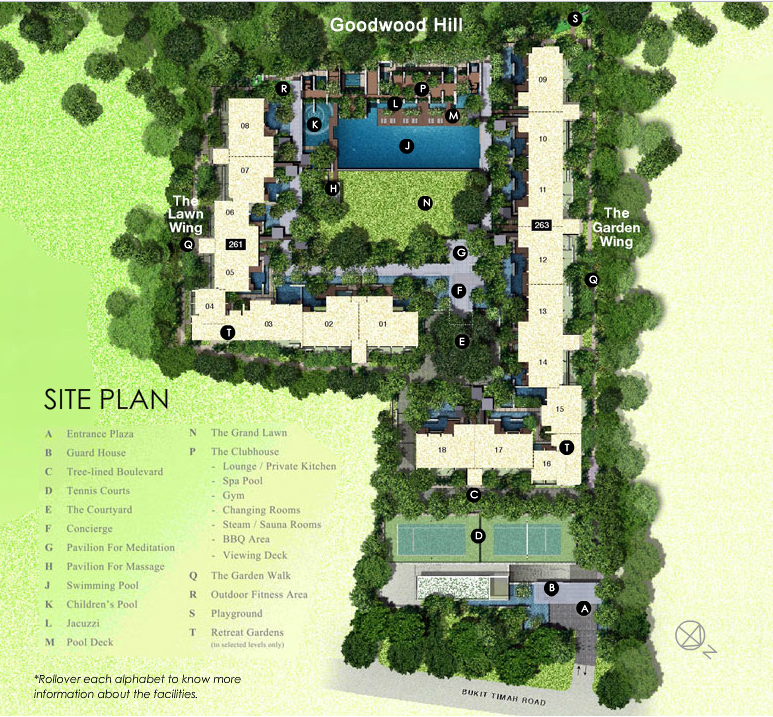
This now includes all building structures that protrude more than 1m from the ground as seen from the top-down ‘Site Plan’ view. This means that at least 50% of the land area must be dedicated to greenery and landscaping.
Maximising the site coverage will help to maximise the developer’s profits whilst a lower site coverage means more exclusivity, usually at a higher price.
Some standout projects which intentionally promote exclusivity are Goodwood Residence along Bukit Timah Road (80/20 ratio) and Principal Garden along Prince Charles Crescent (80/20 ratio). This can be an important consideration when evaluating the development’s en-bloc potential.
Facilities: Whilist I am unable to find an exact URA link to define this, condominiums are required to have a certain number of communal facilities such as security posts, lap pools, BBQ pits, function rooms and tennis courts.
Of course, the list goes on and not having some will not preclude these developments from having condo status.
The new launch trend these days seems to do away / significantly reduce yesteryear norms such as tennis courts. For example, Avenue South Residence at Silat Avenue, with 1,074 units only has 1 tennis court, as does Parc Esta along Sims Avenue with 1,399 units. Just compare this with Maple Woods at 993 Bukit Timah Road, built in 1997 with 4 tennis courts for 697 units or The Sovereign at 99 Meyer Road with 2 courts for 87 units.
Some facilities have disappeared altogether, such as squash courts and golf bag lockers as demand for these sports waned over the years.
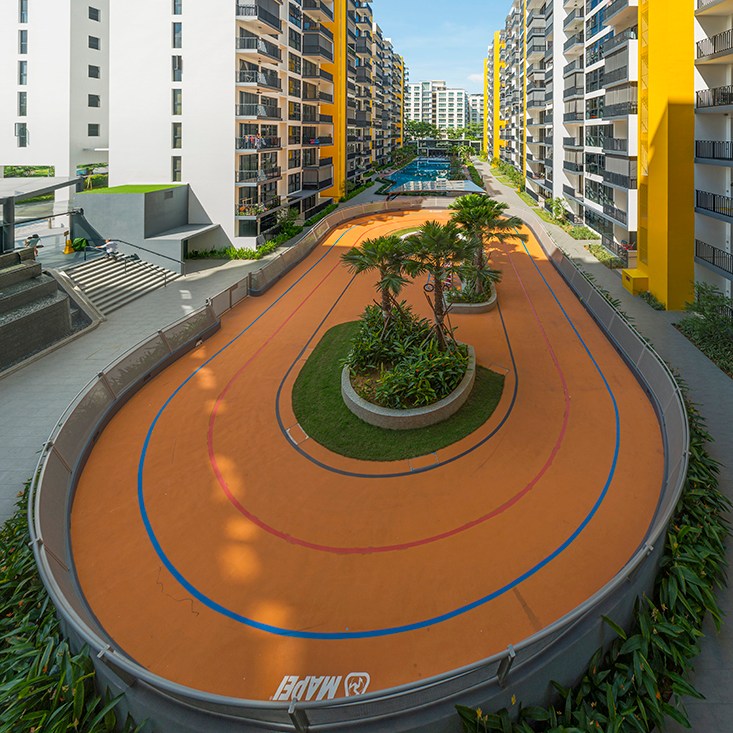
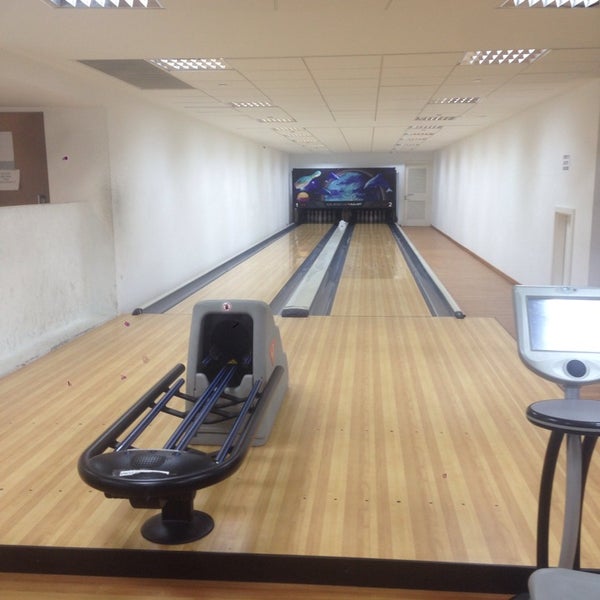
Some interesting condo facilities include a bowling alley at City Square Residences at Farrer Park and a velodrome for track racing at Westwood Residences EC near Jalan Bahar.
Set Back from Boundary: This is admittedly one of the lesser known requirements of what is required of a condominium. Essentially, there is a minimum buffer required between the housing block and the road itself.
How much buffer is required will be determined by a) type of road and b) height of development. More details can be found on URA’s link.
What is interesting is that some projects which have met all of the other requirements to be classified as a condominium did not end up qualifying as one due to this boundary requirement.
A new launch example would be Parc Esta along Sims Avenue, which despite some 70 facilities onsite, including a tennis court, multiple swimming pools and communal gathering spots, is classified as an apartment because of its inability to comply with the set back requirement.
Integrated Developments: Finally, the exception to the rule is that all ‘integrated’ developments cannot be classified as condominiums. Some examples include Woodleigh Residences above Woodleigh Mall / MRT, Bedok Residences above Bedok Mall / MRT and Orchard Residences above ION Orchard / MRT.
2. Apartment
Now, having explained the requirements of what makes a condominium in quite extensive terms, an apartment is basically everything that a condo is not.
Some usual stereotypes about apartments are that they are usually:
Low-Rise (<5 storeys)
Squeezy between blocks
Lack facilities found in condos
I agree that these points are more or less justified, especially those within private landed enclaves such as Telok Kurau and Bukit Timah. Many of these apartments have <30 units in the entire development and was built after the developer had bought over a single large bungalow.
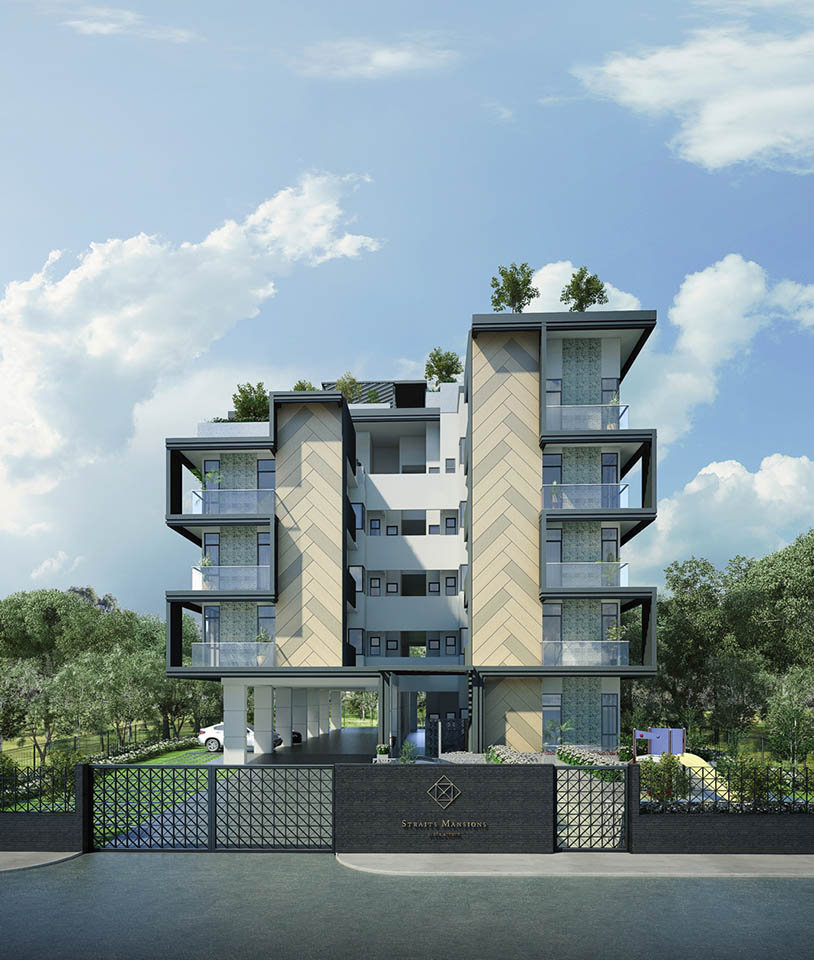
Some examples of old bungalows being torn down and rebuilt include Dunman Regency along Dunman Road and Straits Mansion at Sea Avenue.
However, there are also exceptions to these stereotypes. Look at Parc Esta – would you really consider it an apartment? It probably has way better facilities than many older condo developments and simply didn’t qualify as a condo because of a technicality.
Additionally, some apartments are what I would term as “boutique condos” because they are small (below 300 units) but have sufficient facilities which will make living there no different from a condo.
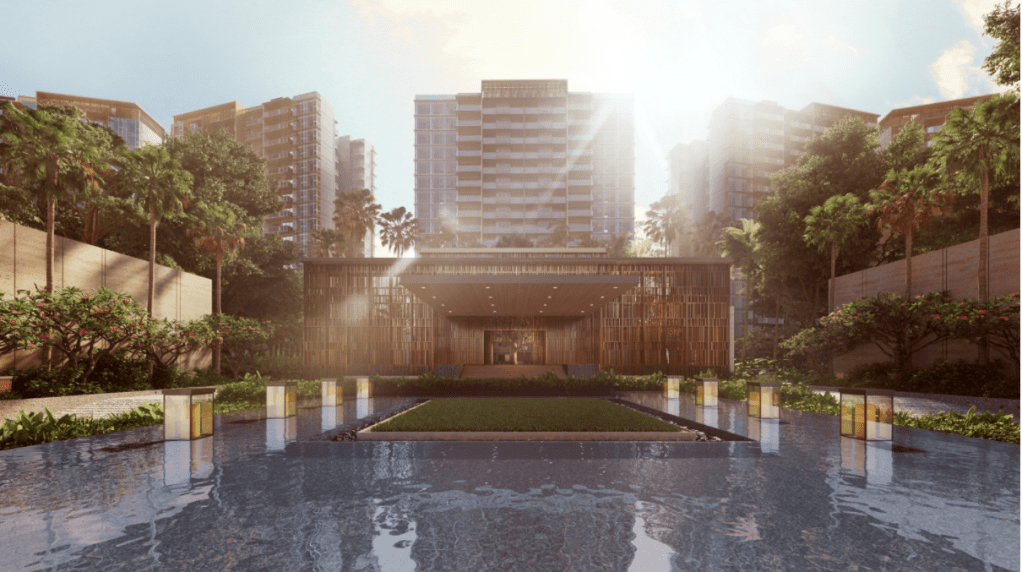
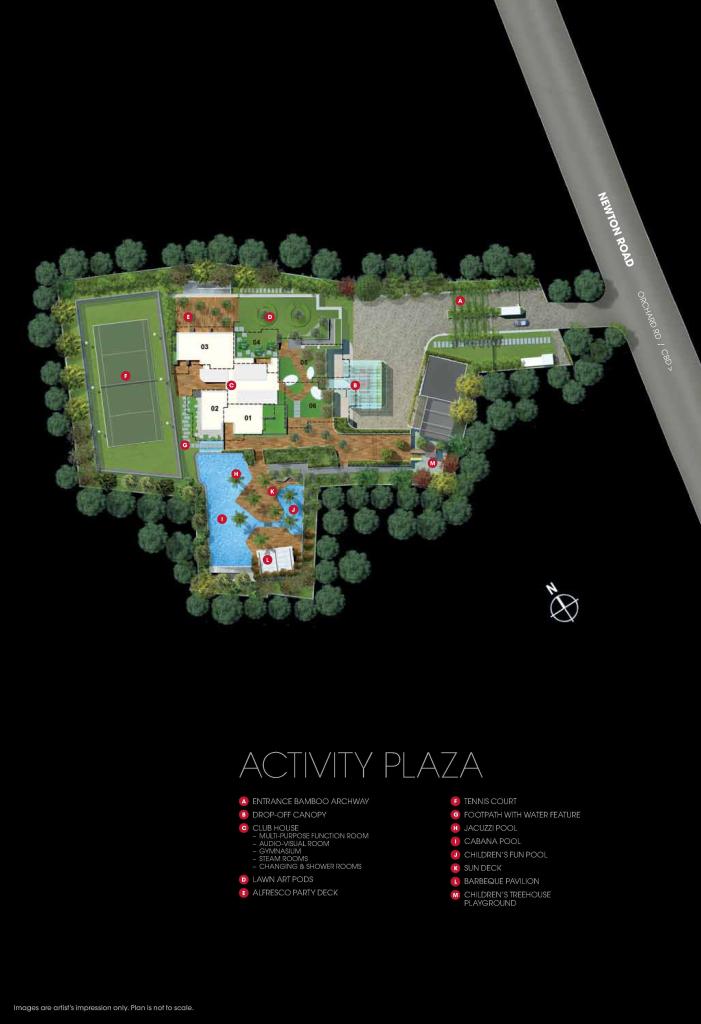
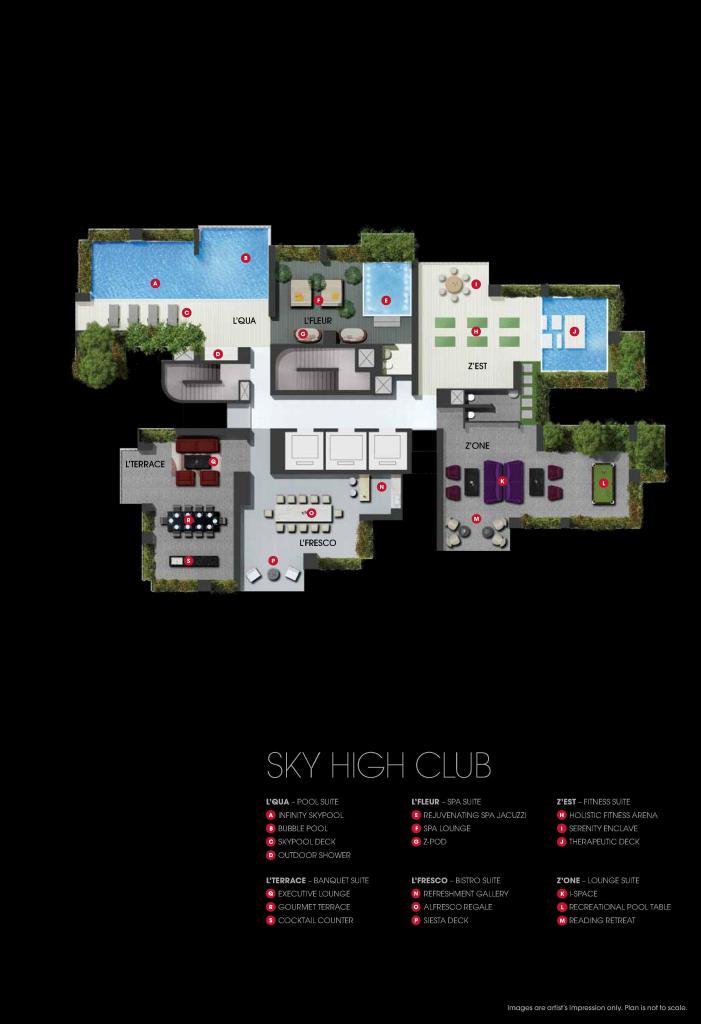
Some examples would be L’Viv at Newton Road and Espada at St Thomas Walk. Both are high rise developments with small land areas but packed with facilities – tennis court, decent sized pools, BBQ pits and most importantly, sky decks / gardens, which I absolutely adore. Sky gardens allow residents with units on lower floors to enjoy the same high-rise living at a fraction of the price.
L’Viv Ground and Sky Facilities
So… back to the main question – do their classification / status matter and why?
There is no clear cut answer on this. It really depends on what kind of apartment you are considering and for what purpose. I am looking at this purely on a return on investment perspective.
Apartments are in general, expected to cost less than condos simply because they lack the facilities and land area. However, the exceptions are those are ‘pseudo-apartments’ such as Orchard Residences and Parc Esta mentioned above.
These aforementioned developments have the makings of a condo and should not be seen as apartments in the first place, despite their legal classification. In these cases, their status should not matter because they offer the same quality of life when compared to condos.
However, on the flip side, when we consider “proper” apartments such as those being rebuilt from single bungalow units into 20 unit apartments, I am of the view that they will offer limited upside in the longer term.
This is because of 2 reasons:
(i) Desirability – HDB upgraders / landed downgraders are looking for a product which can better their existing dwelling. Why sell your HDB to move into a smaller apartment unit which doesn’t even have a decent sized lap pool to begin with? You pay higher property taxes with no facilities to shout about.
(ii) En Bloc Potential – If your apartment has been rebuilt from 1 bungalow into 16 apartment units, chances are the plot ratio has been maximised. This means that when your development gets old, it would appear less attractive to developers looking to acquire land as the site has been “fully built up”. Straits Mansion at Sea Ave has 25 units for 18,000 sqft of land, rebuilt from a dilapidated bungalow. Compare to this to full fledged condos such as Gallop Gables at Farrer Road which has only 140 units for more than 240,000 sqft of land. As an astute developer, and assuming budget is of no issue, which would you be more inclined to pick?
Look, I am not saying avoid apartments at all costs. They have their purpose in the property market – catering to those who are looking for a private home with little frills and possibly lower maintenance (which may be a myth btw) because of the fewer facilities.
Personally, however, if I were to purchase an apartment, I would try to look for developments which are more ‘pseudo-condo’ like or an integrated development (which is very popular and most have made money) rather than an apartment in its truest sense as I feel that it is ‘sandwich’ class that will at least allow me to hedge my ‘property bet’.
It is fair to say that condos in general have better appreciation over the years compared to apartments so that 20% price difference initially may seem steep initially, but may pay off in the longer term.
Properties in Singapore take a lifetime to repay – hence it is important to know what you are buying into and why.
*Disclaimer* All photos are not my own and have been taken off the internet. This post represents my views as an individual and is not representative of my company or any organisation I am affiliated to.
Admit it, Singaporeans are crazy over property. Through the generations, property has allowed people to move up socio-economic ladders through a combination of capital appreciation and leverage which a property investment offers. However, this is mainly concentrated on the residential segment of the market.
Oft because of its higher quantums and lack of information, office properties as an asset class is less often talked about amongst Singaporeans. Whilst URA offers no official segmentation of office properties, it is generally understood that there are 3 main categories of office properties:
1.Grade A Offices: The Crown Jewels of this segment. According to a 2016 Business Times article, “CBRE Research defines a Grade A building as a landmark building with modern flexible layout and floor plates above 18,000 square feet (sq ft). The building size is above 300,000 sq ft and offers underground parking and good lift services zoned for passengers and goods delivery.
It offers high technical specifications (such as raised floors, 24-hour cooling system) and good quality building services (for example, security, CCTV), and is professionally managed. The building should also be located close to public transport.
Out of a CBD Core office stock of about 27.6 million sq ft, approximately 43 per cent of this stock is classified Grade A CBD Core. The rest of the office stock is classified Grade B CBD Core.”
This segment is where most of the action lies. More and more developers are keen to enter this space, as the gulf between Grade A and other types of offices widens. The continued demand for these high quality offices have really come from an explosion of co-working spaces. Whether or not co-working spaces are a fad or here to stay, especially with the Covid-19 pandemic raging on, remains to be seen.
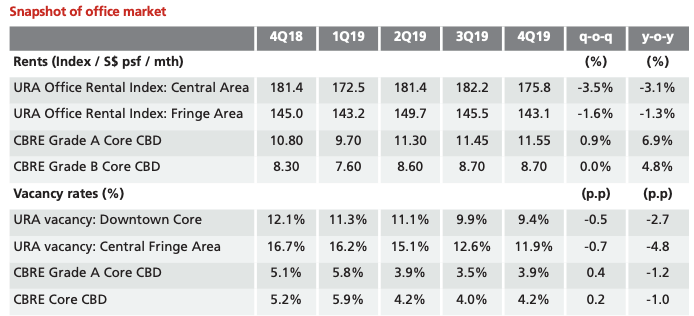
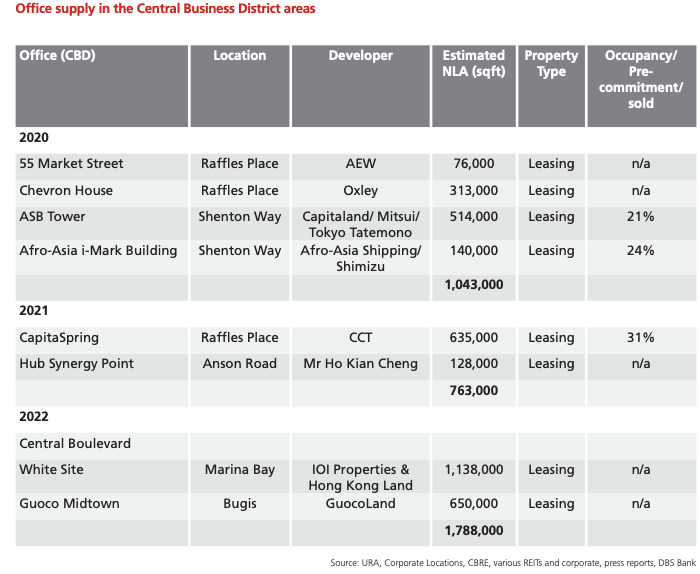
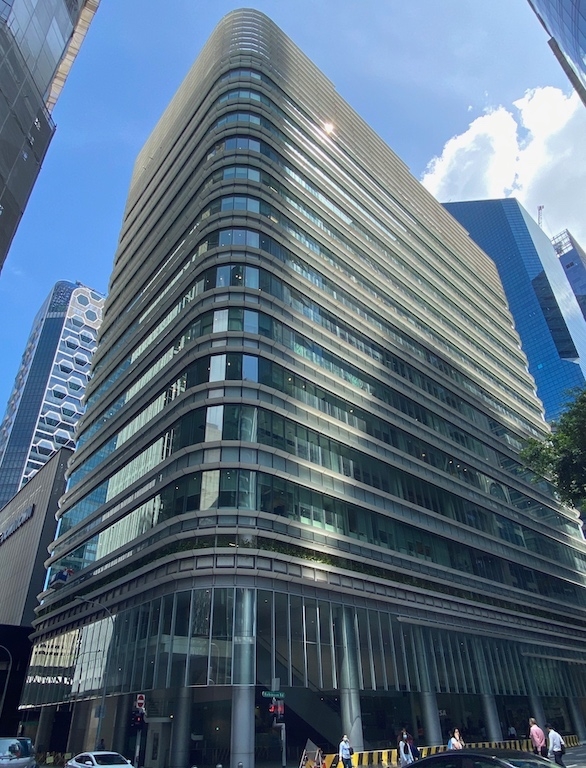
A DBS research study shows that in 2020, we expect more than 1mil sqft of new Grade A CBD office space to enter the market, many of which are refreshments done to older properties on site. If you know, you know but Afro-Asia Building used to boast of Uncle Sam’s Claypot Rice, a hugely popular lunch joint for the CBD folks.
Writing this in the midst of the Covid-19 pandemic, the outlook for offices in general look relatively pessimistic in the short term. Savills predicts 2020 Grade A CBD rents to decline 10% YoY, bucking the general upward trend we’ve seen over the last few quarters.
Examples of Grade A Offices include Marina Bay Financial Centre, Asia Square and 6 Battery Road
2. Grade B Offices: Seen as the slightly more inferior sibling to Grade A offices, these are usually slightly older properties, which may not be as presentable as Grade A ones in terms of aesthetics, floor plate optimisation and security etc. What you lose out on however, is compensated with a rent that is on average, 25% cheaper. Whilst Grade A offices are typically rented by large banks and MNCs, Grade B ones are more catered towards smaller international outfits, mid-sized law firms and successful MMEs and SMEs.
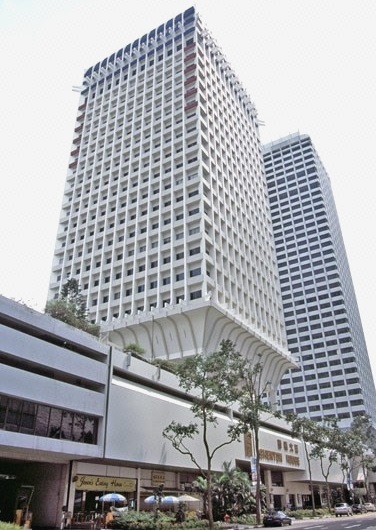
Examples of Grade B offices include many smaller buildings along Shenton Way, Robinson Road and Cecil Street.
3. Grade C Offices: The lowest grade of offices in Singapore, these are usually much older properties with very basic features. They will not have fancy air-conditioned lobbies or large floor plates which you can optimise. Some may not even have lifts. Expect the upkeep of the common areas to be mediocre or average at best. I would believe majority of the tenants here will be SMEs and start ups. If analysed well, they may be some attractive choices in this segment.
*Disclaimer* All photos are not my own and have been taken off the internet. This post represents my views as an individual and is not representative of my company or any organisation I am affiliated to.
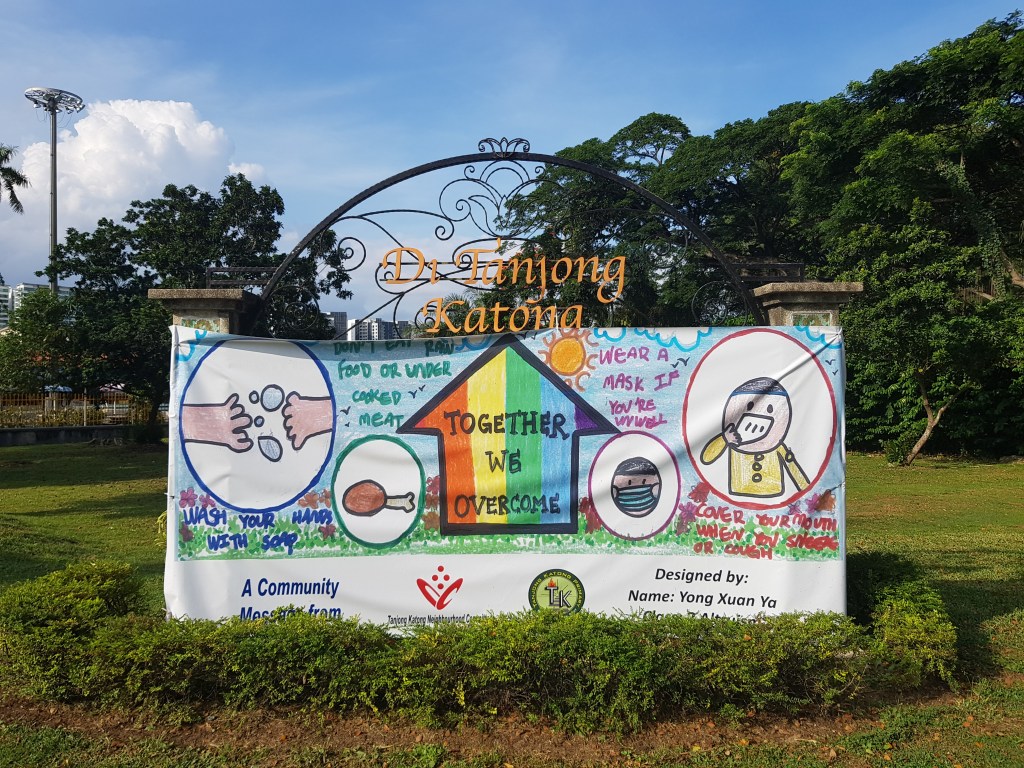
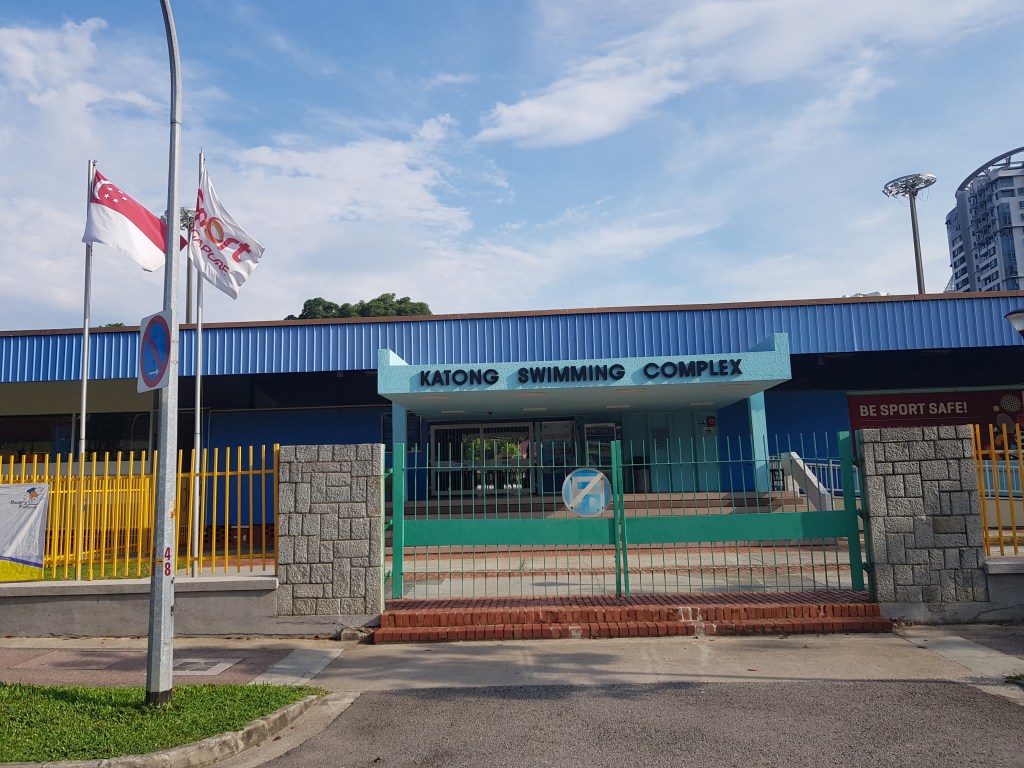
At the idyllic District 15, famed for its coastline and proximity to the city, the Mountbatten Road precinct rules. Tanjong Katong used to be a favourite amongst the Indo Chinese, who enjoyed seafront living at their doorstep. Being featured here are the houses of Wilkinson Road. Many of the grand old dames have now been demolished, but remnants of the vieux riche remain. Katong Swimming Complex (Since 1975)
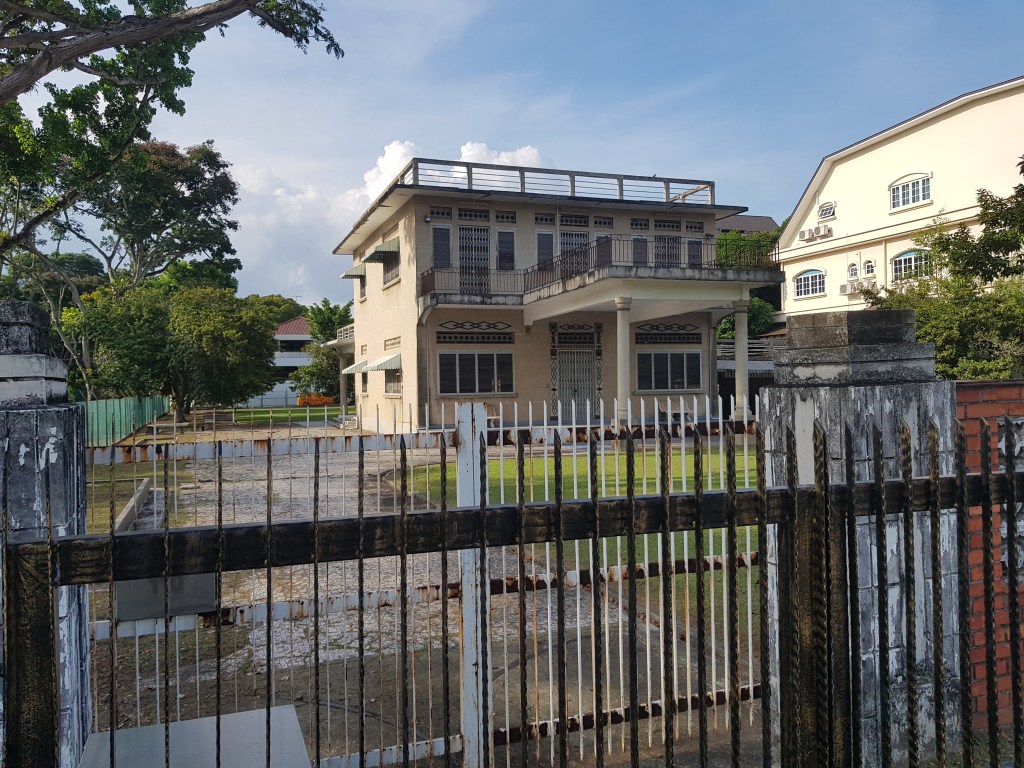
Welcoming you at 111 Wilkinson Road is Katong Swimming Complex, an ever present structure since 1975. At 110 WLK right across, an old bungalow remains, dilapidated and uninhabitable, much like many old dames of Tanjong Katong.
110 Wilkinson Road
Further down the road, we find a small park, leading up to the main Mountbatten Road, where buses ply towards the City and further East.
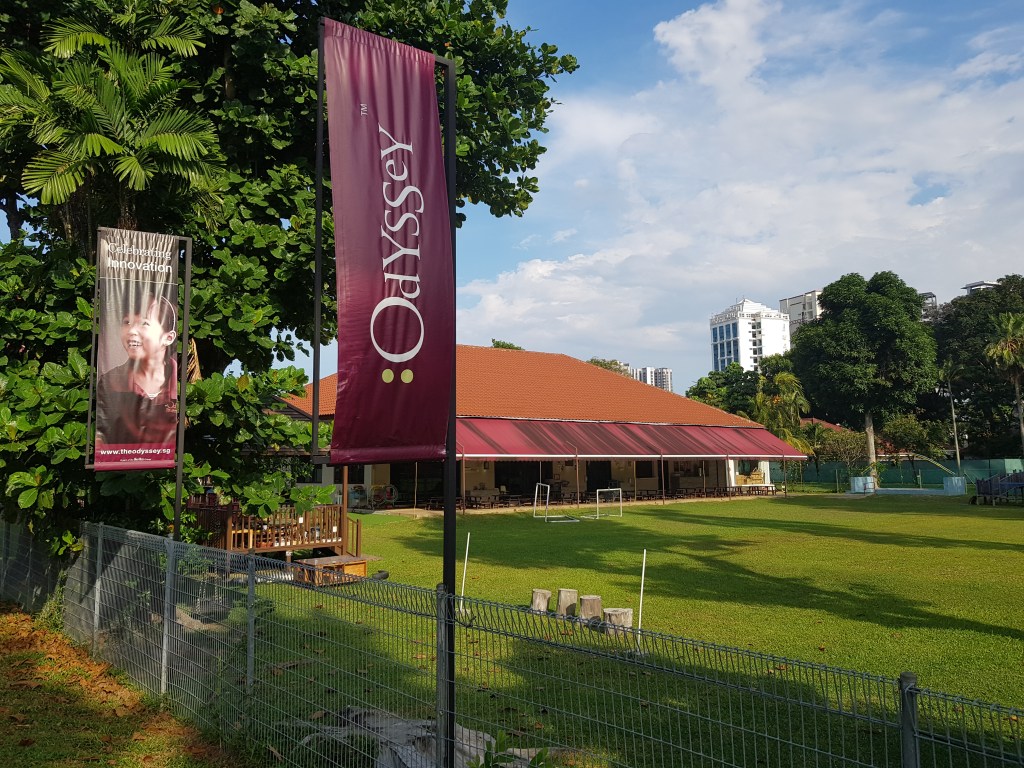
There are no shortage of educational institutions either. Along Wilkinson Road, you will find Odyssey – The Global Preschool. Truly, this is a preschool for the affluent, with such a vast expanse of land. In the vicinity, you will also find other Montessoris and Dunman High School, a top pre-university institution in Singapore which I am proud to call my alma mater.
Venturing further, you will find 100 Wilkinson Road which belongs to the era of homes built in the 1990s with an emphasis on grander structures.
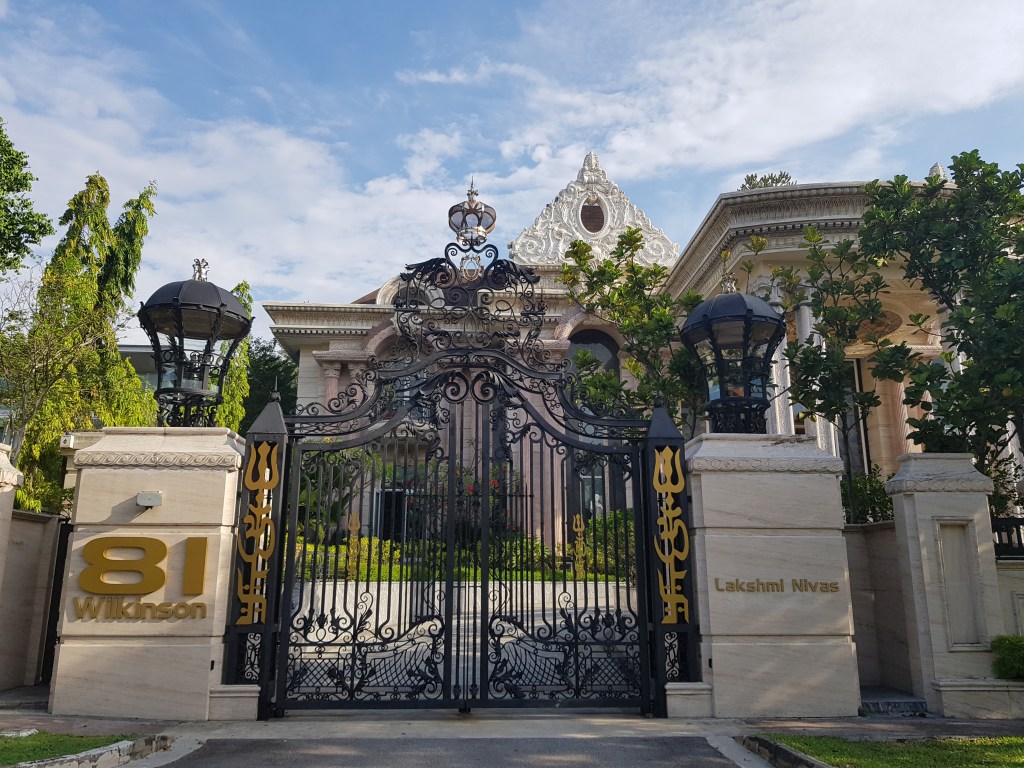
But what can beat the sheer opulence of 81 Wilkinson Road, home to Lakshmi Mittal, formerly the 3rd richest man in the world and CEO of Arcelormittal. Whilst his fortunes have declined sharply as with the prices of steel, he is still worth US$18.6Bn at the time of writing in 2020 😂 #famousneighbours I am sure everyone would stop and take a second look at this marble clad palatial home.
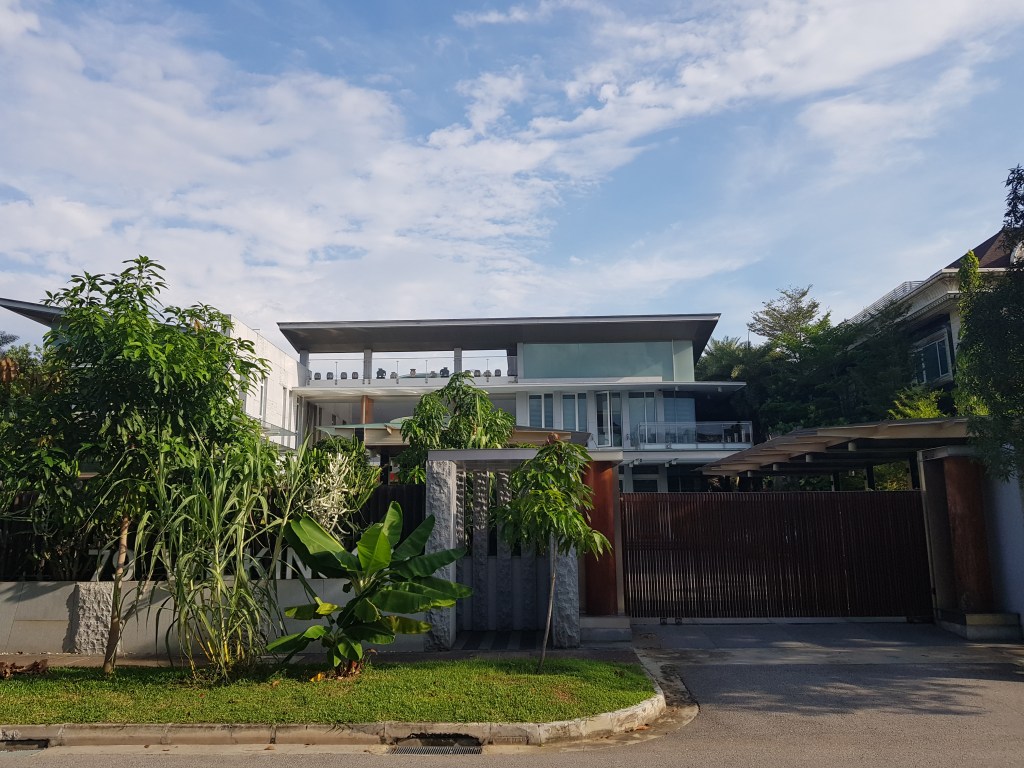
His neighbours aren’t too shabby either. 79 Wilkinson Road sits on a 26,404 sqft plot of land and was sold at $30mil ($1,136psf) in 2016 to the CEO of ValueMax Group, a SGX listed company for his own stay.
A year later in 2017, 75 Wilkinson Road changed hands at $17.2mil ($1,202psf) for a land size of 14,305 sqft. The old house, originally built in 1995 was torn down and recently completed its renovations
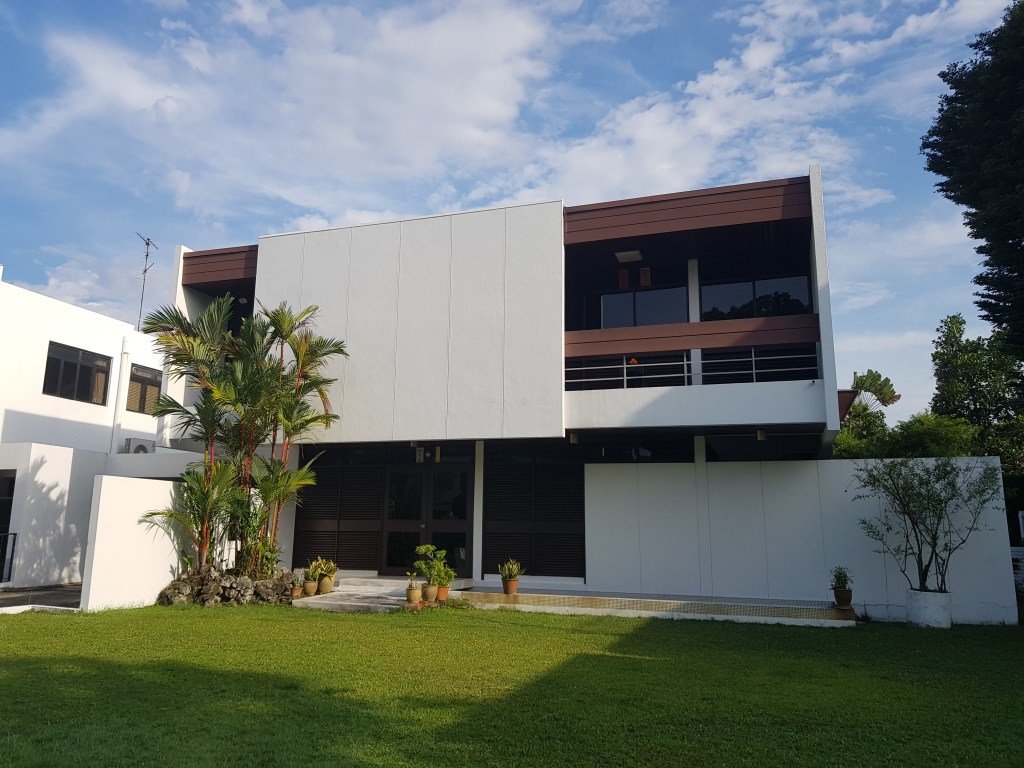
65 Wilkinson Road stands in contrast to these homes with a simple old home with lots of empty spaces for the young to run about. I believe this is likely to have been built in the 70s.
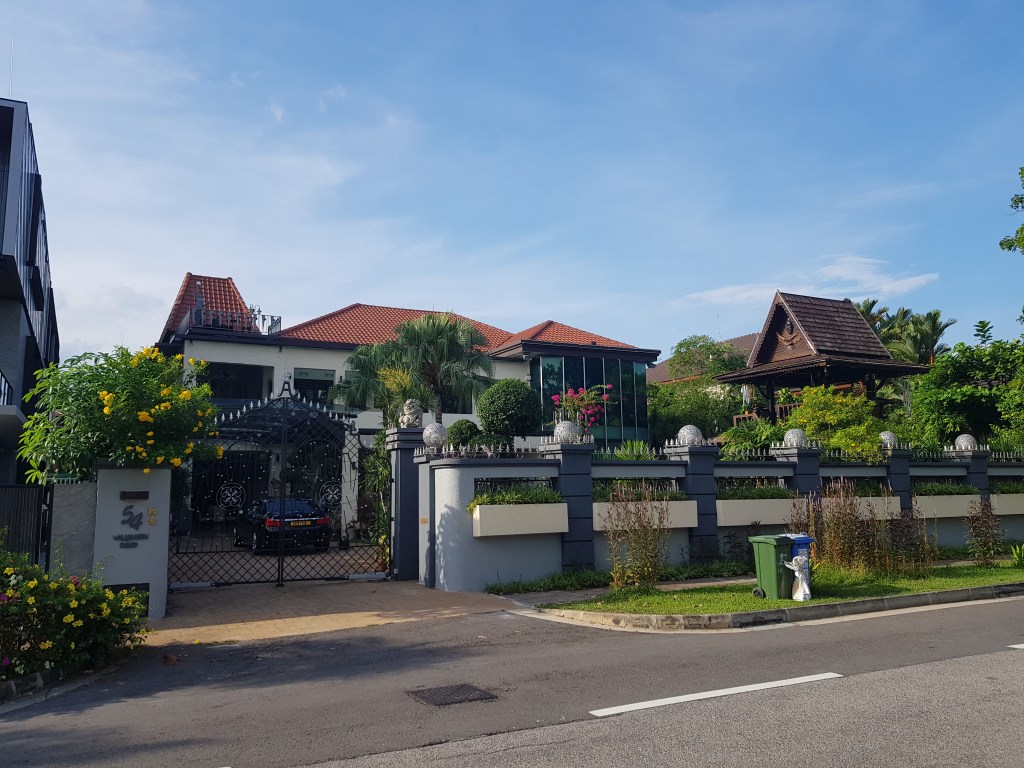
54 Wilkinson Road sits on a 15,791 sqft of land and even features a treehouse styled lookout
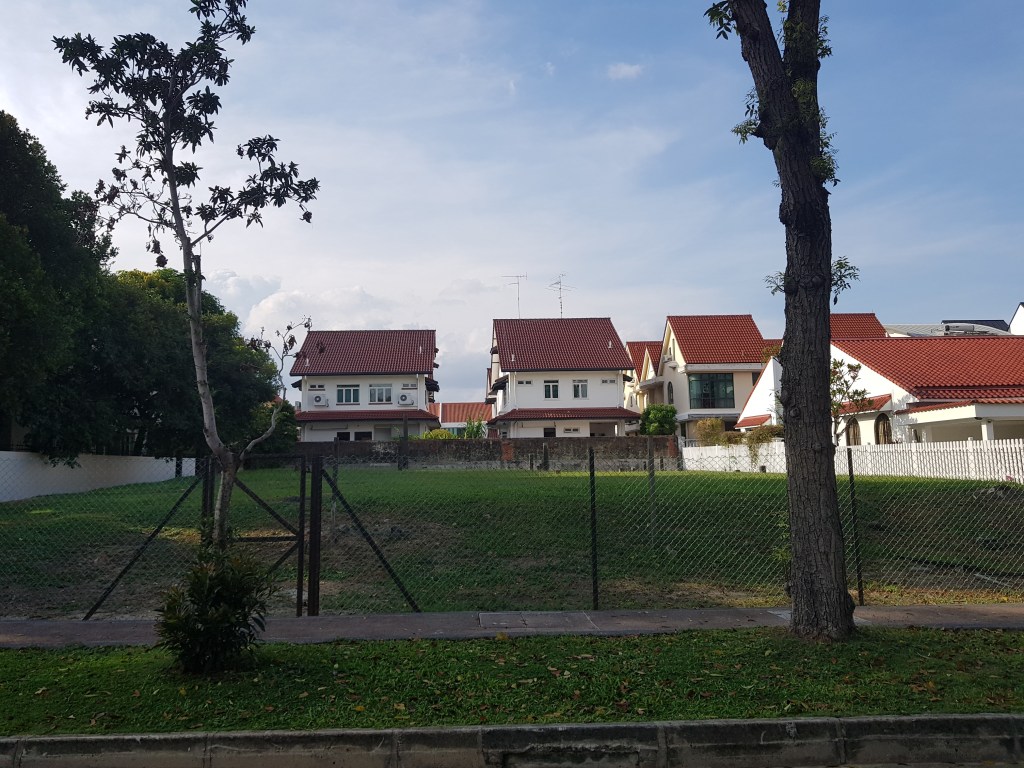
50 Wilkinson Road is the ONLY piece of vacant land available along Wilkinson Road. Land size is estimated to be around 10,000 sqft, sufficient for subdivision into 2 detached homes or 4 semi-d’s. Who’s interested? I definitely am.
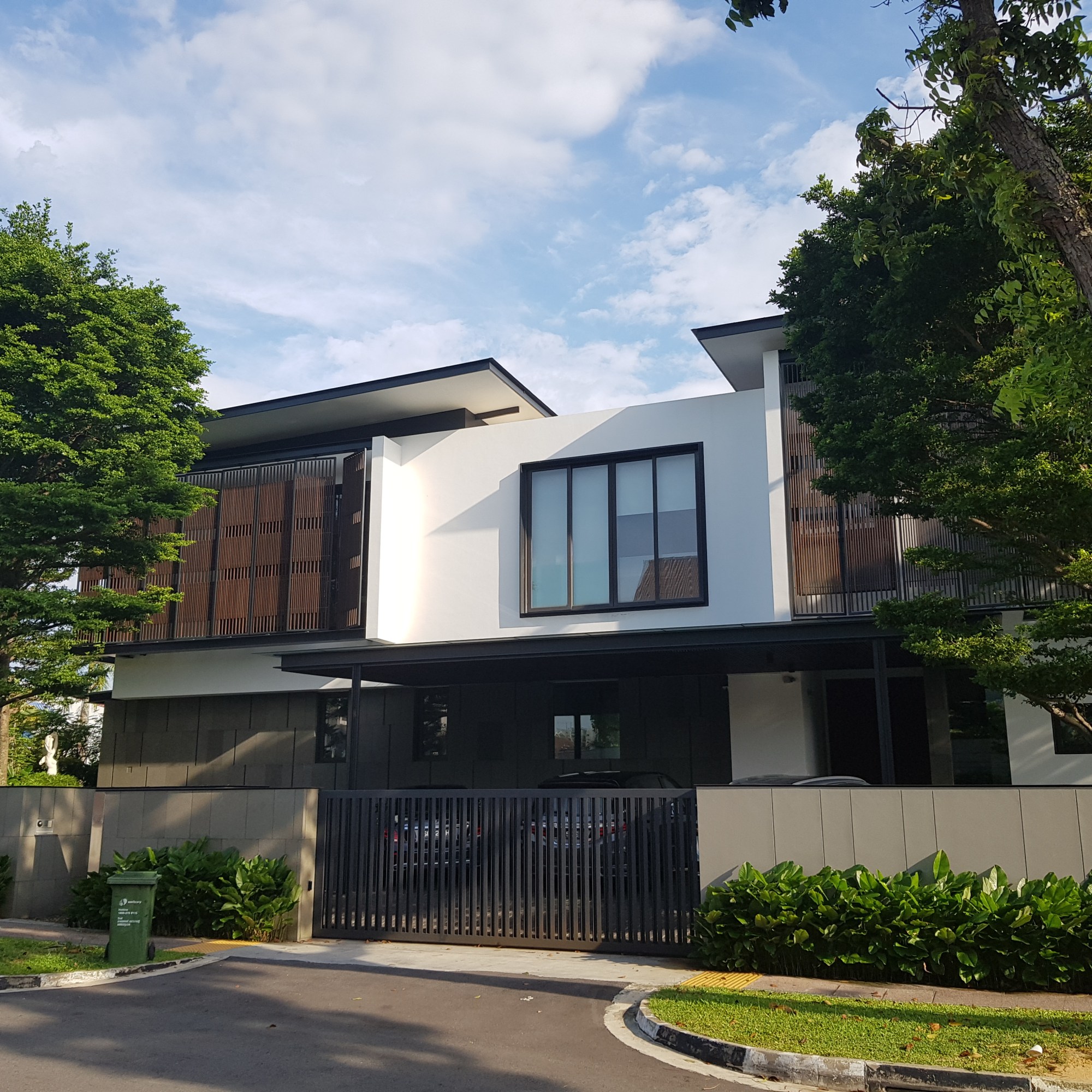
As you can already tell, Wilkinson Road is a pretty long stretched, flanked by Branksome Road and Mountbatten Road, which is the main road. We started our journey along Mountbatten / Kampong Arang and now feature homes closer to Tanjong Katong Road. We feature mainly rebuilt homes from the 2000s and beyond. Their style is markedly different with a focus on maximising the land by creating more liveable space and the use of timber strips and darker/monochrome tones.
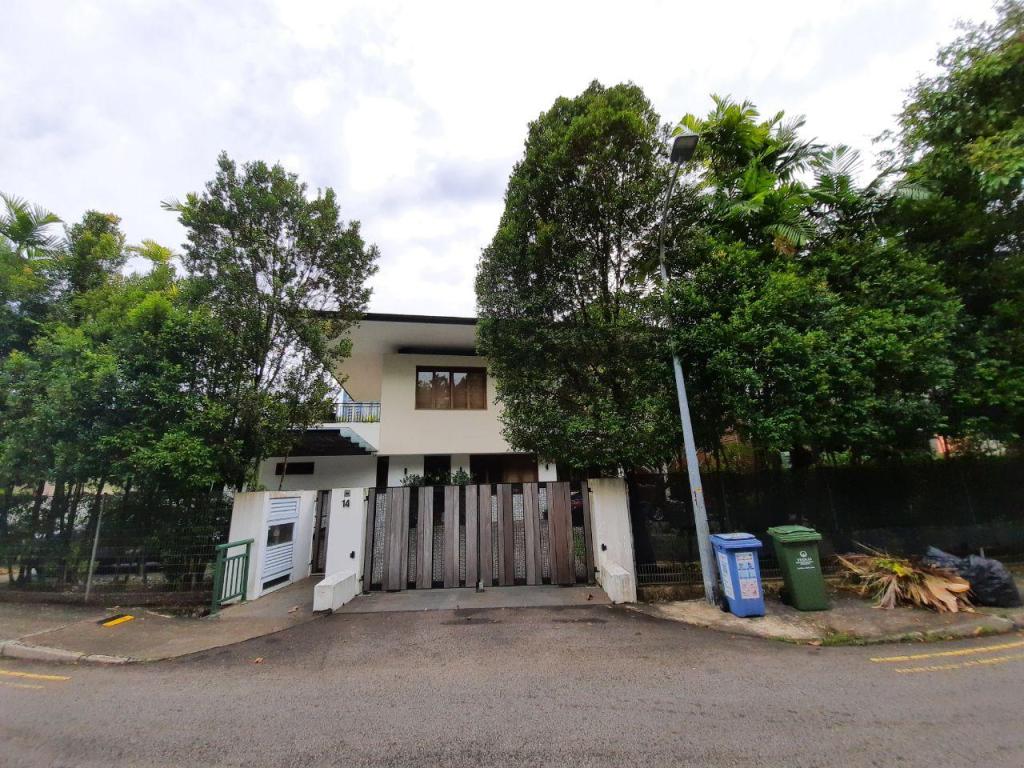
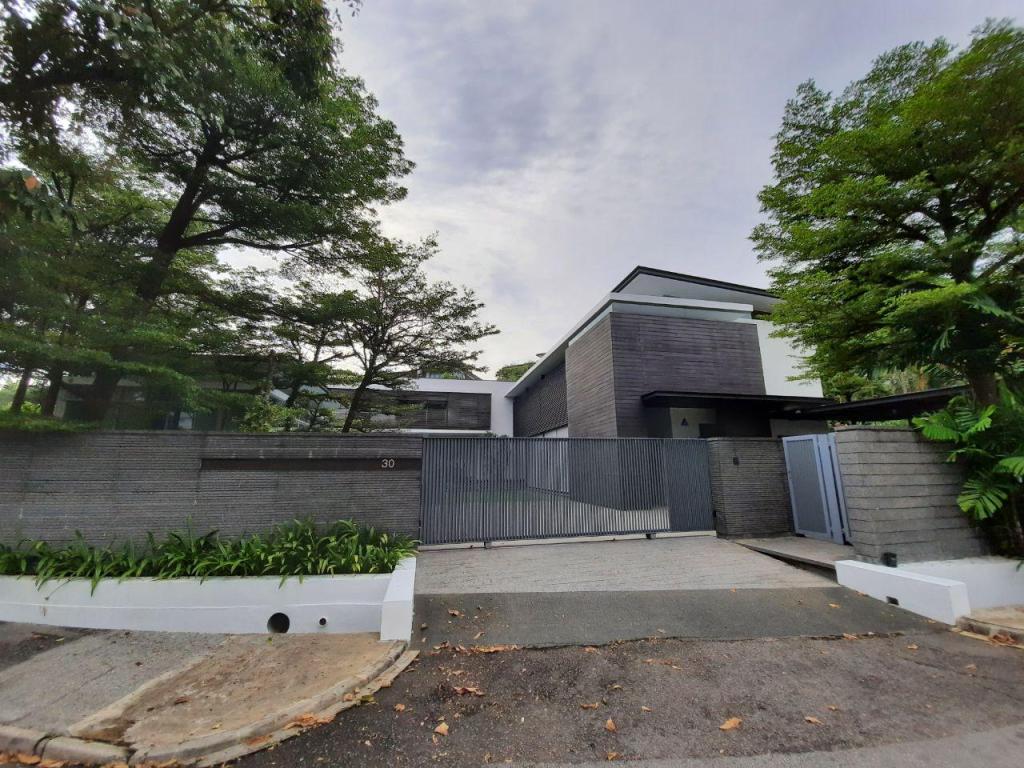
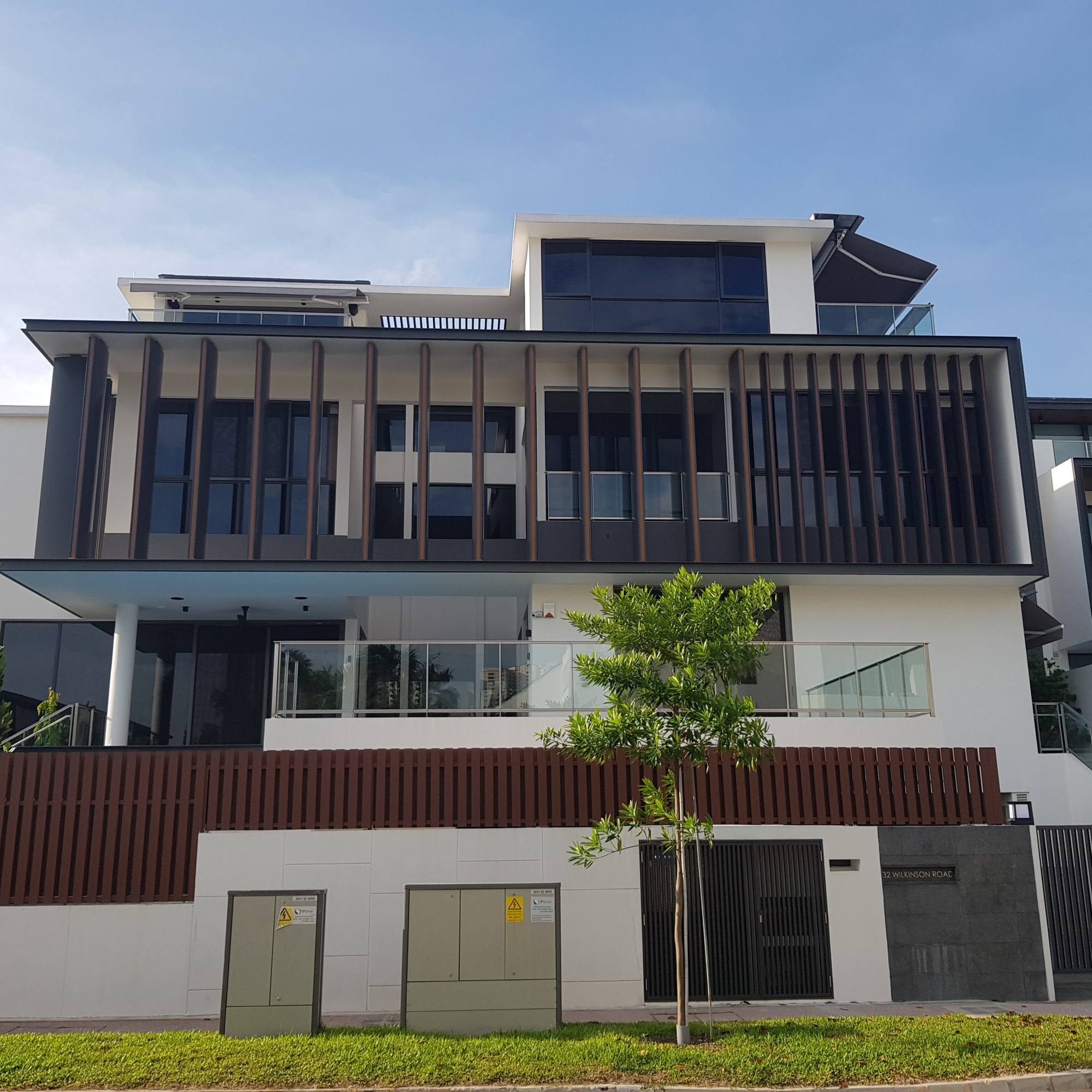
41 Wilkinson Road is a corner detached on 8,612sqft of land while 32 Wilkinson Road is similarly a corner detached and used to be an empty plot of land before being rebuilt. 30 Wilkinson Road is also a newly built home.
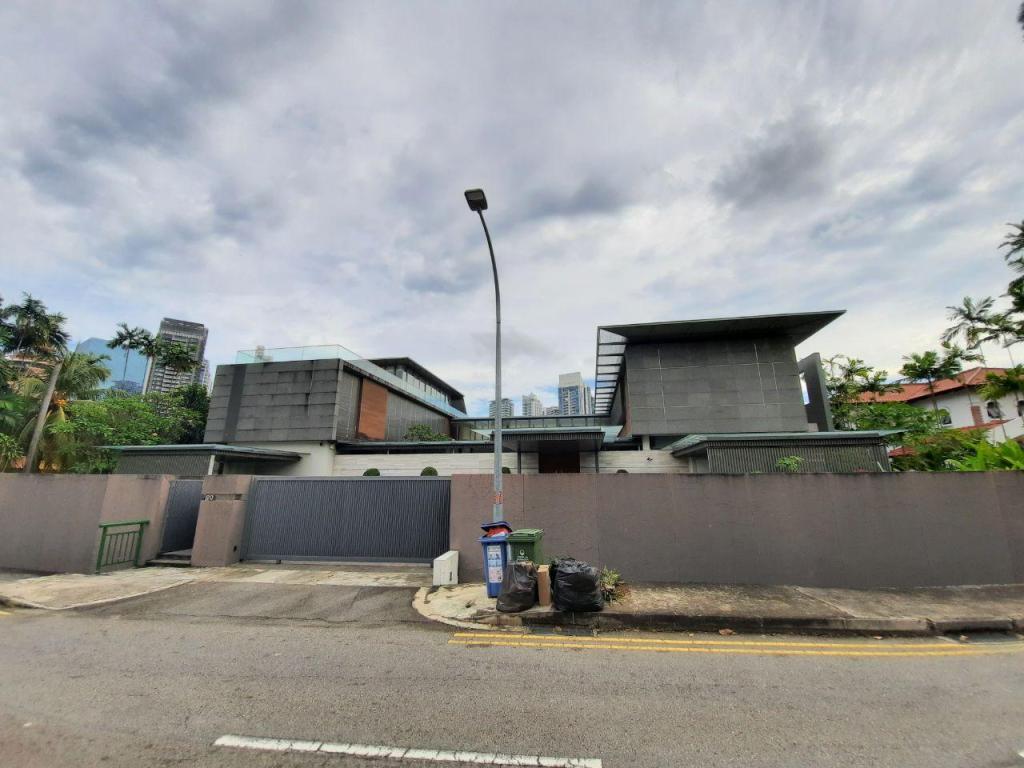
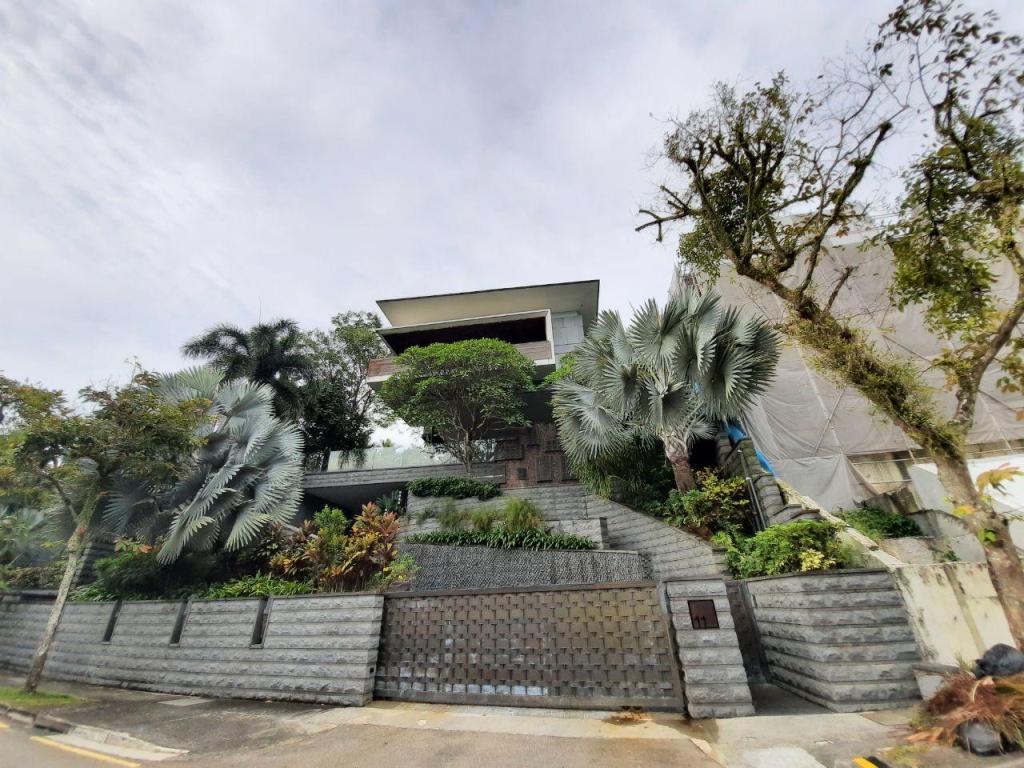
What is perhaps most interesting in this set of homes at 28 and 26 Wilkinson Road. Designed by Kite Studio Architecture, these 2 homes sit on more than 40,000 sqft of land and was crafted to allow 2 brothers to reside together with their families but yet maintain a degree of privacy. They share a good sized pool and lawn in the middle. Their father runs Soilbuild Group Holdings, a property and construction empire and was ranked 36th richest in Singapore by Forbes in 2019 with a net worth of $925mil.
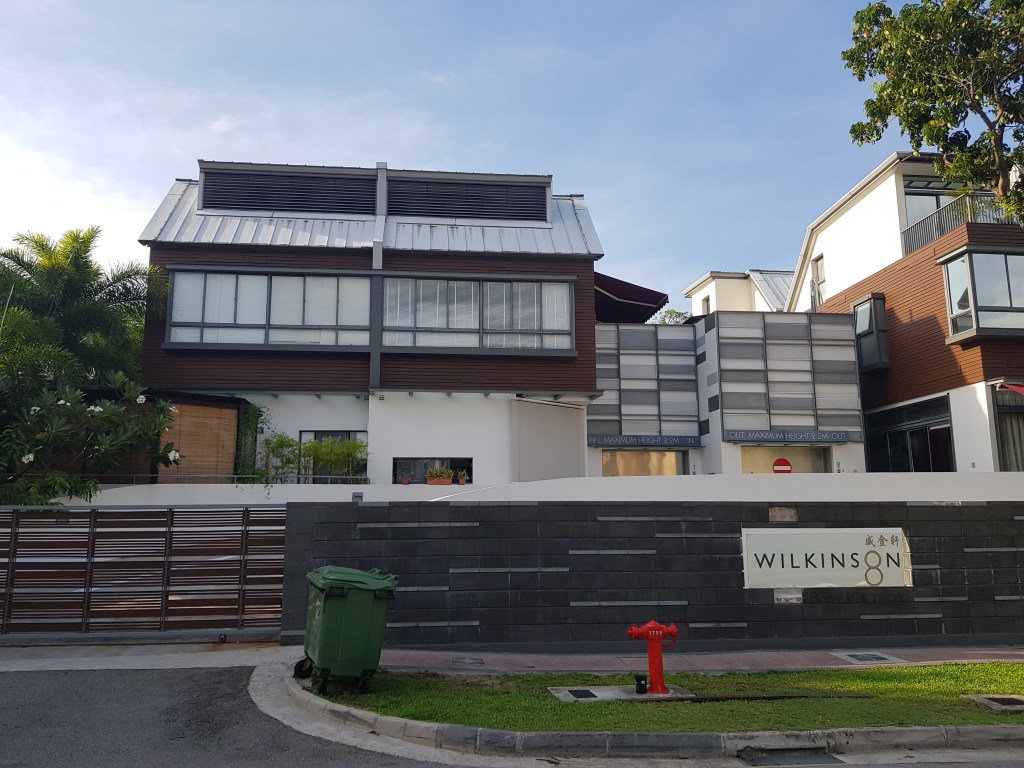
If you are looking for a more affordable option along Wilkinson Road, look no further than Wilkinson 8, the only strata-landed property along this road. The last transacted price was $2.85M in November 2019. Evidently, based on the sale price of the other bungalows along Wilkinson Road, $2.85M looks like a steal! With that, I conclude my tour of Wilkinson Road, a prime stretch in D15. Hope you enjoyed the features and can’t wait to showcase more beautiful homes soon 🙂
This project marks Singapore Johore Express’ first foray into the residential property market and a sign of more exciting things to come from the transport operator.
Kallang Riverside is a mid-scale (212 units) development consisting of units from 1BR to PH (530sqft to 3500sqft). When I first visited the launch in 2014, there were few buyers and little public interest, especially at its (very) high asking price of $2000psf. 2014 also marked the start of a 4 year dip in property prices. However, with the recent en-bloc fever, consumer sentiments seem to have picked up and here I am revisiting this project for all of you!
For easy reading, the yardsticks I have used are:
Location/Accessibility
Unit Layout
Condo Facilities
Pricing
Growth Potential
1. Location/Accessibility (7/10)
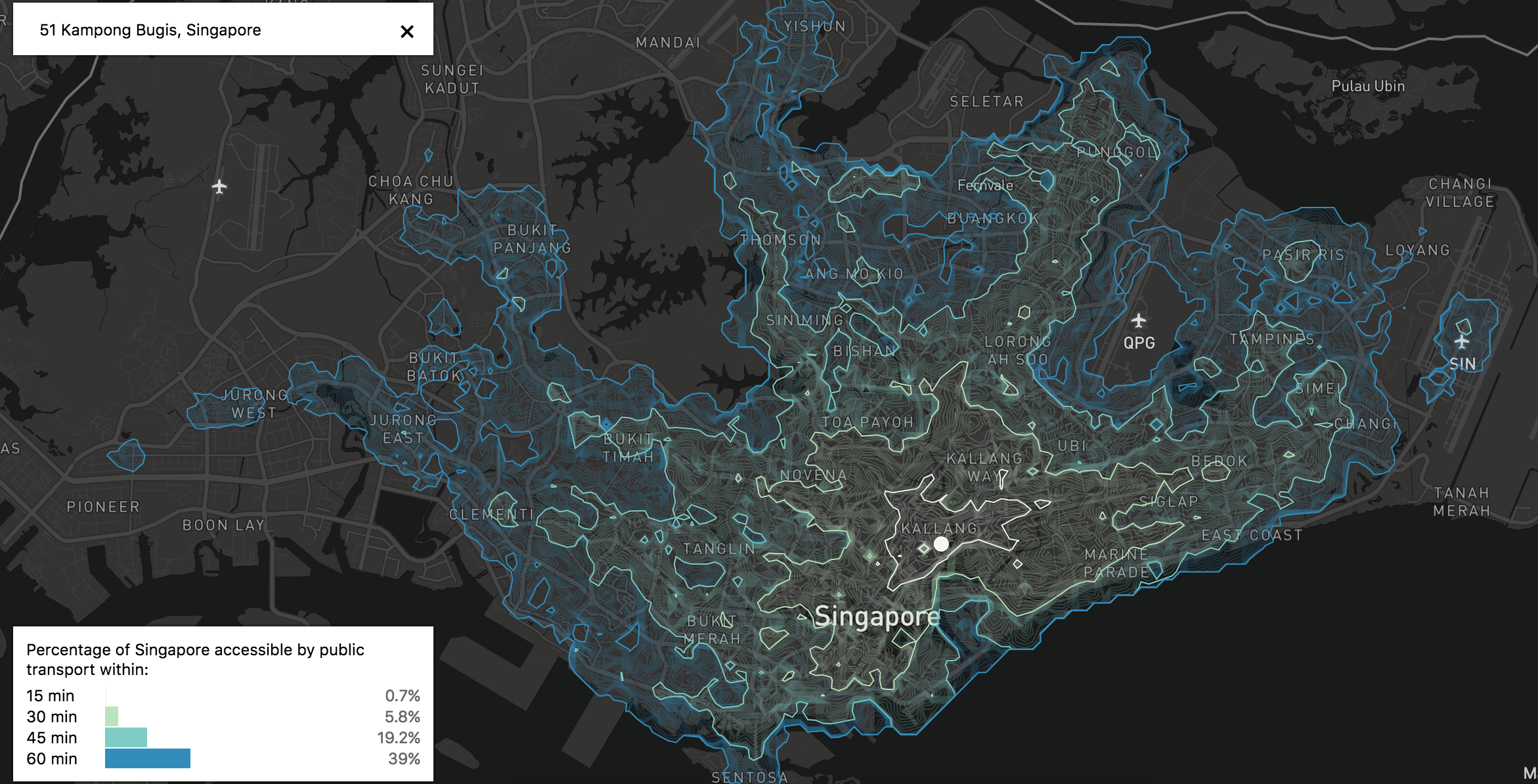
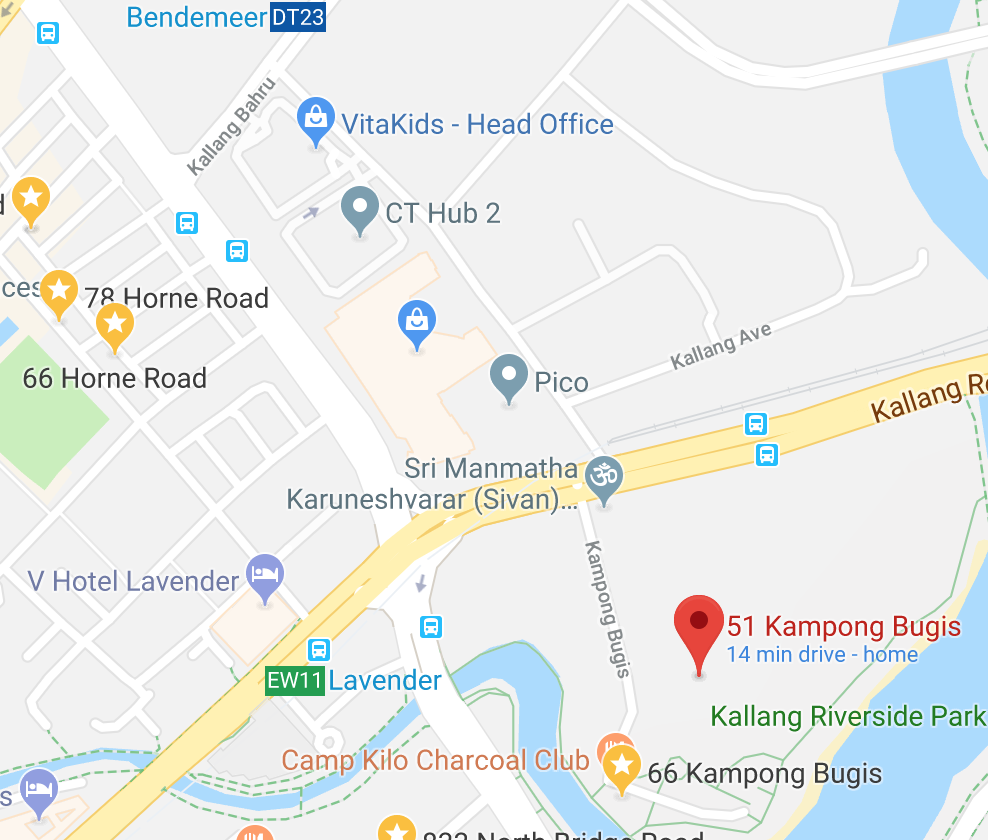
Located just 470m (6 mins walk) away from Lavender MRT, Kallang Riverside gets high marks for its close proximity to Marina Bay and the CBD. This project would thus greatly appeal to professionals working within these areas who would be able to get to work in less than 15 mins. Moreover, from the very helpful isochone map created by Mr Justin Zhou, it is evident that 19.2% of Singapore is accessible within 45 mins of Kallang Riverside. The areas range from Pasir Ris to Thomson-Seletar, a very impressive feat!
Where I would fault its location is that the area that the condo’s location is still sparse with little amenities to offer. Granted, the famous Michelin-starred Tai Hwa Bak Chor Mee may just be a 10 min walk away but the whole Kampong Bugis area remains undeveloped. The nearby Aperia Mall should offer residents its fix of groceries and eateries. Personally however, I dislike its close proximity to CT Hub 2 and other light industrial properties. I feel that this would hinder the growth potential of the project but this is only personal view. Have a look at its location below!
2. Unit Layout (9/10)
The units are generally squarish with little wastage of space. The developer was certainly targeting families who are looking more towards their own stay as the units are large and very spacious by today’s measure. We are looking at 2BR units at around 1000 sqft and 3BR at 1140 sqft. That’s definitely a big, big plus for me as it conveys this sense of space and grandeur. Units also have high ceilings (3m if I don’t recall wrongly) so buyers could be creative in their renovations, including a loft or two would not be a problem! Kallang Riverside gets near-perfect points in this segment because of its attention to buyer needs!
3. Condo Facilities (8/10)
Great facilities offered at Kallang Riverside with the tennis court on the 5th storey Sky Terrace and the swimming pool on the 24th storey. I would say the facilities that condo buyers generally look out for are present in the project, and I especially like that the tennis court and pool are located “in the sky”. It’s good that there are no unnecessary facilities because they ultimately only result in higher maintenance costs.
4. Pricing (4/10)
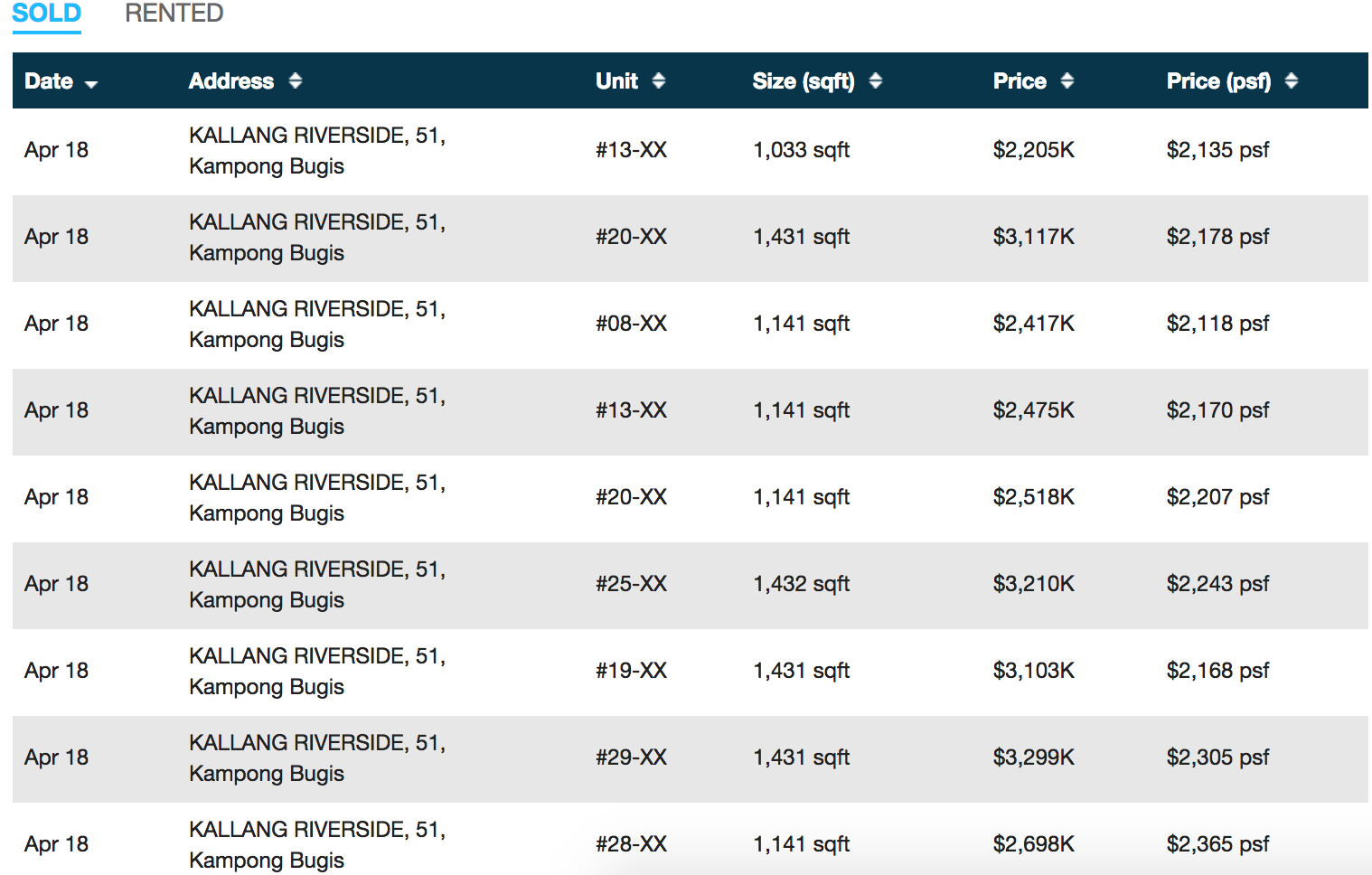
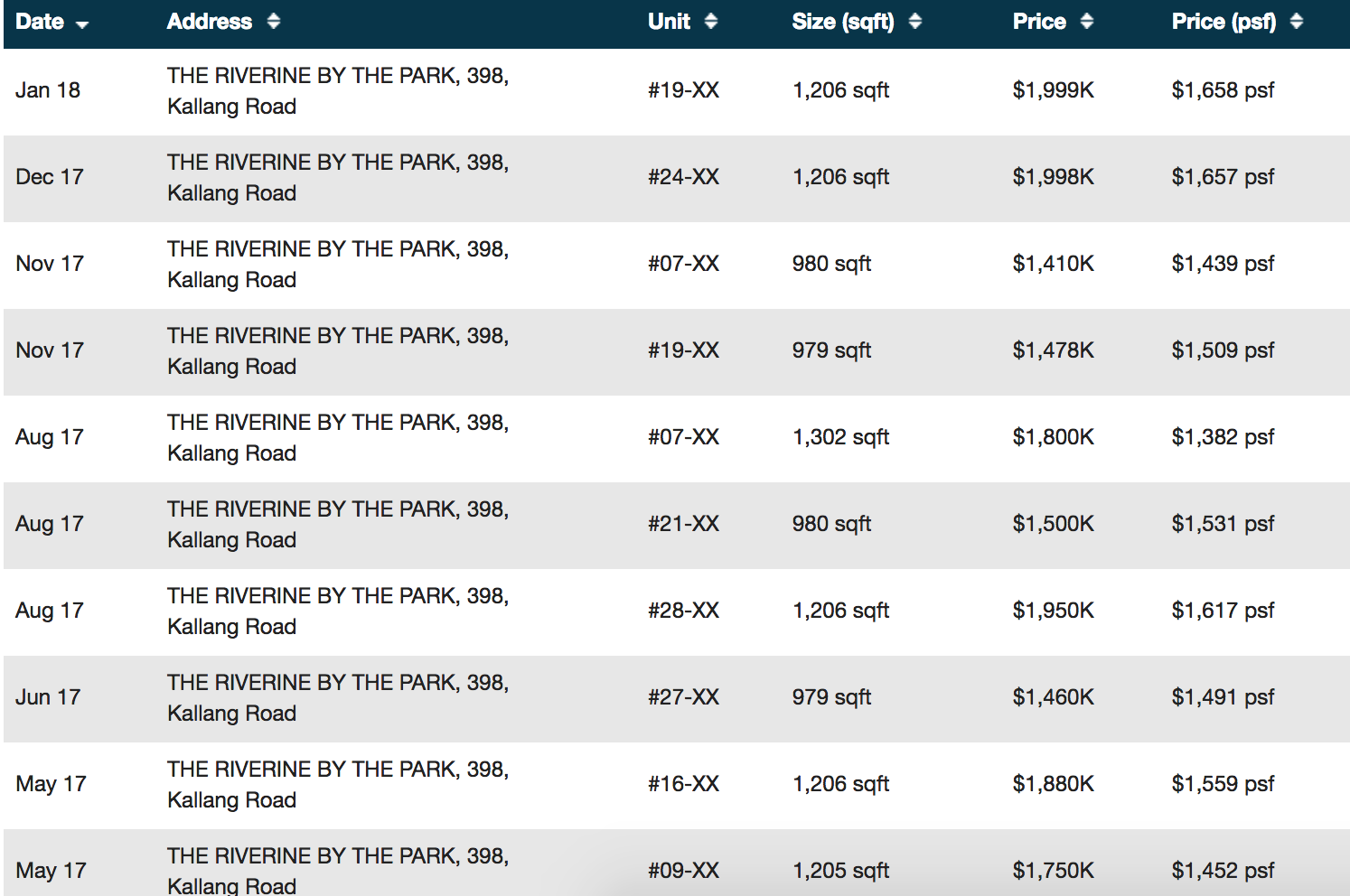
It’s clear from the SRX/URA data that the psf prices have well crossed the average $2000/psf mark when I first viewed the project in 2014. As you can see, the quantum for each unit is not low, going well above $2mil on average. My gut feeling is that this project, notwithstanding all its very good points, is overpriced. I can see its appeal with its FH status but I do not think that its location in what is perceived to be in a ‘light industrial’ and ‘city fringe’ area justifies its high price.
If one is interested in the area, I would say that the nearby Riverine by the Park, which is also a FH project, carries way better value. Judging by the URA/SRX stats, you could potentially save more than 20% by purchasing a resale unit there instead!
Kallang Riverside is therefore a no-no for me in terms of pricing. Far too expensive, especially when its close condo is priced so competitively.
5. Growth Potential (7/10)
As part of the Kallang Riverside Masterplan by URA, the area will be an extension of Marina Bay precinct and a sought-after city-fringe location housing more than 4000 residential units. This is exciting news for the area and the project should benefit from being 1 of the only 2 FH projects expected in the area. I think growth potential is relatively strong but I have reservations given the already (very) high sale price at the Kallang Riverside project. I feel that its capital upside is therefore more limited compared to other projects in the area.
Total Score: 35/50 (Consider buying, but keep in mind the drawbacks!)
*Disclaimer* All photos are not my own and have been taken off the internet. This post represents my views as an individual and is not representative of my company or any organisation I am affiliated to.










































 Singapore Property Walkabouts